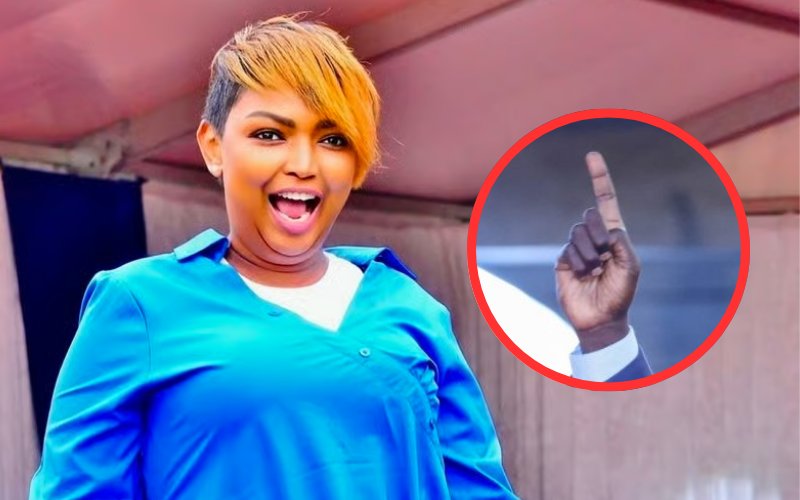
Nominated Senator Karen Nyamu has dismissed “Wantam” chants directed at her during an endometriosis awareness event in Nairobi, saying she ignored the heckling and was determined to speak about the condition in Parliament.
Nyamu was addressing Natalie Githinji’s Endometriosis Warriors (N.E.W) event at the Kenyatta International Convention Centre (KICC) on Sunday, September 27, when sections of the crowd interrupted her with loud “Wantam” chants.
Appearing unfazed, Nyamu told the gathering that she had not attended the event for politics and would not be distracted by the reaction.
“I’m not here for politics…. I’m sure you know me and you know I don’t care,” she said.
Nominated Senator Karen Nyamu downplays the heckling she faced during Natalie Githinji’s Endometriosis Warriors event at KICC on Sunday, saying not everyone was shouting ‘Wantam’ in the building and that she has grown thick-skinned to such hostility for supporting President… pic.twitter.com/tRcb7tRkDW
— John Mutongoi (@johnmtongoi) September 28, 2026
Speaking after the event, Nyamu said she had anticipated the reception because of comedian and political activist Eric Omondi’s involvement in the gathering.
“I was kind of expecting it because hii event ni ya Eric Omondi and I’ve seen Eric Omondi has been in the forefront kufight government,” she said.
Nyamu said she could have chosen to stay away from the event to avoid the criticism, but decided to attend because of the opportunity to engage with women living with endometriosis and push the issue through Parliament.
“Na mimi nikose kuja kwa sababu nitaambiwa one term sio mimi. Mimi nitakuja, mseme one term yenu, niseme ile nasema alafu niondoke na niendelee na kazi yangu about endometriosis kwa bunge,” she said.
Asked how she handled the heckling, Nyamu said she did not try to confront the crowd.
“I don’t think I’ve handled it. I think I’ve ignored it,” she said.
The senator said criticism would not necessarily stop her from pursuing an issue she believes requires government attention.
“It’s not something that has to be embraced by everyone because you’re doing a good job or because you have a vision,” she said.
Nyamu said she gave notice in the Senate on September 10 to introduce a motion on endometriosis, following discussions with women affected by the condition.
“If it was not for Natalie, we would not be having that motion in the Senate,” she said, crediting Githinji for using her public platform to draw attention to reproductive health.
The proposed motion seeks greater government support for women living with endometriosis, including the establishment of specialised treatment centres across the country and improved insurance coverage for treatment.
Nyamu also raised concerns about the capacity of Kenya’s healthcare system to handle complex cases, saying the country has about 700 registered gynaecologists but only five she identified as being trained to perform complex endometriosis surgeries.
“We have only five gynecologists who are able to operate on a woman who needs surgery with endo,” she said.
She also questioned the lack of official national data on the number of women living with the condition, arguing that the gap makes it difficult for the government to plan and budget for specialised services.
“In Kenya we don’t have any endometriosis data. How do you plan, how do you budget, how do you put endo centres all over the country if you don’t know the number?” she said.
The N.E.W event brought together women living with endometriosis and members of the public for awareness activities and discussions around the condition.
Githinji has publicly documented her 17-year struggle with endometriosis, including her diagnosis with severe Stage 4 disease and treatment following a serious flare-up.
Her advocacy has also drawn comparisons with the campaign of the late reggae DJ Mary Njambi “Jahmby” Koikai, who spent years raising awareness about endometriosis after suffering a rare form of the condition that affected her lungs.
Koikai died in June 2024 aged 38 after a long battle with the disease. She had undergone numerous surgeries and repeatedly spoke publicly about the challenges faced by women seeking diagnosis and specialised treatment in Kenya.