Allan Kilavuka, for the first time in God-knows-when, no longer has an executive assistant. Setting up this interview with him stretched time into space. “It might sound trivial, but I’m struggling with my calendar,” he says. Messages can go unanswered for a while, mostly because half the time he’s out on his farm in Kitale, getting his nose dirty.
This is what happens when the machinery around a chief executive is switched off. The PA goes. The diary goes. You discover how much of your life other people were running.
Kilavuka left Kenya Airways (KQ), where he was CEO, in December, three months before his contract ended, and spent the intervening months on garden leave doing, by design, very little. He hiked, read, exercised, travelled upcountry and finished a Master’s dissertation.
He met friends on one condition: nobody was to mention work. When people came offering jobs, he told them to talk to him after April. He wanted to detox first.
These days he has several irons in the fire: a small consulting firm, talks on leadership and ethics, executive classes at Strathmore Business School, a few carefully chosen boards, some advisory here and there.
“You get to run around a lot, but the beauty is that you’re in charge of your time.” If an invitation doesn’t interest him, he declines it. “I’ll only say yes to something I really want to do.”
His phone is certainly quieter. Life after the corner office comes with fewer interruptions and, occasionally, a little curiosity about who is still on the other end. Every couple of weeks, he calls a CEO or a Cabinet minister to see who still picks up. About half don’t. He expected it, because he has never confused his job with his identity.
He lives by what he calls the four Fs: faith, friends, family, and fun. They were his compass long before Kenya Airways. “I have one true north,” he says. His job was one way of moving toward it.
I am. I was born in Kisumu but raised in Kericho, at the Tea Research Foundation, where my father managed the estates. So I grew up around the greenery of the plantations. It has such a soothing effect. Kenyans pretend to be tea people, but we actually drink milk with a sprinkling of tea.
What did that environment give you?
Order. There was a lot of order. And scientists like evidence. They base their decisions on data. Maybe that crept up on me, because I also like data and evidence.
Before KQ, I worked for international organisations, including General Electric, and travelled a lot. I lived in South Africa. There are many good things in South Africa, but tea is not one of them. Their black tea is the bottom of the barrel. So I either imported tea from Kenya or took coffee.
But my real interest in coffee came just before I retired from KQ. I have a farm in Kitale. I had given up on maize because it’s a loss-maker. I tried canola, beans, then half an acre of avocado. Avocados need a lot of care. Once ready, they have to be picked and sold immediately.
Then on a trip to Brazil, I travelled with a Kenyan who turned out to be a coffee processor. We had a lot of idle time, and I told him my avocado story. He said, “Have you tried coffee?” I was like, “Coffee? Who tries coffee?” He walked me through the maths.
With coffee, you can harvest, dry it and store it if you don’t want to sell immediately. The returns may not be glorious, but they are something. So I planted 10 acres. The trees are about 30 months old now, and I have just harvested my first crop.
When did you start seeing yourself as a farmer?
I was brought up on a farm, so I’ve always been a farmer at heart. I just never had the opportunity to dedicate my time to one. When I go to my farm, I don’t just supervise. I put on my farm clothes and get dirty.
If it’s picking coffee, I pick. The workers tell me they get intimidated because it’s my farm, so I work overtime. Usually, at six o’clock I’m on the farm, working, and they are like, “The boss is here; we can’t leave”. I tell them, you’re free to leave. [Laughs]
When the boss, who is still working, says you are free to leave, it means you are not free to leave. Did you get into farming with some romance?
I’m a born farmer. I have analysed farming and listened to farmers. I’ve planted maize, canola, avocado, beans. I’ve failed many times. I knew farming is tough. And it helped that I’ve been in aviation. Those are two very difficult sectors, both low-margin and dependent on external factors. So I didn’t go in with an idealistic viewpoint.
Any discoveries in farming now that you are giving it much attention?
It can be addictive. When my cherries started ripening, I harvested with the workers, and I couldn’t leave the farm. The bushes are still short, not even a metre tall, so you have to bend, but that presents a problem since I’m not young.
We’d pick and pick and pick. My back hurt, but I couldn’t go past a bush with some red in it. It calls you. It tells you, pick me. One time I went with my wife and discovered she had the same problem. Then I invited one of my in-laws, and she got into the same problem. You can’t leave. You even forget about lunch.
Is farming therapeutic for you?
Very much, especially because of the greenery. Farming is one thing I like doing; hiking is another. I started hiking in 2016, stopped, then picked it up again after the Covid pandemic. I find healing in nature.
What else are you doing now?
I have a small consulting firm. I do a lot of public speaking on leadership: integrity, ethics, servant leadership, leading differently. I train executives through Strathmore Business School, sit on a few boards, because I’m very selective, and do some advisory work. The beauty is that I am in charge of my time. If I don’t want to do an assignment, I can say no.
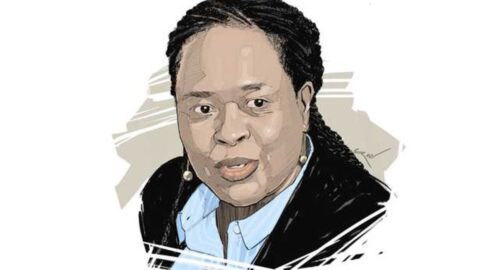
Kenya Airways former Group Managing Director and CEO Allan Kilavuka poses for a picture after the interview on October 13, 2026.
Photo credit: Francis Nderitu | Nation Media Group
A friend who left a high-pressure job told me the stress doesn’t leave your body immediately. Was that your experience?
That is true. Fortunately, a few people prepared me for it. My contract ended in March this year, but I left in December, so I had three months of garden leave. From January to sometime in April, I stopped running around, apart from finishing my Master’s dissertation. People would approach me about joining them. I would say, ” Talk to me after April; I just want to detox.” So your friend is right. You need that time to do nothing.
I find resting to be tiring. Did you find resting tiring?
[Chuckles] No. Let me tell you something. In high school, I had a very good friend called Douglas, who unfortunately passed away. Douglas is a very big part of my life. He was a very wise young man, many years older than his age.
When we were both 13, he asked me, “Allan, when do you ever rest?” I said, “I rest all the time. You see me sitting.”
He said, “No, you’re not resting. When you’re resting, don’t do anything. Don’t think anything. It can be five or 10 minutes, but completely forget about everything else and just be.”
I’ve been practising that, and people tell me I’m very calm. Part of the reason is that I try my best to be present, and not crack my brain about some tomorrow thing, or the sky collapsing. So, when I decided January to April would be rest, I did exactly that. Resting doesn’t mean sleeping. It means doing things that aren’t demanding. I hiked, exercised, read, and met people for a chat.
Has your identity changed since you retired?
No. My life philosophy is the four Fs: faith, friends, family, fun. I’m intentional about all of them, because I need to be anchored. I have one true north, and I’m walking toward it whether I’m at work, farming, hiking or having fun. The only thing that changes is how I get to my purpose.
Impact and the elevation of the people I work with. How do I elevate their leadership so that they, in turn, impact others and society? Even on my farm, I look at my workers and ask what impact I’m having on him, so they can have an impact on their families. And when I send my coffee to the miller, will they say, “ This is one of the best beans I’ve ever seen?” And can I answer why?
Looking back at KQ, what do you wish you’d done?
When I took the job, I pushed for what I called a reset. Split it into a bad company and a good company, so that we could reset the company and start afresh.
Covid had given us the opportunity. It was very risky, because it could all go belly up, which is why I wanted the main shareholder to support it. I pushed for it, but my voice was not big enough. I was outvoted by the directors and the shareholders. Even now, I truly believe it was the right thing to do.
The second, which I would still pursue, is a Pan-African airline group, like what the Latin Americans have done with LATAM. The Europeans have several. Africa is very natural for it. We are a huge continent, and our traffic is not properly consolidated or scheduled.
My plan was for KQ to be an anchor airline. We started with South African, then would bring in the rest. Hubs in Kenya, West Africa, Southern Africa, maybe North Africa, scheduling together, training together. It’s not a novel idea. It’s happening all around the world. I feel we lost a big opportunity.
Would you go back to corporate life?
I would, but not to just any company. It has to align with my purpose.
What did you learn about yourself at KQ?
I’m very big on emotional intelligence, because it speaks to self-awareness. When I was young, I had a very short temper because of my past. That’s a story for another day. As I matured, I got over it because of my faith.
But something never left me. If someone lies to me, the short temper comes back. In a big corporation like KQ, there’s a lot of that. I look very calm now, but you don’t want to see me when I’m upset. When stakeholders lie through their teeth, it can go very badly for them and for me.
Is there a period you’d want to forget?
During Covid, we lost people. Some pilots died. Some ordinary staff died. I made it a point to personally visit the families of employees who lost a spouse or children, or to attend the funeral. We are a family, and as the father figure, I needed to support them in their grief.
One of my employees lost her only two children in a road accident. They were six and five. That was very traumatic, even for me. But even that had a lesson, in how people rallied behind her.
Now that you’re home more, what have you discovered about your home?
[Laughs] I once heard my wife telling a friend, “I’m learning how to live with Allan differently, because he’s here a lot.” [Chuckles] I was blind to that. When I’m home, I’m mostly in my study reading psychology, philosophy, faith. But even in my man cave, my presence was in her way. Then I thought, this woman has not seen me here all these years, and all of a sudden I’m here. Now we go for walks together a lot more, talk more, plan more.
Is there anything you’re struggling with?
All these years in corporate life, I’ve always had a PA. I never worried about small things, like my calendar. It might sound trivial, but I’m struggling with my calendar. The reason I booked this meeting for 2:30 pm is that I had forgotten I’d moved my 3 pm one. I need to use technology a lot more, including AI.
What I’m not struggling with is the phone. Sometimes I play games. I say, “This person is CEO of that and that, so let me call him”. Half of them don’t pick. When they do, I say, “Oh, you’re actually still picking up my call?” Most top executives don’t pick up my calls, including Cabinet ministers.
No. I expected it. I do it for fun. And it’s a good thing, because then you know who the genuine people are and who just wanted to use you. These are people who used to call me and say, please, I’m getting late, help me out. Now, most of them will not bother. But such is life.
Last week in Mombasa, one PS saw me passing by and called me up. “Hey, my friend, I’ve just seen you. How are you doing?” I said, “You actually still call me?” He said, “Yeah, why not?” Most of the PSs will not bother. But such is life.