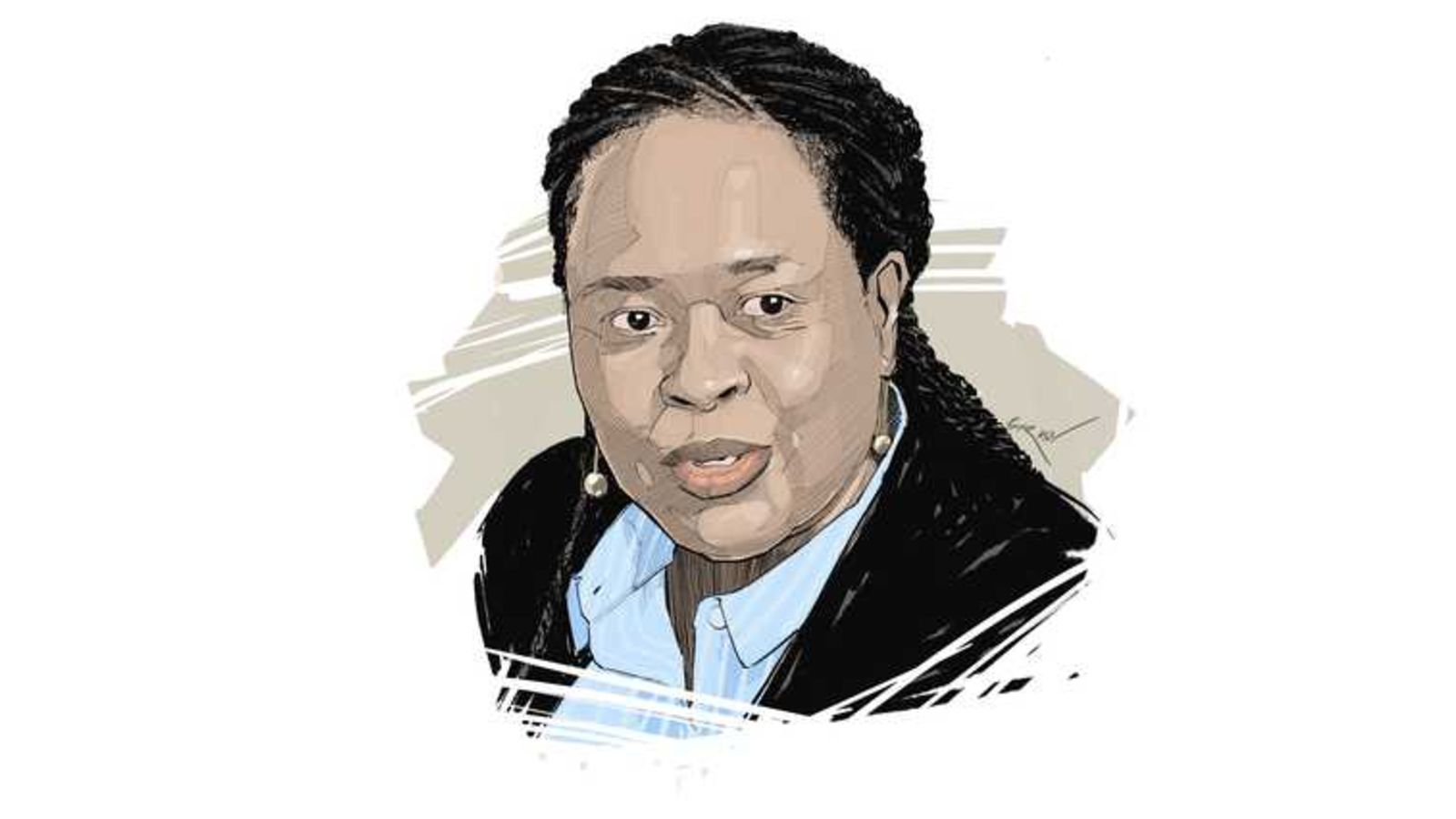
Esther Koimett is not one for the limelight. Soft-spoken and rarely seen in the media, the former Principal Secretary has spent much of her career away from the public glare, even as she sat at the centre of some of the biggest transactions that have reshaped Kenya’s economy.
Now, the daughter of the late powerful Moi-era minister Nicholas Biwott is back in the spotlight after reversing attempts to place her 18.24 percent stake in Middle East Bank Kenya under a nominee company amid a series of ownership changes at the lender.
Regulatory disclosures show that Ms Koimett’s stake rose from 17.48 percent in August to 18.24 percent in October. Her shares were briefly placed under PrimeCorp Holdings on October 5 before being transferred back into her own name four days later.
“There has not been any action on my side,” Ms Koimett told the Business Daily when asked about the changes.
The episode offers a glimpse into the corporate interests of a woman whose career has been defined by proximity to the government machinery.
Ms Koimett is now the largest shareholder in Middle East Bank Kenya, following a multibillion-shilling transfer of wealth from her late father.
Her direct stake places her at the centre of strategic decision-making at the lender, where she joined the board in February 2024.
Her career has spanned different administrations and taken her through some of the most influential offices in government, earning her the description of the “iron lady of Kenya’s public service.”
She was an old hand at the National Treasury, with one of her most enduring legacy coming when she held the position of investment secretary where she was involved in the government’s privatisation programme, assessing State-owned institutions and recommending whether they should be sold to private investors.
The list of companies linked to her work reads like a history of Kenya’s economic liberalisation: Kenya Airways, KCB, Housing Finance, TPS Serena, Mumias Sugar, Safaricom, KenGen, and Kenya Railways Corporation.
Some were privatised through initial public offerings while others involved the sale of government stakes to strategic investors.
For Ms Koimett, the significance of the transactions went beyond the sale of State assets. She viewed the privatisation programme as an important contributor to the development of Kenya’s capital market, particularly through widening the ownership of companies and deepening trading at the Nairobi Securities Exchange.
“The impact privatisation has had on the Nairobi Securities Exchange has been tremendous,” she said in an interview 10 years ago.
She served as head of the Kenya Post Office Savings Bank, Permanent Secretary in the Ministry of Tourism and Information and investment secretary at the Treasury.
Her career stretched across administrations and political transitions, while she remained largely identified with the civil service rather than partisan politics.
In a past interview, Ms Koimett described her rise as a gradual process rather than something she had planned as a young girl growing up in Tambach, Elgeyo-Marakwet.
“I grew up in the village like most Kenyans my age, a normal childhood,” she said. “I suppose I always aspired to work to the best of my ability in whatever God gave me to do. It’s just been a growth process.”
She is not the kind to dramatise her own achievements. Even when discussing her career in the male-dominated world of government, Ms Koimett did not frame her rise as a battle between women and men.
“Throughout my career, I never really stopped to look at myself as a woman. I’m just a Kenyan doing my job to the best of my ability,” she said.
Her advancement, she believed, was helped by supportive bosses and mentors. She singled out the late Silas Ita, former director of the Investment Promotion Council, George Mitine, a former investment secretary, and Joseph Kinyua, the former Treasury PS and head of the civil service in Uhuru Kenyatta’s government, as people who influenced her career.
She showered praises on them as empowering bosses who gave juniors opportunities, exposed them to new experiences and allowed them room to grow.
Of Mr Kinyua, currently the chairperson of KCB Group, she recalled that he led from the front, listened and provided guidance. His work ethic, she said, pushed those working under him to work harder.
For someone who has spent much of her career in powerful government offices, Ms Koimett has kept her private life remarkably private.
A wife and mother, she acknowledged that combining a demanding career with raising a family was difficult, but credited her husband for supporting her.
She also spoke openly about the importance of mothers spending time with their children and argued that women should not have to choose between careers and family life. Christianity and family, she said, were among the values she held most dear.
Ms Koimett inherited an equal one-fourteenth share of her father’s estate, alongside each of her siblings from Biwott’s four wives. The inheritance included the shares in Middle East Bank.
The estate was built by Biwott during a long political career that began in 1974 and included his service as a close aide to President Daniel arap Moi before he became one of the most powerful Cabinet ministers of the Moi era.
Biwott died in July 2017, aged 77.
The inheritance has since put Ms Koimett in a different position from the public servant whose career was built primarily around managing State investments. Her 18.24 percent stake in Middle East Bank Kenya now makes her a major private-sector investor in her own right.
Her transition from government to corporate Kenya has been gradual. Ms Koimett is now chairperson of M-Pesa Holdings Company and AAR Insurance Kenya and sits on the boards of Kenya Airways, Car & General and the African Trade and Investment Development Insurance.
Her Middle East Bank stake and directorship further cement her position in the country’s corporate boardrooms.
The timing is significant. Local banks have increasingly attracted interest from larger African lenders seeking acquisitions that would give them access to Kenya and the wider East African market.
Middle East Bank itself has been strengthening its capital base. Its core capital rose to Sh3.07 billion at the end of December 2025 from Sh2.11 billion three months earlier, after the Central Bank of Kenya pushed lenders to raise minimum core capital from Sh1 billion to Sh3 billion.
The bank reported a net profit of Sh264.37 million for the year ended December 2025, up 22.2 percent from Sh216.34 million.
Ms Koimett’s stake in Middle East Bank gives her a significant seat at the table of a regulated financial institution at a time when Kenya’s banking industry is undergoing consolidation and attracting regional investors.