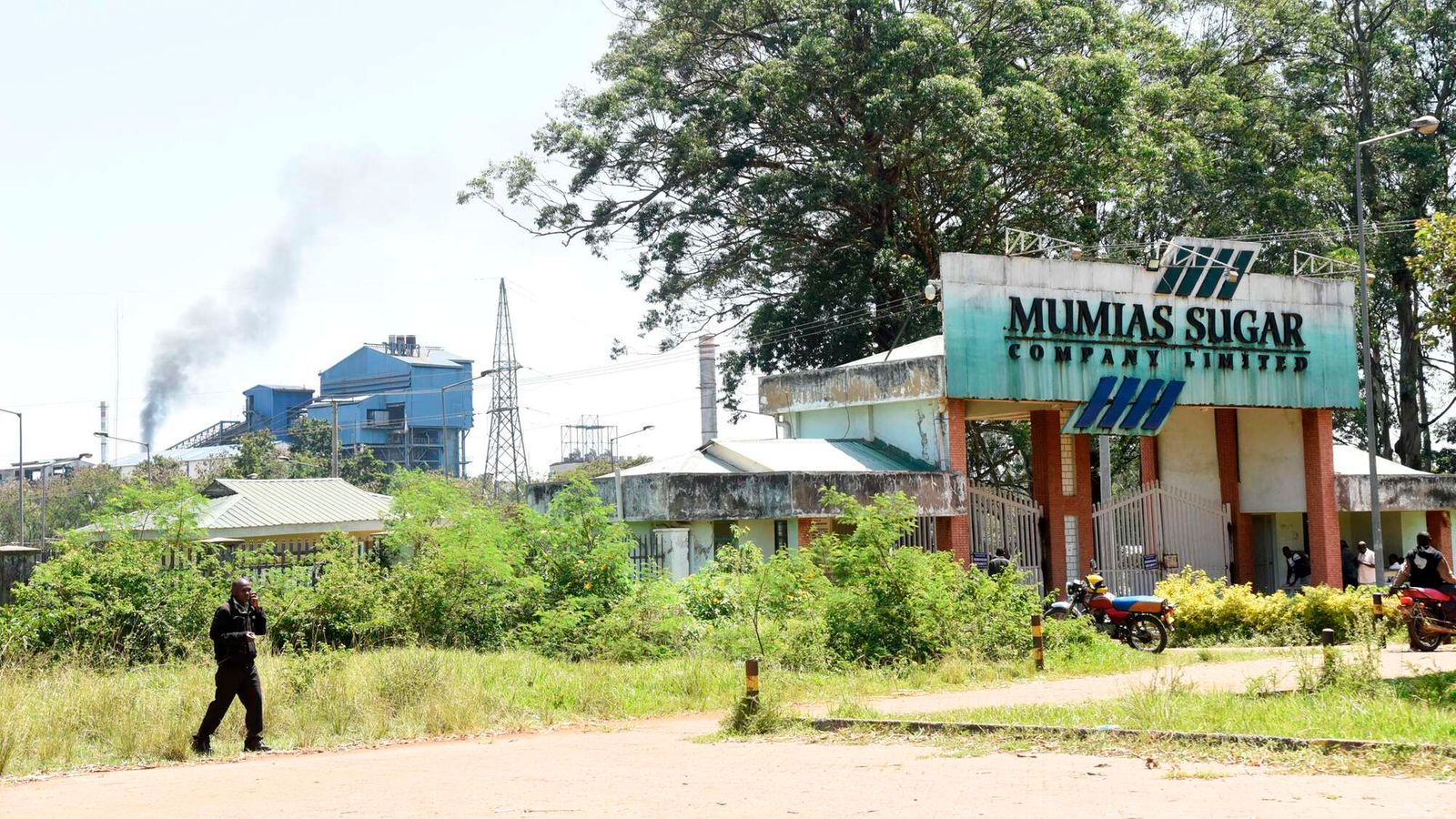
A shareholder of Mumias Sugar has reported the Capital Markets Authority (CMA) to the office of the Ombudsman, accusing the regulator of failing to address his concerns about the continued suspension of the miller’s stock
The shareholder, Taiti Hanningtone, wrote to CMA on August 27 through city law firm I.C. Law LLP asking for reasons for the continued suspension of the stock, and whether the company has been complying with regulations requiring it to furnish shareholders with material information, including financial results.
He said the prolonged suspension has left shareholders without sufficient information concerning the regulatory status and future of their investment.
In its reply, the CMA declined to offer specific responses to the 33 queries filed by Mr Hanningtone, citing Section 13 (2) of the Capital Markets Act that restricts disclosure of information it gathers in the course of exercising its functions.
CMA also directed some of the queries to Mumias and its receiver manager, while noting that disclosures on prospective or ongoing regulatory and receivership processes would be speculative.
In his letter to the Commission on Administrative Justice (Ombudsman), Mr Hanningtone has taken issue with the CMA’s response, saying that CMA Act contemplates disclosure in edited or redacted form where only part of a record is exempt, rather than a blanket refusal on information.
He has also faulted the decision to direct him to the company for answers without confirmation whether the CMA already holds the information that he sought in his letter.
“The applicant respectfully requests that the Commission find that the CMA’s reliance on section 13(2) of the Act, without a corresponding item specific application of section 6 of the Access to Information Act, 2016, does not constitute a lawful basis for refusal under the Act,” reads the application.
“Order the CMA to provide item specific written reasons, by reference to section 6(1) of the Act, for its refusal in respect of each of the 33 requests set out in the applicant’s letter of August 27, 2026 that remains unanswered.”
Mumias was suspended from trading in September 2019 after it was put into receivership by KCB Bank over debt default. At the time of suspension, Mumias owed banks Sh12.5 billion.
The miller was initially suspended for a period of three months, which was extended by a further three months at the expiry of the initial freeze. In April 2020, CMA announced that the suspension had been extended indefinitely.
Mumias was trading at Sh0.27 per share when it was suspended, with a market capitalisation of Sh413.1 million.
It is among six companies that are currently frozen from trading at the Nairobi Securities Exchange, locking in Sh27 billion in paper wealth for the affected investors. The others are ARM Cement, Bamburi Cement, East African Cables, TransCentury and Deacons East Africa.
Even as the sugar miller remains suspended from trading, its assets in Western Kenya were leased to Ugandan businessman Sarbjit Singh Rai through his firm Sarrai Group in 2021, for a period of 20 years.
In its letter to Mr Hanningtone, the CMA said that it continues to exercise its statutory oversight over the company as a listed issuer, while also respecting the primacy of the process under the Insolvency Act 2015 and directions of the courts handling the receivership related proceedings.
“The exercise by the Authority of its regulatory oversight must not contradict but align to the ongoing insolvency and court processes,” said the CMA in its letter dated September 18.
The CMA added that it carried out an onsite governance inspection of Mumias in May 2025, assessing the corporate governance structures of the company and arrangements to safeguard the interests of stakeholders, secured and unsecured creditors and shareholders.