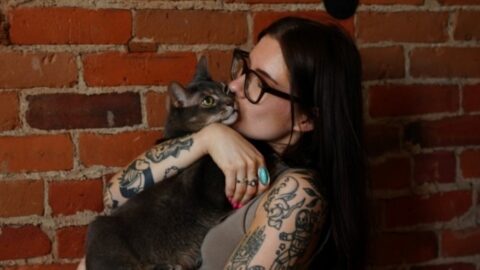
When actress Sarah Hassan scrolls through social media, she knows her face is more than a photograph. It is an asset.
“No brand can dare use my image for any promotional gain without reaching out to me first. I have made this very deliberate to protect my image and reputation,” she tells BDLife.
That caution is increasingly becoming the norm among Kenya’s celebrities. A face, a name or even a social media handle is no longer just part of fame. It has become something that can command hundreds of thousands of shillings in endorsement fees and, increasingly, trigger costly legal battles when companies use it without permission.
Sarah is among Kenya’s highest-paid celebrity endorsers, with industry sources telling BDLife she can charge upwards of Sh700,000 for a single campaign, depending on negotiations and deliverables. She declines to discuss exact earnings, laughing off the question with, “Of course I can’t tell you that. That is personal.”
Her approach reflects a broader shift across Kenya’s entertainment industry where celebrities are becoming increasingly protective of their names, faces and reputations as awareness grows that fame itself can be intellectual property.
The idea isn’t new. In 1993, NBA legend Michael Jordan walked into a Chicago courtroom to defend something that had nothing to do with basketball. His name.
A local grocery store had used the phrase “Michael Jordan’s Restaurant” in advertisements promoting steaks and chicken wings without his consent. What the store saw as clever marketing, Jordan saw as an attempt to profit from a reputation he had spent years building.
“It’s not just about my name being used. It’s about people being misled into thinking I endorsed something I had nothing to do with,” he said at the time.
Jordan won the case and was awarded $8.9 million (Sh1 billion), establishing that a celebrity’s identity could be treated as a commercial asset. More than three decades later, that principle has become even more relevant as his Jordan Brand continues generating billions of dollars long after his retirement.
The same thinking is now reshaping Kenya’s courts.
In January 2024, popular Kikuyu gospel singer Hellen Muthoni found herself in a battle over the use of her image in a marketing gimmick she never signed up for.
A hair company, Solpia Kenya, trading as Sistar Kenya, had splashed her photo across its online marketing campaigns. She had never given consent, never signed a deal, and never seen a shilling from it.
The Data Protection Commissioner (ODPC) awarded her Sh500,000 in damages. But Ms Muthoni wasn’t satisfied.
“The compensation is too little given the reputation I have built over time. It risks diluting my brand and weakening my ability to command endorsement deals in the future,” she argued through her lawyer.
Actor Paul Ogola faced a similar ordeal. In 2023, the ODPC awarded him Sh1.45 million after Shalina Healthcare Kenya continued to use his image long after their contract had expired.
Mr Ogola had originally signed a six-month deal in 2022 to appear in an online campaign for Pharmasal, a pharmaceutical product. The contract expired in August that year. But the company kept plastering his image across billboards, calendars, websites, and posters without his consent.
In her determination, Data Commissioner Immaculate Kassait ordered Shalina Healthcare to pay Sh500,000 for billboard use, Sh500,000 for calendars, Sh200,000 for online use, and Sh250,000 for violating Ogola’s right to be informed, totaling Sh1.45 million.
In a recent judgment by the High Court, Kenyan veteran actor, the Crime & Justice star actor Alfred Munyua, won claims over infringement of his image rights against Wananchi Group, owner of Zuku-pay TV. However, he still lost the case on technical grounds.
Munyua aka Alfie, who also appeared on the once-popular TV show Mother-in-Law, lost the case in which he was seeking lucrative compensation from Zuku, accusing the company of unlawfully using his image in an advertisement of a movie in which he features, without his consent.
Some time in February 2025, Wananchi posted a commercial video advertisement on its official Facebook page featuring Munyua’s image to promote the movie Pwagu, in which he stars, on its Zuku Swahili Channel 100. Munyua had not given consent for his image to be used in advertising the movie despite being one of Pwagu’s leading cast.
While the High Court found that Wananchi had indeed infringed on the renowned actor’s image and personality rights and was entitled to damages, it still went ahead to dismiss it on grounds that he failed to first pursue redress through the ODPC.
The High Court stated that Munyua should have exhausted the dispute-resolution mechanisms provided under the Data Protection Act before turning to it if dissatisfied with the outcome at the ODPC.
In another judgment issued in 2025, the ODPC awarded Africa’s fastest man, Ferdinand Omanyala, Sh500,000 against Oxyegne, a PR and Marketing firm, for using his image to promote a financial project he had initially agreed to be part of but later turned it down. Omanyala was seeking Sh10 million in compensation.
According to Data Protection and intellectual property (IP) expert Dave Muli, these cases show how most Kenyan celebrities are beginning to capitalise on their reputations.
“These cases are setting a good precedent because it’s unlawful to exploit a popular figure’s image for commercial gain without having to compensate them, given the reputation they have built for themselves stemming from their career achievements that many aspire to reach,” he explains.
In developed markets such as the West, the estates of long-dead icons still cash in. Charlie Chaplin’s name and image, for instance, continue to earn millions annually.
“A celebrity is someone widely recognised for their achievements. When that recognition is cultivated over time, it creates goodwill that can be monetised. But it has to be protected,” adds Dave.
He however cautions that goodwill built from a good reputation over time is fragile. Scandals can damage it overnight. But when nurtured, it can outlive the celebrities themselves.
“Unlike in the past, celebrities are getting to realise how important it is to protect their names and images using data protection and defamation laws. It is a good sign.”
However, Dave also points to gaps in Kenya’s legal framework and limited public awareness. Unlike many Western countries, Kenya has no standalone law governing celebrity image rights. Instead, public figures rely on a patchwork of protections under privacy, defamation and copyright laws—measures that can stop unauthorised use but do little to help them monetise their image as a long-term commercial asset.
The solution, he says, lies in being proactive by registering trademarks for names, catchphrases, and logos. Using copyright as well to protect creative works, besides image rights.
“Trademarks and copyrights don’t just protect reputation. They give celebrities the tools to turn goodwill into long-term economic gain that can outlive them, just like the case of renowned American comedian Charlie Chaplin who has been dead for 48 years, but whose generation continues to cash in. In Kenya, Chaplin’s likeness continues to be used by different brands, such as the Charlie Bistro chain of restaurants, who pay his estate licensing fees.”