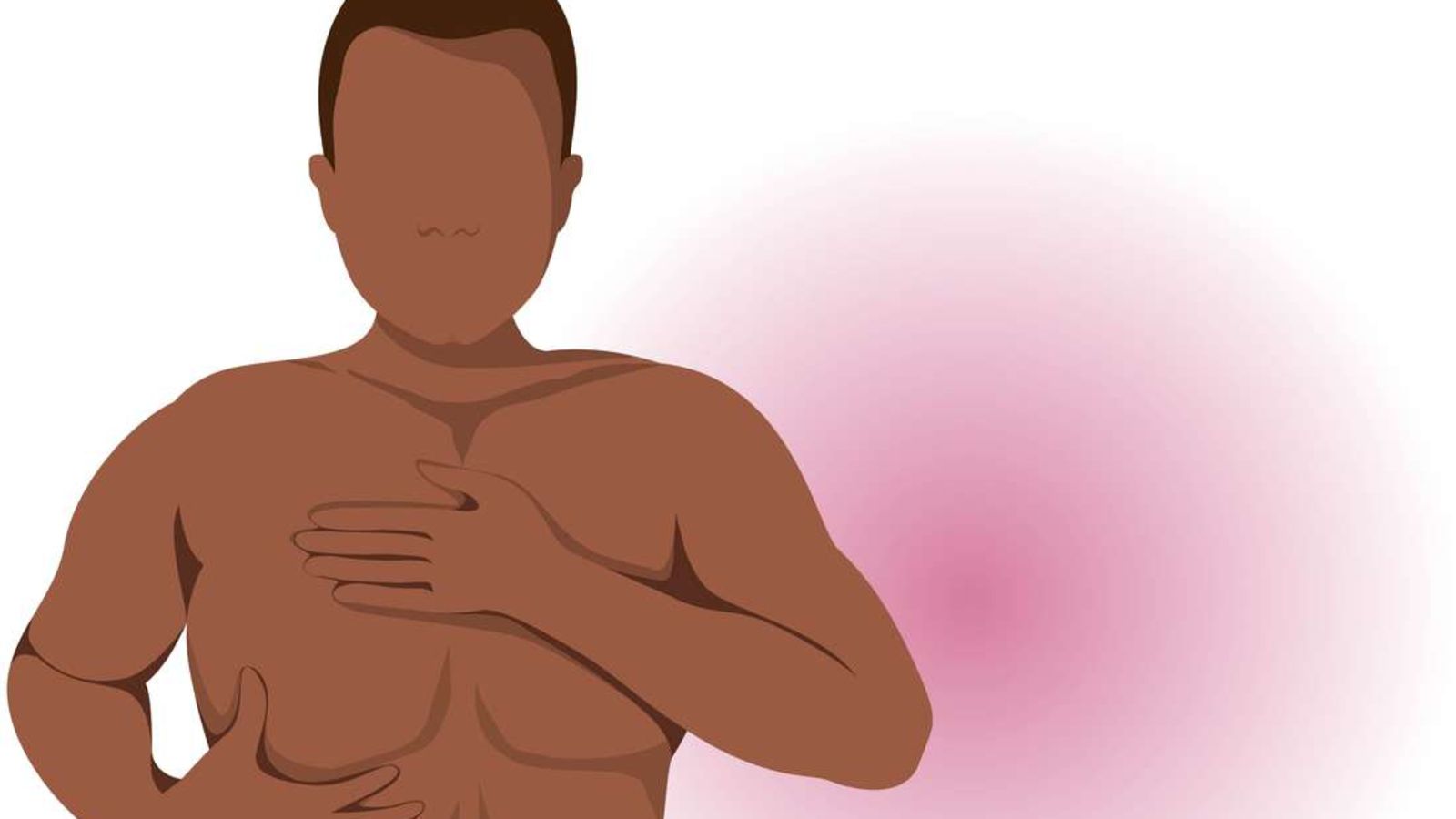
A hard, painless lump near the nipple, bloody nipple discharge or a nipple that suddenly turns inward may not immediately raise alarm in a man. Breast cancer is commonly associated with women, and some men may not realise that they, too, can develop the disease.
Although male breast cancer is rare, it remains a health concern that requires greater awareness. Fewer than one in 100 breast cancer cases worldwide occur in men, according to Dr Karishma Sharma, a medical oncologist at Aga Khan University Hospital, Nairobi.
“Men have a small amount of breast tissue behind the nipple, and cancer can develop in this tissue just as it does in women,” Dr Sharma says.
She adds that cases have been documented in Kenyan hospitals, although more comprehensive data is needed to establish the true burden of the disease nationally.
The most common symptom is a lump in the breast, usually firm and painless, and often located beneath or close to the nipple or areola, the darker skin surrounding it.
Dr Manel Haj Mansour, a consultant medical oncologist and section head of medical oncology at Aga Khan University Hospital, Nairobi, says other warning signs include nipple discharge, changes in the nipple, skin dimpling and alterations in the size or shape of the breast.
Dr Sharma identifies additional symptoms, including redness, scaling or a persistent rash on the nipple or breast skin. A lump or swelling in the armpit or near the collarbone can also be a warning sign, sometimes appearing before a breast lump can be felt.
“Because men have very little breast tissue, even a small cancer can quickly reach the nipple, skin or underlying muscle, so these changes can appear relatively early,” Dr Sharma explains.
Bloody nipple discharge, a newly inverted nipple, skin puckering and unexplained changes affecting one side of the chest should therefore not be ignored.
Breast swelling in men can have several causes. One of the most common is gynaecomastia, a benign enlargement of breast tissue that can occur during puberty, later in life, with excess body weight, in association with liver disease or as a side effect of certain medicines.
Dr Sharma says gynaecomastia usually feels like a soft or rubbery, disc-shaped area directly beneath the nipple. It may affect both sides and can be tender, particularly when it develops recently.
A cancerous lump, by contrast, is more often hard or firm, painless and confined to one side. It may be fixed rather than mobile, sit slightly off-centre from the nipple or occur alongside changes in the nipple or surrounding skin.
However, these differences are not reliable enough for a man to determine the cause himself.
“Gynecomastia and cancer can even occur together,” Dr Sharma cautions. “The only way to be sure is an examination by a health care provider, usually followed by imaging and, if needed, a biopsy.”
Age is an important risk factor. Male breast cancer is most commonly diagnosed in men in their 60s and 70s, although it can occur at any age.
Family history and inherited genetic changes can also increase risk. Dr Sharma identifies BRCA2 mutations as an important risk factor, while other inherited changes involving genes such as PALB2, CHEK2, TP53 and PTEN may also raise the likelihood of developing the disease.
Previous radiation treatment to the chest, including treatment for lymphoma, is another risk factor. Conditions that increase oestrogen levels relative to testosterone, including severe liver disease and excess body weight, may also contribute.
Dr Haj Mansour similarly identifies family history of breast or ovarian cancer, inherited BRCA mutations, Klinefelter syndrome, obesity, previous chest radiation and conditions associated with increased oestrogen levels as risk factors.
However, Dr Sharma cautions that having a risk factor does not mean a man will develop breast cancer. Many men diagnosed with the disease have no obvious risk factor.
Both specialists advise men not to wait for a lump to grow or become painful before seeking medical attention.
“Don’t wait. Any new breast lump or change should be checked by a health care provider as soon as possible,” Dr Sharma says.
Men should particularly seek prompt assessment if they notice a hard or one-sided lump, bloody nipple discharge, a newly inverted nipple, skin dimpling, a sore that does not heal or swelling around the armpit or collarbone.
Although many breast changes turn out to be benign, delaying assessment can allow an existing cancer to grow and spread.
Diagnosis begins with a medical history and physical examination. The doctor examines both breasts, the armpits and the area around the collarbone while asking about symptoms and family history.
Diagnostic mammography and breast ultrasound may then be used to investigate an abnormality. Ultrasound can help determine whether a lump is solid or fluid-filled, assess nearby lymph nodes and guide a needle biopsy.
A core needle biopsy, usually performed under local anaesthetic, involves taking a small tissue sample for laboratory examination. It is the main method used to confirm whether cancer is present.
Dr Sharma says further testing is conducted if cancer is confirmed, including assessment of hormone receptors and HER2 status, which help guide treatment. Depending on the stage, additional scans may be required to determine whether the disease has spread.
Genetic counselling and testing are also important. “All men diagnosed with breast cancer should be offered genetic counselling and genetic testing, regardless of age or family history,” Dr Sharma says.
The results can inform treatment decisions and screening for other cancers, while helping family members understand their potential inherited risk.
Male breast cancer is often diagnosed at a later stage because of limited awareness and embarrassment, Dr Sharma says. Some men may mistake a lump for an injury or infection or delay seeking help because they do not expect to develop breast cancer.
By the time the disease is detected, it may have spread to the skin, chest muscle or lymph nodes, potentially requiring more extensive treatment.
“The stage at diagnosis is one of the most important factors in a person’s outlook,” Dr Sharma says.
However, she notes that outcomes for men and women diagnosed at the same stage are broadly similar and that male breast cancer can be treated using the same effective approaches employed in women.
Recognising changes early and seeking medical assessment promptly can therefore make a substantial difference to treatment prospects and the chances of a cure.