By Victor Ahiuma-Young
The Non-Academic Staff Union of Educational and Associated Institutions, NASU, has decried the worsening hardship confronting Nigerian workers and their families, citing rising hunger, poverty, fuel prices and the escalating cost of basic necessities.
It also demands urgent moves to review the national minimum wage to reflect prevailing economic realities.
NASU equally called on the Federal Government to introduce immediate measures to ease the burden of rising food prices, transportation costs, electricity tariffs, housing rents and healthcare expenses, warning that workers’ earnings can no longer guarantee a decent standard of living amid the prevailing economic challenges.
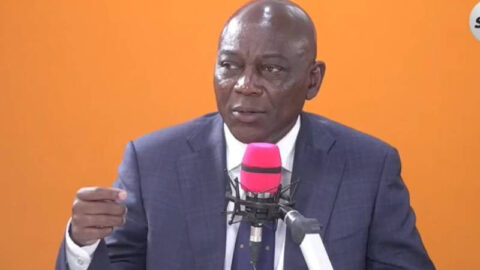
NASU President, Dr Makolo Hassan, made the call in his welcome address at the union’s National Executive Council, NEC, meeting taking place between Tuesday, October 13, and Wednesday, October 14, 2026, in Abuja.
Hassan, who described the current minimum wage as inadequate in the face of rising living costs, said the union would continue to press for a living wage that guarantees workers and their families a dignified existence.
He said, “While the ₦70,000 National Minimum Wage was a hard-won victory, the prevailing economic realities in Nigeria have rendered it grossly inadequate.
“With the increase in the pump prices of petroleum products, the astronomical rise in the cost of food, transportation, housing, electricity, healthcare and other essential commodities, the current Minimum Wage has effectively become a slave wage that can no longer sustain Nigerian workers and their families.”
He urged the Federal Government to urgently initiate a review of the national minimum wage and institutionalise periodic wage reviews and cost-of-living adjustments to protect workers’ purchasing power against inflation.
According to him, Nigerian workers deserve not merely a minimum wage but a living wage capable of guaranteeing decent living conditions and economic security.
The NASU president further stressed that economic reforms must translate into tangible improvements in the lives of ordinary Nigerians rather than deepen hardship and inequality.
He said, “The true measure of any economic reform is not the applause it receives in boardrooms, but the difference it makes in the lives of ordinary Nigerians.
“The cost-of-living crisis remains one of the gravest challenges confronting Nigerian workers and their families. Whatever improvement may be reported in headline inflation, the reality in our homes, markets and workplaces tells a harder story. Food, transport, rent, school fees, medicines, electricity and other basic necessities continue to consume an unbearable share of workers’ incomes. With food inflation still at 19. 57 per cent in July 2026, affordable food remains NASU’s central national demand.
“We call for urgent and sustained support for farmers, improved security for farming communities, better storage and transportation infrastructure, and deliberate investment in domestic food production. The projection that nearly 35 million Nigerians could face acute and severe food insecurity during the 2026 lean season must be treated as a national emergency. No worker who contributes to the wealth of this country should go home unable to put food on the family table.
“The continuing consequences of petrol pricing and subsidy removal are equally severe. Every increase in the cost of fuel travels quickly through fares, food prices, production costs and ultimately the pockets of working people. Domestic refining must therefore translate into real and measurable relief for Nigerians, not merely improved statistics or higher margins for operators. Government must protect households and productive enterprises from the full impact of international oil-price volatility and exchange-rate shocks.
“At the same time, Nigeria must urgently expand reliable and affordable mass transportation through buses, rail and other public transit systems, while subjecting Compressed Natural Gas (CNG) and other promised intervention programmes to proper assessment to determine whether they are truly delivering relief to workers. Our position is clear: workers cannot continue to bear the greatest burden of economic reforms while receiving the least protection from their consequences.
“This same principle is what guides our demands on electricity and housing. Nigerian workers should not be compelled to pay increasingly high electricity tariffs without corresponding improvements in supply. We demand affordable power for households and productive enterprises, universal metering, an end to arbitrary estimated billing, and a tariff system that places fairness, service delivery and the welfare of citizens above revenue extraction. As the service-based tariff regime and updated 2026 Multi-Year Tariff Orders (MYTO) continue to shape electricity pricing, workers must not be made to pay more for darkness.”
He also raised concerns over food insecurity, citing the projection that nearly 35 million Nigerians could face acute and severe food insecurity during the 2026 lean season.
He called for increased support for farmers, improved security in farming communities and investment in domestic food production, storage and transportation infrastructure.
The union also demanded affordable housing schemes, accessible mortgage facilities and measures to protect workers against unreasonable rent increases. It maintained that workers should not be forced to pay higher electricity tariffs without corresponding improvements in power supply.
On employment, Hassan expressed concern over youth unemployment, underemployment, casualisation and the declining productive capacity of the Nigerian economy. He called for a national employment strategy focused on technical and vocational education, apprenticeship programmes, industrial skills development and the creation of secure, decent jobs.
He equally urged the government to address factory closures and the high costs of electricity, transportation, raw materials and credit, noting that the survival and expansion of productive enterprises were essential to sustainable job creation.
The NASU president further called for improved healthcare, adequate funding for public education, prompt payment of pensions and gratuities, and stronger social protection programmes for vulnerable Nigerians.
Hassan also called for greater transparency and accountability in the management of public resources, insisting that increased revenues accruing to states and local governments should translate into timely salary payments, better public services, improved infrastructure and stronger social protection.
On industrial relations, he reaffirmed NASU’s commitment to collective bargaining, freedom of association and the protection of workers’ rights, warning employers against intimidation, victimisation and practices designed to weaken trade unions.
He further urged the government to address insecurity, particularly attacks on farmers and rural communities, noting that banditry, kidnapping and insurgency threatened workers’ lives, agricultural production, food supply and national productivity.
As the country approaches the 2027 political transition, Hassan urged organised labour to place workers’ welfare at the centre of national discourse, insisting that candidates and political programmes should be assessed on their commitments to living wages, decent jobs, security, industrialisation and quality public services.
He urged members of the National Executive Council to remain united and committed to advancing the interests of the union’s membership, stressing that sustained engagement and collective action remained critical to achieving better working conditions and economic justice for Nigerian workers.