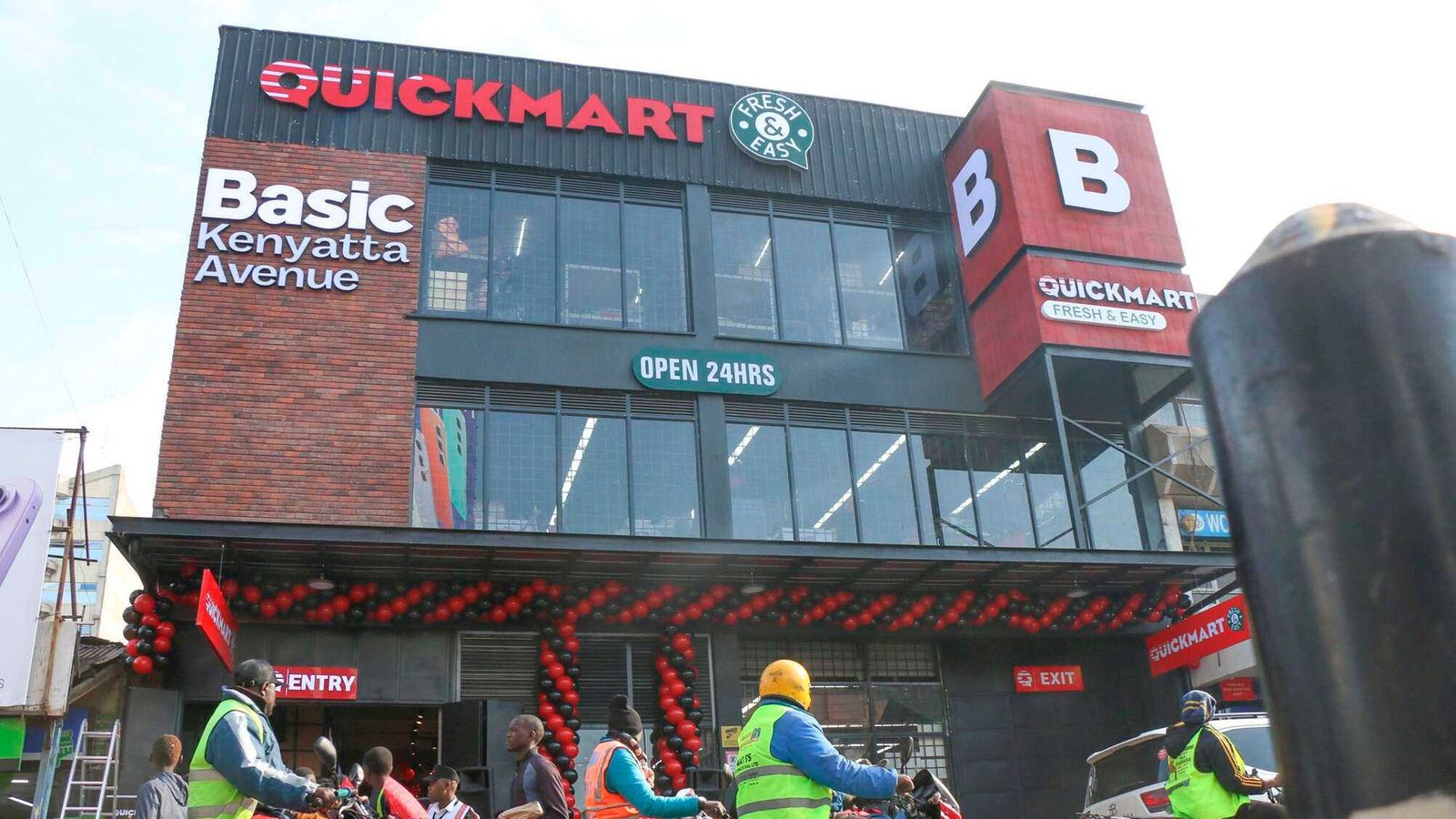
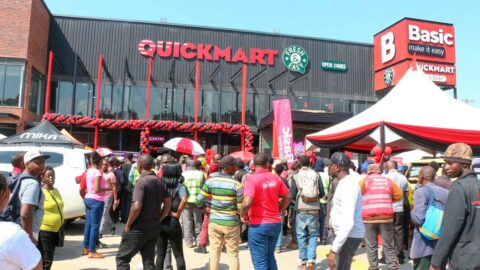
The imminent listing of supermarket chain Quickmart is set to bring back dividends to the commercial and services segment of the Nairobi Securities Exchange (NSE), diversifying the options for dividend-chasing investors at the bourse.
Quickmart said in a notice that it will maintain a policy of paying at least 80 percent of its net profit as dividends to investors post-listing, joining a select list of firms that distribute more than three-quarters of net earnings to their owners.
Latest full-year dividend statistics show that Safaricom, Standard Chartered Bank Kenya, BAT Kenya, NSE, TotalEnergies Marketing Kenya, Williamson Tea Kenya, Kapchorua Tea and Kakuzi are the most generous listed firms by dividend policy at ratios of between 81 percent and 453 percent in the most recent financial year.
“Following the listing, the company intends to adopt a dividend policy targeting a payout ratio of at least 80 percent of annual profit after tax, to be declared and paid semi-annually, subject to the availability of distributable reserves, the capital requirements of the company (including its growth and investment plans) and other relevant considerations,” said Quickmart in a notice of its intention to list.
“The company expects to distribute approximately Sh2 billion and Sh2.5 billion in dividends in the 2026 and 2027 financial years respectively, representing dividend payout ratios of 95.1 percent and 90 percent.”
Quickmart is expected to launch its public offer by the end of this month when its current owners will offload two billion shares, representing 50 percent of its four billion issued shares.
The sellers have also included a green shoe sale option of an additional 7.5 percent stake in case of an oversubscription, which if exercised fully would result in the sale of a 57.5 percent stake.
The entry of the retailer with its policy of paying dividends will go some way towards reinvigorating the commercial and services segment, in which TPS Eastern Africa was the only company to pay a dividend last year out of 13 listings.
Commercial and services is the largest NSE market segment by number of listed companies, ahead of banking at 12 firms and nine on the manufacturing and allied segment.
It has however lagged in returns to investors in dividends due to difficult operating conditions affecting its constituent stocks, seven of which made net losses in the latest financial year, and which also include suspended Deacons East Africa.
In the other segments, 11 out of the 12 listed banks paid a dividend last year, as did four manufacturing firms. Four out of six listed insurers also made a distribution, while half of the six listed agriculture firms also made payments. Dividend payments by listed companies have also emerged as an important source of liquidity for individuals and businesses in an economy that is still grappling with costly credit and flat payslips.
In the NSE, 33 companies paid Sh245.9 billion in dividends in their latest financial years but banks and Safaricom collectively accounted for 80 percent or Sh197.2 billion of the total amount distributed to investors.
The other 21 companies that paid out dividends for the year distributed a combined Sh48.7 billion, which is just over half of the Sh80 billion that was paid out by Safaricom alone. This indicates limited diversification beyond banks and the telecommunications firm for investors seeking dividends.
Besides the concentration on a few firms, expanded ownership of large banks and Safaricom by foreign investors means that a larger proportion of dividends is being shipped out of the local economy.
In June, South African company Vodacom Group tightened its grip on Safaricom by purchasing an additional 20 percent stake from the Kenya government and the UK’s Vodafone Group for Sh272 billion, attaining a controlling stake of 55 percent.
South Africa’s Nedbank is buying a 66 percent stake in NCBA for about Sh110 billion in a deal that is expected to close early in the fourth quarter of the year.
Fellow South African lender Absa Group has also recently increased its stake in Absa Bank Kenya from 68.5 percent to 72 percent at a cost of Sh6.5 billion through a tender offer that was priced at Sh34.50 per share.