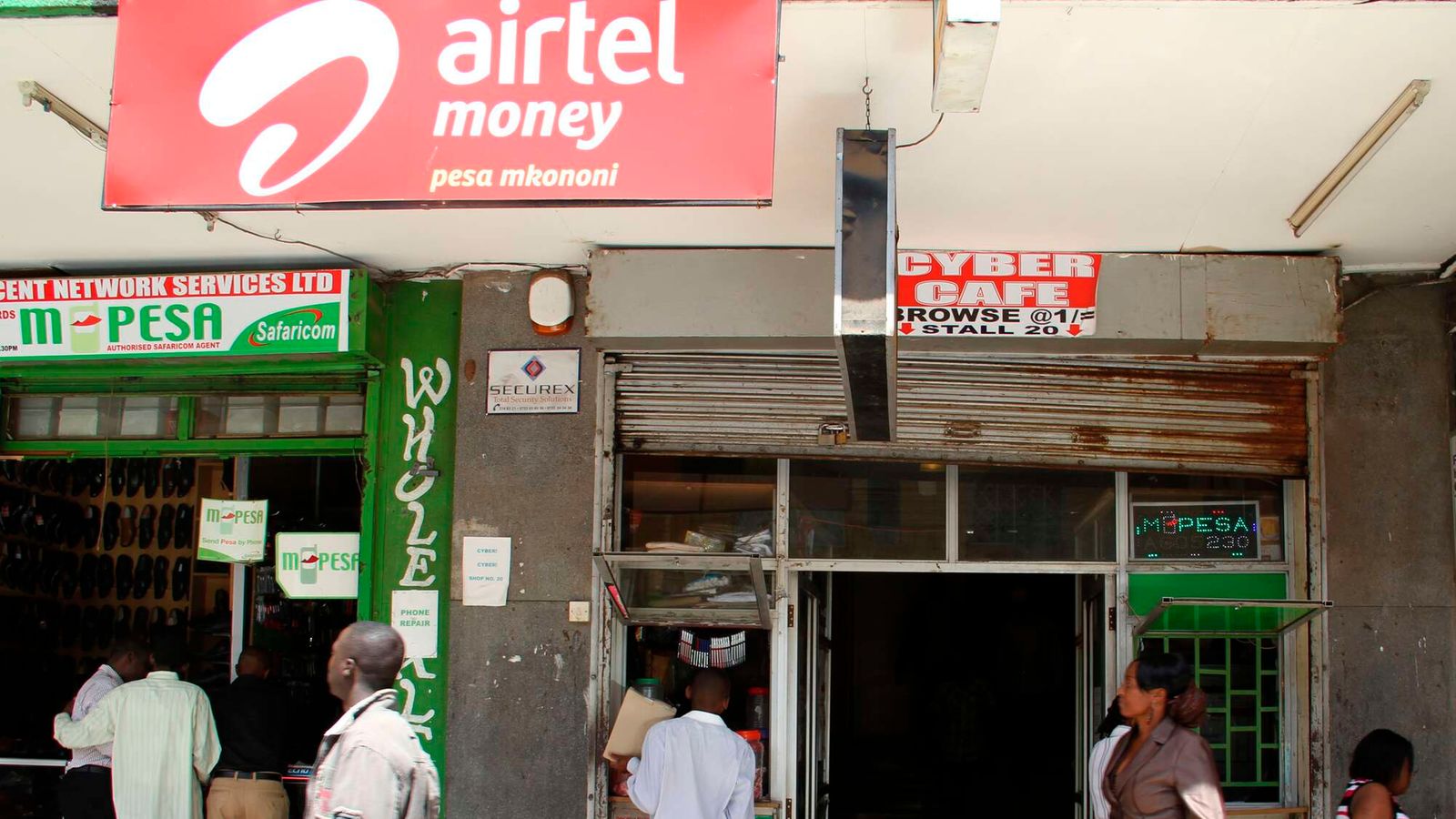
Safaricom increased its share of Kenya’s mobile subscriptions to 69.8 percent in the three months to June, widening its lead over Airtel, which gained ground in broadband and mobile money.
Communications Authority of Kenya (CA) data shows Safaricom’s share of mobile subscriptions rose from 68.9 percent in March and 66.8 percent in December 2025.
Airtel’s share, meanwhile, fell to 26.8 percent from 27.6 percent in March and 29.2 percent in December.
Safaricom also retained the largest share of mobile broadband subscriptions at 64.4 percent, although it was a decrease from 64.5 percent in March.
In mobile money, Safaricom’s M-Pesa continued to dominate the market with an 88.8 percent share at the end of June, down from 89.1 percent in March.
Telkom Kenya recorded the least market shares, with 0.6 percent in both mobile and broadband segments, and a zero percent share in the mobile money market.
Safaricom has been strengthening its position in mobile subscriptions, while Airtel has maintained a larger share of the broadband market than its share of mobile subscriptions would suggest.
In September 2025, Safaricom held 65.3 percent of mobile subscriptions, 62.7 percent of mobile broadband subscriptions and 89.7 percent of mobile money, compared with Airtel’s 30.7 percent, 33.5 percent and 10.3 percent respectively.
Kenya’s largest telco has maintained a dominant position in mobile money, while Airtel has gradually increased its share of the segment even as its overall mobile subscription share has declined.
M-Pesa is Safaricom’s largest unit and is on course to generate half of the telco’s profits. In the year to March, Safaricom’s revenue rose to Sh414.1 billion from Sh371.4 billion in the same period a year earlier, reflecting a 11.5 percent growth.
M-Pesa revenue rose 13.4 percent from Sh182.7 billion, accounting for 45.6 percent of Safaricom’s sales.
Revenue from mobile data rose 14.4 percent to Sh83.3 billion, while fixed internet to homes and offices rose 12.2 percent to Sh20.2 billion.
Safaricom has been ramping up its data business to offset stagnating mobile calls. Its voice revenue has been falling due to saturation and the adoption of internet-based alternatives like WhatsApp and Messenger.
Airtel Africa does not disclose its performance data for specific markets like Kenya. For the year ended March 2026, the firm said data revenues from its East Africa operations, which cover Kenya, Tanzania, Uganda, Rwanda, Zambia and Malawi, jumped to $930 million (Sh120 billion) from $755 million (Sh97.7 billion) a year earlier.
CA’s latest data shows Safaricom commands a 36.1 percent share of Kenya’s fixed internet market, with 1,024,950 subscriptions.
Jamii Telecommunications has 541,003 subscribers, representing 19.1 percent, while Wananchi Group commands 10.4 percent with 294,375 subscribers.