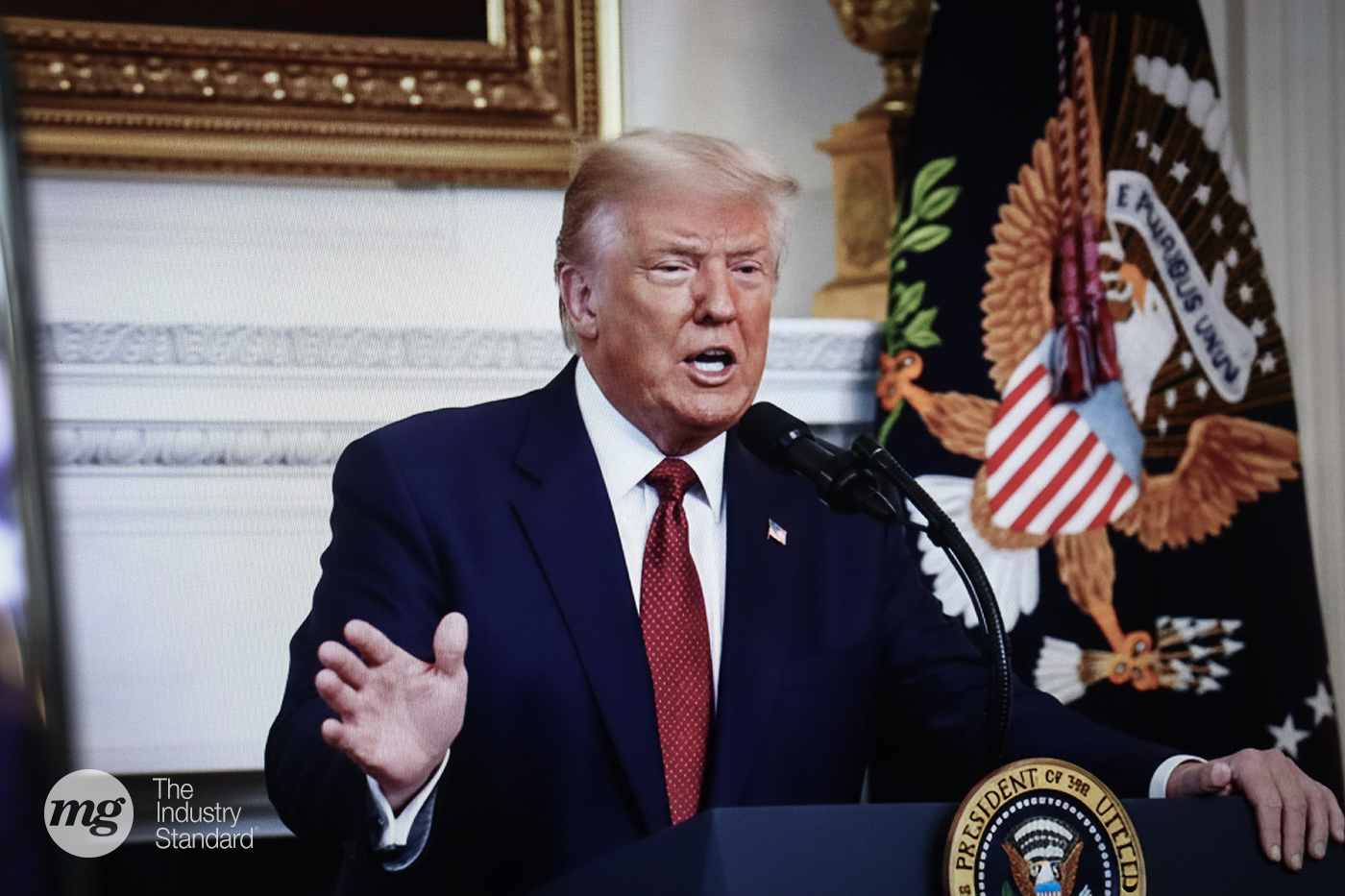
WASHINGTON – President Donald Trump on Thursday signed an executive order directing the U.S. Attorney General to expedite the process of rescheduling marijuana from Schedule I to Schedule III under the Controlled Substances Act — a move the president called “common sense” that would have a “tremendously positive impact.”
What the executive order actually does
The order seeks to finalize a 2023 recommendation by the U.S. Department of Health and Human Services calling for cannabis to be rescheduled. However, the executive order does not itself reschedule the plant. Under federal administrative procedure, the Department of Justice — or its designee, the Drug Enforcement Administration — must complete a formal rulemaking process that includes a public comment period, any requested hearings, and publication of a final rule in the Federal Register before rescheduling takes effect.

According to a White House fact sheet, the order also directs HHS to develop research methods utilizing real-world evidence to improve access to hemp-derived cannabinoid products, and instructs White House staff to work with Congress on legislation that would allow Americans to benefit from full-spectrum CBD products while restricting products that pose serious health risks.
Separately, the Centers for Medicare and Medicaid Services has proposed a rule that would narrow the current blanket prohibition on cannabis products under Medicare Advantage, potentially allowing coverage for hemp-derived products that comply with both state and federal law. However, Food and Drug Administration regulations classifying CBD as an unapproved food additive may limit which products actually qualify for coverage.
The executive order comes after a lengthy bureaucratic process. The Biden administration’s HHS first recommended rescheduling in 2023, finding that marijuana has a “currently accepted medical use” — the first time a federal health agency had reached such a conclusion. The FDA reviewed medical marijuana research and found credible scientific support for its use in treating anorexia related to medical conditions, nausea and vomiting, and pain.
According to the White House fact sheet, 40 U.S. states plus the District of Columbia now have state-sanctioned medical cannabis programs, with more than 30,000 licensed health care practitioners authorized to recommend medical marijuana for more than six million registered patients across at least fifteen medical conditions.
Why 280E tax relief matters to cannabis operators
Rescheduling would not legalize marijuana federally, but it would remove cannabis from the most restrictive category under the Controlled Substances Act. Industry analysts say one of the most significant practical impacts would be relief from Internal Revenue Code Section 280E, which prevents businesses handling Schedule I or II substances from deducting standard operating expenses. The restriction has resulted in some cannabis businesses facing effective tax rates as high as 80 percent.
“280E is not an abstract policy issue,” said Cy Scott, co-founder and chief executive officer of cannabis industry data firm Headset. “It directly determines whether many otherwise healthy, well-run businesses can stay open. Because the tax effectively applies to gross profit rather than true operating income, a significant share of cannabis retailers today are operating at or near breakeven after federal taxes. Removing 280E would create an instant improvement in cash flow, allowing operators to stabilize their businesses rather than simply survive quarter to quarter.”
Improved cash flow and increased stability would bring other benefits, as well. “When free cash flow begins to resemble that of other regulated industries, capital can be underwritten with greater confidence,” said Darren Gleeman, managing partner at MBO Ventures. “That shift is likely to bring private credit and deal activity back gradually — not overnight, but meaningfully… Cleaner cash flow supports higher valuations and more flexible transaction design.”
The rulemaking process is already well underway. The DEA published a notice of proposed rulemaking in May 2024 and received more than 42,000 public comments. Administrative hearings were scheduled to begin in December 2024, but those proceedings were postponed on the eve of Trump’s inauguration — in part because pro-rescheduling parties alleged the agency exhibited bias toward keeping cannabis a Schedule I drug.
Why congressional Republicans are pushing back
Despite the president’s support, the executive order has drawn sharp opposition from within his own party in both chambers of Congress.
In the Senate, nearly half the Republican Conference sent a sternly worded letter warning the executive order poses serious health and economic threats to the nation. The letter was spearheaded by Sen. Ted Budd (R-N.C.) and signed by members of GOP leadership including Senate Republican Whip John Barrasso (R-Wyo.), Senate Republican Conference Chair Tom Cotton (R-Ark.), and Senate Republican Policy Committee Chair Shelley Moore Capito (R-W.Va.). Former Senate Majority Leader Mitch McConnell (R-Ky.) and former Senate GOP Whip John Cornyn (R-Texas) also signed on.
The senators argued that marijuana should remain classified as a Schedule I drug because of “its high potential for abuse and its lack of an FDA-approved use.” They also made an economic argument, contending that rescheduling would undermine Trump’s manufacturing agenda. “We cannot reindustrialize America if we encourage marijuana use,” they wrote. “America’s workplace and America’s roads are endangered by marijuana use.”
The senators estimated 280E relief would save cannabis businesses approximately $2.3 billion annually — funds they warned would be used to increase marketing and expand operations into more states.
In the House, a group of 26 Republicans led by Rep. Pete Sessions (R-Texas) and House Freedom Caucus Chairman Andy Harris (R-Md.) sent a similar letter urging Trump to abandon the effort.
“We write to urge you to oppose rescheduling marijuana, a harmful drug that is worsening our nation’s addiction crisis,” the House lawmakers wrote. “Reclassifying marijuana as a Schedule III drug will send the wrong message to America’s children, enable drug cartels, and make our roads more dangerous.”
A White House official responded to the Republican opposition by emphasizing the order’s limited scope. “The President is committed to expanding medical research into promising treatments for American patients,” the unnamed official told Fox News. “Today’s EO does not legalize recreational marijuana use, nor does it pave the way to recreational marijuana use.”
The road to final rescheduling remains uncertain. While the executive order directs the Attorney General to “expedite” the process, the postponed hearings still must be resolved and a final rule issued. Some observers estimate the process could take 60 to 90 days under favorable conditions, though legal challenges from either cannabis reform opponents or industry stakeholders concerned about regulatory implications could extend the timeline.
Congressional action also remains a possibility. Republicans opposed to rescheduling could attempt to pass legislation blocking the regulatory process under the Congressional Review Act, though such a measure would face uncertain prospects given the president’s support for the policy.
What this means for hemp, CBD, and medical research
The executive order also addressed the recent federal budget legislation that redefined hemp in ways that will broadly ban consumable hemp products containing THC or other intoxicating cannabinoids, set to take effect in November 2026. The order urges Congress to examine updating the definition of hemp to ensure that full-spectrum CBD remains accessible to patients — but accomplishing that goal would require Congress to revisit the legislation it passed just last month.
“Any cannabis reform benefits the entire plant,” said attorney Jonathan Miller, who represents the U.S. Hemp Roundtable. “We consider this executive order to be a direct rebuke to the hemp ban that was malignly attached to legislation that reopened the government [in November]. This also gives strong impetus to efforts to extend the ban’s moratorium an additional eighteen months to allow proper time for Congress and the Trump administration to develop the regulatory framework that ensures the safe provision of hemp products while cracking down on the bad actors peddling the unsafe products that the executive order calls out.”
What happens next — and how long it could take
The executive order sets a clear direction, but significant questions remain — including whether the administration will restart the postponed DEA hearings or seek an alternative path to finalize rescheduling. With nearly half of Senate Republicans on record opposing the move, the industry may be waiting months to learn whether this policy shift survives the road ahead.