Our review of Metroid Prime 4: Beyond, developed by Retro Studios. Available now for Switch (Reviewed) / Switch 2.
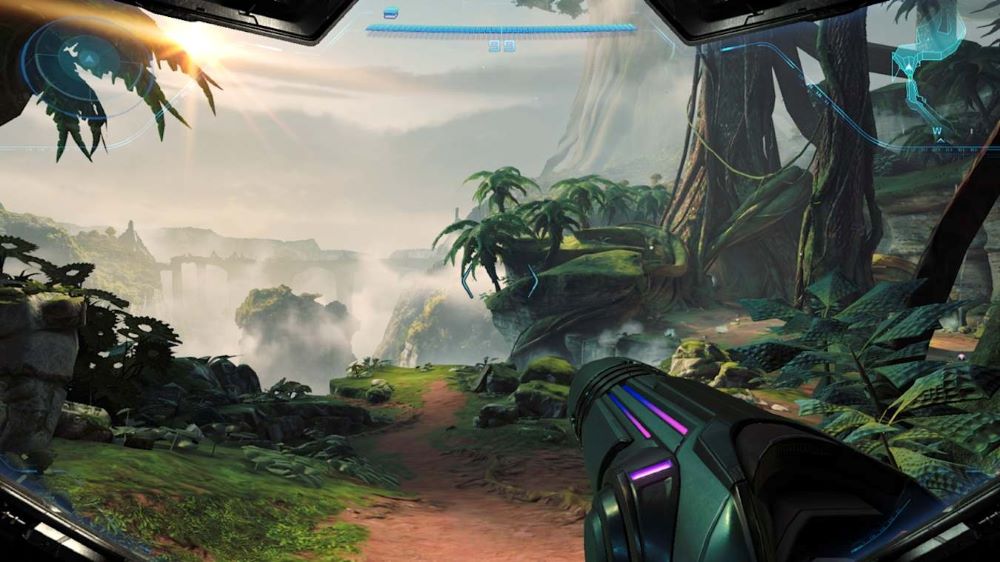
WHAT IS IT?
The loooooooooooo [deep breath] oooooooooong-anticipated sequel to the great First-Person-Adventure titles of the 2000s.
IS IT GOOD?
When it’s allowed to be Metroid, it’s great. But it’s not always allowed…
WHO SHOULD PLAY IT?
Samus mains.
RETURNS
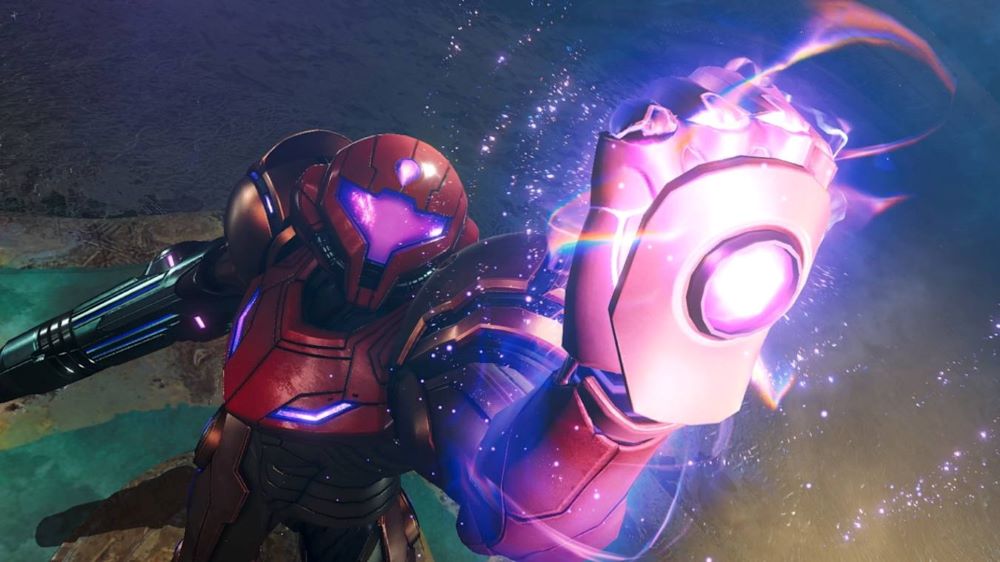
Retro Studios’ sterling pedigree – they’re the talent behind the original Metroid Prime Trilogy, plus the excellent Donkey Kong Country Returns and Donkey Kong Country: Tropical Freeze – is one of just several reasons fans have been excitedly waiting for a new Prime since the original Trilogy concluded in 2007.
What makes the Prime games – including this latest entry – so interesting is that, while they superficially resemble a First-Person-Shooter, their gameplay and design philosophy more closely resemble a classic exploratory-adventure game. Obviously indebted to the side-scrolling Metroid titles – which have merrily rolled along a separate, equally well-received track – the thrill in Prime lies not in combat, but in exploring an easter egg-laden world laden with powerups, hidden paths, and the powerups which help access ever more of those hidden paths.
Every Prime game starts the same way: protagonist Samus is dropped onto a new alien world, stripped of the armoury’s worth of abilities she’d gained in the previous game, then sent exploring across a sprawling, beautifully interconnected world – in which most paths are, at first, locked behind mechanisms which can only be accessed using very specific equipment, to be unlocked later.
Prime is a series which thrives on backtracking: each time you gain a new weapon, a new power, it’s an invitation to trek back to where you saw a door or a pathway which can only be accessed with that new thing. Which in turn invites a whole new detour to the next new ability, next unlocked door.
Which, in Prime 4, is also a problem.
ECHOES
Metroid Prime 4 must have the most arbitrary, unnecessary setup of any Prime game to date.
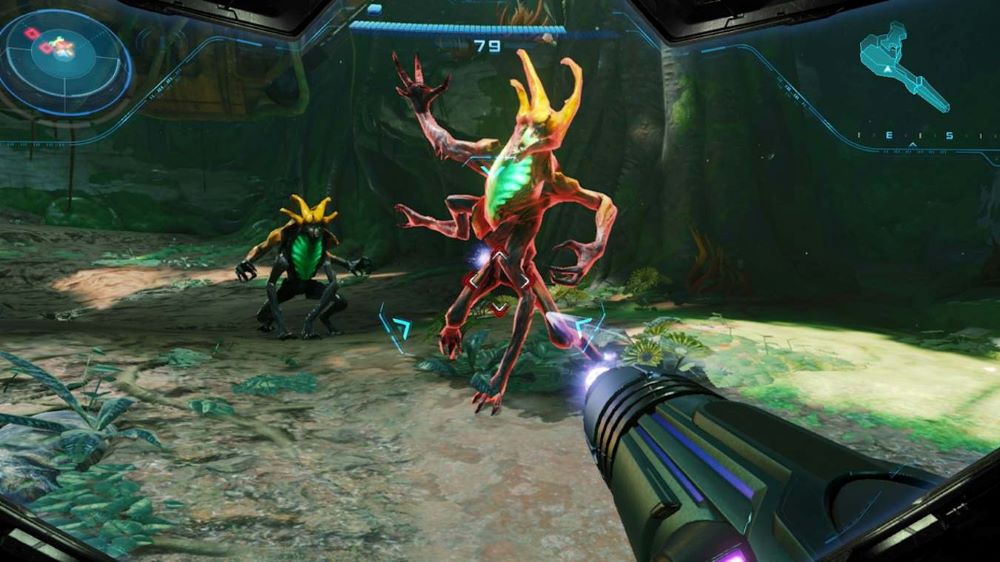
Launching thrillingly with a pitched battle in which Samus is called upon to defend allies against an invading enemy force, the game quickly throws all that out the window by randomly transporting Samus to an entirely different planet, accompanied by an (increasingly annoying) squad of highly talkative allies.
This dynamic – the teammates constantly chattering in Samus’s ear, loudly and repetitively commenting on what’s happening, where to go next – is a new one, for both the Metroid and Prime series. One can see where Retro was heading with this, introducing a sort of Metal Gear-style support team so Samus wouldn’t have to face her travails alone. Except that, by design, Samus has always been a lost, lonely protagonist.
That’s part of the Metroid charm: the thrill of arriving somewhere new, hopelessly lost and outmatched, only to eventually, methodically, piece together a sense of the world. Metroid games are (or are supposed to be) lonely, oppressive, eerie, the player trapped in an alien landscape, never quite knowing what lurks around each corner. Going from helpless and confused to overpowered and confident is one of the great feelings of Metroid/Prime.
Handing Samus a bunch of annoying colleagues, constantly cutting in while you’re admiring the latest alien vista, dramatically undermines what makes Metroid special. It’s just not a good fit, and it becomes an increasing plague as the hours wear on.
Another equally plaguing addition is the vast, boring overworld, a more-or-less empty desert which the player is forced to repeatedly traverse on motorcycle. While Metroid has long thrived on backtracking – it’s baked into its DNA – that backtracking has generally involved quick movement from A to B to C, the process of exploration itself rewarded as you play around with your growing slate of abilities. By planting Samus on a bike and making this desert so bland, Beyond jettisons one of the defining aspects of Metroid. Imagine a Souls game, except instead of an intricately interconnected world, each level is separated by a vast blank space – that should give you an idea of what we’re working with here.
OTHER M
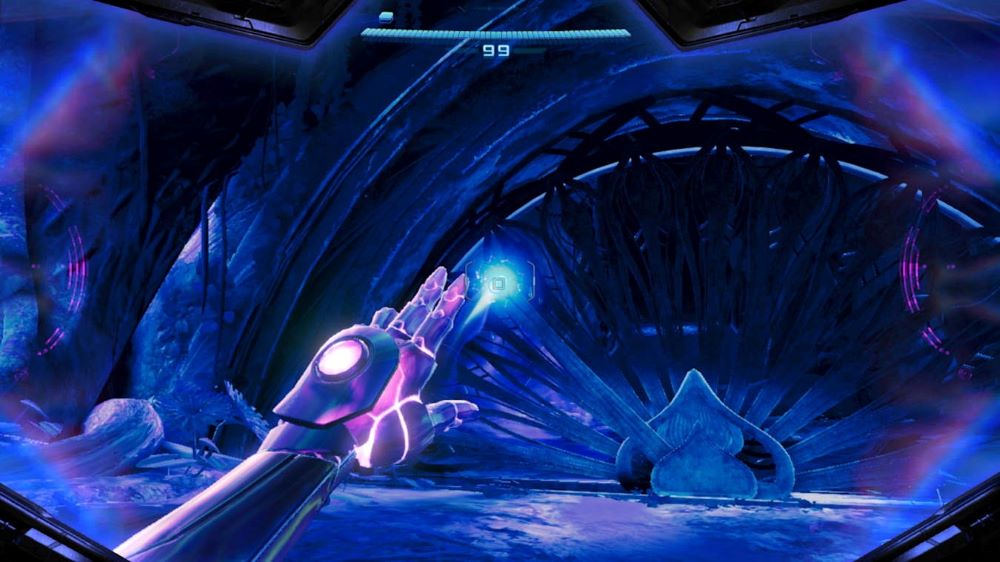
Beyond isn’t a terrible game – that’s almost impossible for a series and developer, with this pedigree. But it’s often an awkward one, betraying what made Metroid great in favour of unwarranted additions which have all the stench of corporate interference. (That’s especially true for the talkative sidekicks.)
Still, there’s fun to be had for those with the patience and the fortitude to move past its shortcomings. The not-FPS controls are still interesting (though I wish the rapid-fire didn’t automatically switch to a charge shot after a few seconds), the wealth of abilities are still impressive, and its individual areas/zones are fun to explore. The boss fights are, as always, pretty cool. It also has some (inadvertently?) funny, mildly-NSFW Gigeresque design choices, in keeping with a proud tradition of Metroid borrowing freely from Alien.
Finally, and I do consider this a bonus, it’s not particularly long – perhaps ten hours if you’re not trying to find or unlock everything – so its worst aspects never overstay their welcome.
Still, after such a long time waiting for a proper new Prime, this feels like more of a detour. Down a vast, empty road.
***
Final score: 7/10 screw attacks.
Visit the official website for Metroid Prime 4 here.