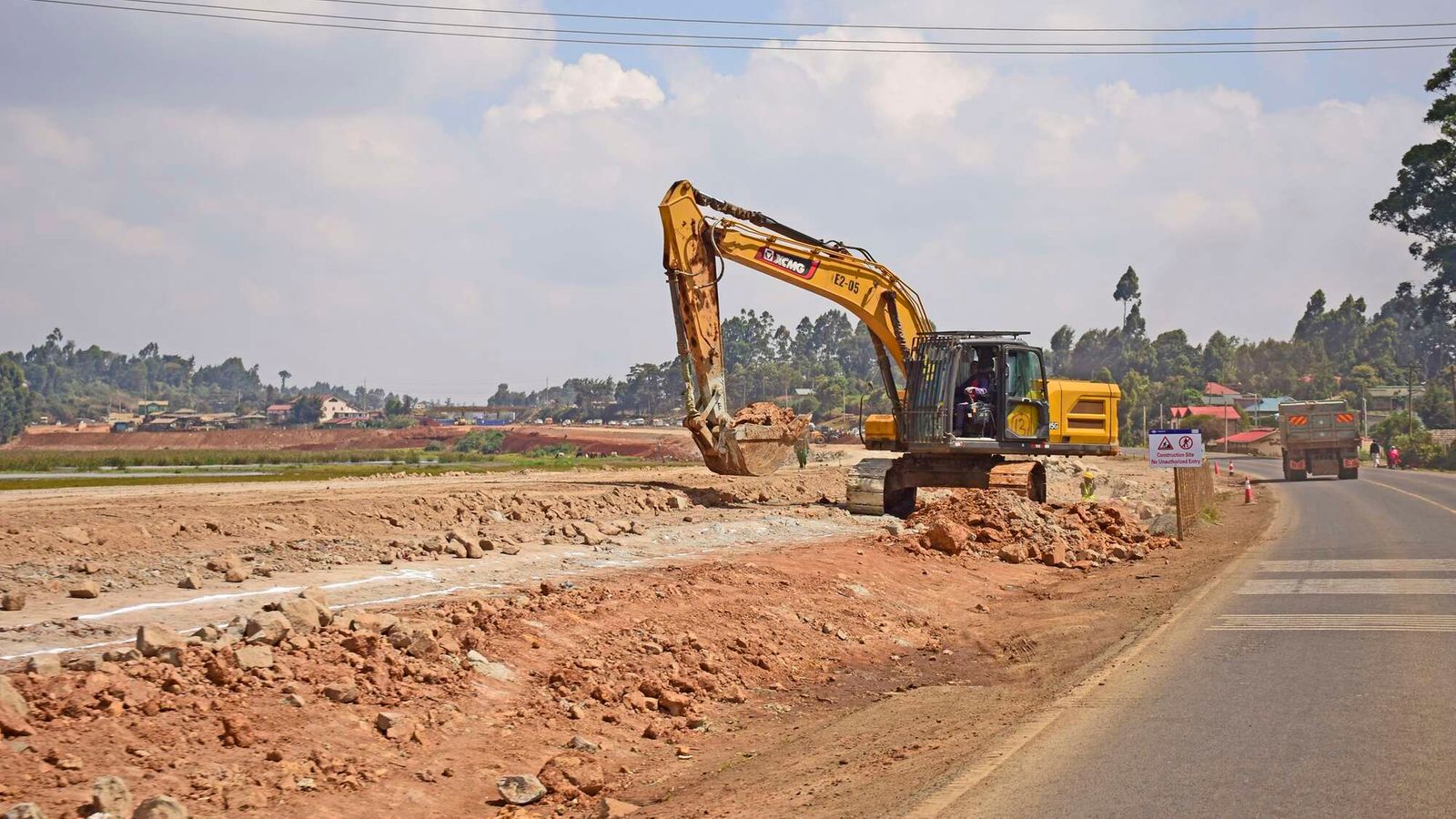
Taxpayers face a potential Sh180.73 billion liability if Kenya terminates the 30-year contract for the Rironi–Mau Summit highway project.
The exposure represents nearly 44 percent of the Sh413.81 billion bill for terminating existing and advanced public-private partnership (PPP) projects in the year that starts July 2027, according to latest budgetary documents published by the Treasury.
The Treasury estimates in the draft 2027 Budget Policy Statement that cancelling the Rironi- -Naivasha–Gilgil and Rironi–Mai Mahiu–Naivasha sections could trigger Sh93.38 billion in payments, while the Gilgil–Nakuru–Mau Summit phase carries another Sh87.35 billion risk.
The Treasury, however, cautions against interpreting the figures as an expected bill, saying the estimates represent maximum potential exposure if contractual events, mainly early termination, trigger compensation to the contractors.
“The likelihood, value and timing of termination payments cannot be determined with certainty in advance, and it is unlikely that all projects would be terminated at the same time,” the Treasury officials write in the report.
The risk has precedent after the current administration in 2025 terminated a contract awarded to a French consortium led by Vinci Highways to expand the Nairobi–Nakuru–Mau Summit highway before construction works began. Kenya paid the consortium Sh7.3 billion to settle the dispute and avoid a potentially costly legal battle in London. The contract had been signed in Paris in 2020 during a visit by then President Uhuru Kenyatta.
The deal envisaged expanding the existing road into a multilane highway, with the consortium recovering its investment through toll charges. The Ruto administration later sought to renegotiate terms over concerns that insufficient traffic could leave taxpayers bearing the financial risk.
After negotiations failed, the government cancelled the agreement and turned to Chinese contractors.
The change followed President William Ruto’s visit to Beijing in April 2025, with the construction of the highway divided between two project teams. China Road and Bridge Corporation (CRBC), working with the National Social Security Fund (NSSF), is responsible for the Rironi–Naivasha–Gilgil and Rironi–Mai Mahiu–Naivasha sections. Their combined project, which is under construction, is valued at Sh96.382 billion to be recovered through a 30-year contract term.
The second phase, Gilgil–Nakuru–Mau Summit, is being developed by Shandong Road and Bridge International (SDRBI) at a cost of Sh86.346 billion under a 30-year contract term.
The Treasury says the construction of this phase was under way, but financial close was still pending when the report was compiled and published last week.
The two phases account for about 43.7 percent of the Sh413.805 billion maximum exposure for existing and advanced PPP projects in the financial year 2027/28.
The Nairobi Expressway, operated under a 30-year contract, carries the next-largest individual exposure at Sh72.040 billion next financial year from Sh103.76 billion in the year to June 2025 and Sh87.58 billion last June.
The 27.1-kilometre double-decker, whose value is put at Sh86.8 billion, reached financial close in November 2021 and has been in operation and maintenance by Chinese operator Moja Expressway since May 2022.
The smart driving licences and associated services contract, being implemented by Pesa Print Ltd and funded by KCB Bank, carries a Sh50.220 billion in potential exposure against a project value of Sh45 billion. The Treasury says the 21-year contract was signed on June 30, 2026, and lists the construction of the smart driving licences project as being underway.
The Africa50–PowerGrid power transmission-lines project, whose cost is estimated at Sh41.6 billion under a 30-year contract term, has an exposure of Sh41.049 billion next financial year, rising to Sh43.943 billion the following year.