*I’ve no regret on subsidy removal, we can’t go back to Egypt — Tinubu *ADC takes on Oyedele over N4,000/$ claim *Ask him to provide evidence, stop using fear to discourage debate *Economy would have collapsed without Tinubu’s reforms, says Shettima *Assures food prices’ll come down soon
By Clifford Ndujihe, Johnbosco Agbakwuru & Luminous Jannamike
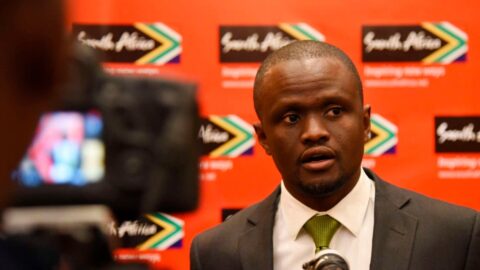
LAGOS — The Minister of Finance and Coordinating Minister of the Economy, Taiwo Oyedele, has warned Nigerians against returning to petrol subsidy.
Read Also: Subsidy removal: I’ve no regret, we can’t go back to Egypt — Tinubu
Oyedele said the return could trigger capital flight, undermine investor confidence and push the naira to N3,000, N3,500, or even N4,000 per dollar.
He disclosed this at a press briefing of the International Monetary Fund and World Bank Annual Meetings in Bangkok, Thailand, yesterday.
In a quick counter, the Presidential Campaign Council, PCC, of the African Democratic Congress, ADC, challenged the minister to produce models showing that giving Nigerians fuel subsidy will hurt the Naira, adding that the Federal Government is discouraging debate on fuel subsidy removal through fear mongering.
ADC presidential candidate, Alhaji Atiku Abubakar, has promised a return to fuel subsidy if elected, to cushion the hardship faced by the citizenry.
Oyedele’s argument
The minister said investors had repeatedly questioned whether government would abandon its reforms ahead of the next election cycle.
Oyedele, who ruled out reversing the government’s economic reforms, maintained that any signal that President Bola Tinubu’s administration is contemplating reinstating subsidy will immediately affect financial markets, raise borrowing costs and worsen economic pressures on households.
“In all the meetings I have had, I came to a conclusion that the markets, including the domestic market, which you can read from the capital market, and the international market, have largely written off the opposition in Nigeria as being unserious.
“If, for any reason, the President were to say we are merely considering the return of fuel subsidy, capital would react immediately. Air fares would struggle, the naira would come under severe pressure, potentially moving towards N3,000, N3,500 or even N4,000. The very fuel people want subsidised would become far more expensive in naira terms,” he said.
Oyedele warned that capital flight could extend beyond foreign investors, as wealthy Nigerians, business owners and middle-class investors might also seek refuge in dollars, further increasing demand for foreign exchange.
He stressed that ordinary Nigerians will ultimately bear the consequences through higher import costs, rising prices and increased economic hardship.
The minister also rejected the description of the Nigerian National Petroleum Company Limited’s temporary reduction in petrol retail margins as a return to subsidy, explaining that it is a commercial decision rather than a payment funded by public resources.
He argued that a company reducing its profit margin to make a product more affordable should not automatically be regarded as receiving or providing a subsidy.
On May 29, 2023, in Abuja, Tinubu announced removal the subsidy on petroleum products, and later floated exchange rate of the Naira, saying the national budget has no provision for subsidy from June 2023.
Subsidy removal: I’ve no regret, we can’t go back to Egypt — Tinubu
President Bola Tinubu said yesterday he had no regrets over removal of fuel subsidy, insisting that Nigeria could not return to “Egypt.”
He also commended his son, Seyi, who is Patron of the City Boy Movement, a political campaign structure for his re-election.
The President spoke at a forum, titled “Together till 2027: An Evening with Original City Boy,” organised by the City Boy Movement, in conjunction with the “Relax, Tinubu Is Fixing Nigeria” movement, at the Old Banquet Hall, Presidential Villa, Abuja.
He said: “When I walked into this hall, I did not see a crowd. I saw Nigeria. I saw why I ran for the presidency of this country. I saw why I wake up every morning to work. I saw the reason. Now, I have no regret. I saw the future that belongs to you.
“I cannot describe the situation or the elation I felt hearing from one or two of you. The words I do not often say enough, I must say tonight: thank you very much. Thank you for standing with me. The road we have walked these past three years has not been easy. We took hard decisions that you heard from Kashim Shettima.
“I could listen to my political opponents promising a return to subsidy. Most of all, sometimes I remember my scripture studies, both in the Bible and the Holy Quran. When Moses left Egypt, they faced a challenge, and the Red Sea parted and gave way.
“You cannot ask Moses to go back to Egypt. We wake up with ideas, original thoughts and deep thinking to move this country forward. With your energy and support, we will never go back to Egypt.
“No regrets. Before I left home, I saw one of the greatest Chinese economic news reports, that the economy was growing by about 4.6 per cent. We are on the right trajectory. We are in good company. The economy is growing steadily. You will have a future, a future to believe in.
“Nigeria must win this election before any candidate does. You are not campaigning for me. You are campaigning for your own future, and that future is Renewed Hope. There is nothing that will push us back.”
The President noted that when he took over the helm of affairs, there was no money, and the country was owing airlines.
“They were almost cutting their flights to Nigeria. Our foreign reserves were nothing. We were printing currency as if there was no tomorrow. But rather than looking back at the flaws of the past, I took the lesson. My first lesson was that I could not avoid assuming the responsibility and liabilities of my predecessor. That was a challenge.
“We rebuilt our tax system. Many said young Nigerians would turn their backs on reform. They were wrong. You are here. I came and promised one thing: that I would stop the unending strikes by ASUU, the Academic Staff Union of Universities, so that a four-year course would be completed in four years in the universities.
“We understood that a nation cannot borrow its way to greatness. You were patient when patience was hard. You defended this administration in the markets, on the campuses, in the motor parks and on social media.
“Often, when it was not popular to do so, I saw it, I noticed it, and I will never forget it. I say thank you once again to the City Boy Movement. All of you have done something new in Nigerian politics.
“You did not just gather people. You built a structure with millions of real, verifiable members, with a presence in every state, every local government, every ward, down to the polling unit. You built a call centre that speaks to young Nigerians every day and listens to whatever their communities need. City Boy Care reaches members where they live.
Excellent thinking
“That is not noise. That is organisation. That is excellent thinking. That is the kind of seriousness this country needs from its young people, and I am very proud of you. I must say so. Relax: Tinubu is fixing Nigeria.”
President Tinubu said the movement had carried its promise to every corner of the country and had told the story of the work his administration was doing when others chose to tell only half of it.
“I say thanks to every youth support group at home and abroad, from Lagos to Maiduguri, from Karu and Akwanga to Sokoto, and from London to Houston to Toronto. You carry different names, different colours and different slogans.
“No promise can be bigger than that of a better Nigeria — one Nigeria, united for one purpose, with great vision, commitment to duty, reality and fidelity to friendship. You have made an enormous contribution. I can go back home confidently tonight and sleep soundly.”
The President assured the City Boy Movement, especially the youths who had stood with him, that they would not be left behind.
“The future of this country does not belong to me, and it does not belong to my generation. It belongs to you.
“I am very proud, once again, that when I signed the Student Loan Act, I had no regrets. Today, more than a million students have been supported through NELFUND.”
On his son, Seyi, he said: “He is running after his father. Your young colleagues would have seen that you are investing your time effectively. We are with you. Thank you. You did it humbly. You did not ask for a title or an office. You went to the young people, your age mates, your group. You listened to them and organised them.
“I am proud of all of you. But I will tell you what every father tells a son: you have only started. Do more, not less. Serve harder. Set an example that your own children, my grandchildren, will be proud to follow.”
He advised the youths to ensure that every young person they knew had a Permanent Voter Card and used it.
“Tell them what we have done, and tell them what we will do. Campaign with your ideas. I came and removed subsidy on my first day. No Nigerian will go bankrupt. Yes, there was nothing left to pay for subsidy,’’ Tinubu said.
Economy would have collapsed, if…. — Shettima
On his part, the Vice President, Kashim Shettima, said Nigeria’s economy would have collapsed had President Tinubu not taken what he described as far-reaching decisions.
He said but for the tough decisions, critics would, by now, be writing epistles about a collapsed economy in the comfort of their homes in Dubai and New York.
Shettima, who credited the President’s decisions for the economy’s recovery, said: “The President took those far-reaching decisions. He had the courage of conviction and the knowledge to take those far-reaching decisions that repositioned the Nigerian economy, so that now the economy grew by 4.43 per cent in the last quarter.
“Most importantly, our foreign reserves are now hovering around the level of $60 billion. Remember how far we have come. It is only those who have been in the deepest valley that will appreciate how magnificent it is to be on a mountain top.”
To the critics of the administration, Shettima said: “The same people who are crying wolf, if the President had not taken those far-reaching decisions, wallahi, I am not talking to you as a politician; I am talking to you as a Nigerian, our economy would have collapsed.
“These people, by now, would be writing epistles about a collapsed economy from the comfort of their homes in Dubai or New York, or in marriage with their young Moroccan wives. I have not mentioned anybody’s name.”
Hardship could’ve been worse
He admitted that Nigerians had endured hardship but said it could have been worse.
“Your Excellency, distinguished ladies and gentlemen, the President has to be commended, not demonised.
“Yes, Nigerians have gone through some tough times, but it could have been worse. Be reassured that in the coming weeks, the President will come up with robust responses to agricultural challenges, and the prices of foodstuffs will certainly come down,” he stated.
The vice president said efforts were being made to reposition the economy, citing the Nigerian Education Loan Fund and investments in infrastructure, and urged the youth to carry the message to the streets.
“I urge the youth of Nigeria. I beseech thee. I implore you to go out to the streets and tell the truth to other Nigerians,” he stated.
On his part, the Director-General of the City Boy Movement, Francis Shoga, said: “I stand before you today on behalf of the leadership and the entire members of the City Boy Movement.
“Mr President, we stand before you with a clear, powerful and unshakable message: the youths of Nigeria are ready. We are ready to work. We are ready to serve. We are ready to live, and we are ready to take purposeful action for the progress, unity and prosperity of our great nation.
“We are not a generation waiting helplessly on the sidelines. We are not a generation without direction, courage or purpose. We are a generation prepared to rise above every limitation, organise with discipline, confront challenges with courage and build the Nigeria of our dreams.
Foot soldiers
“Your Excellency, we are your foot soldiers, ambassadors of hope, defenders of our national unity and committed partners in the great task ahead of national transformation. Whatever young Nigerians have found, we will carry the message of Renewed Hope.
“We will inspire confidence, promote patriotism, encourage responsible participation and transform belief into action. This is our calling. This is our duty. And this is our moment to serve Nigeria.
“Your Excellency, the City Boy Movement draws its inspiration from the courage, persistence, patriotism, visionary leadership and bold decision-making that have defined your political journey and public service.
“Our mission is to inform, engage, inspire and empower Nigerian youths so that they understand the direction of government, recognise available opportunities and participate confidently and responsibly in national development.”
ADC PCC slams Oyedele
Faulting Oyedele, Director of Media and Publicity of the ADC Presidential Campaign Council, Kola Ologbondiyan, challenged him, to publish the economic model behind his warning that a return to fuel subsidy could push the naira to ₦4,000 per dollar.
Ologbondiyan accused the Federal Government of using fear to discourage debate on fuel subsidy, insisting that Nigerians deserve evidence, not alarming projections, on the potential economic consequences of restoring the policy.
Speaking to Vanguard, he described the minister’s warning as scare-mongering and demanded that the government explain how it arrived at the projected exchange rate.
“The Minister of Finance is merely scaremongering. He cannot claim that a return to fuel subsidy will cause the naira to depreciate to ₦4,000 to the dollar without showing Nigerians the model behind that projection,” he said.
Ologbondiyan questioned the reliance on investors’ concerns to oppose a subsidy return, challenging the government to identify those behind the projections and disclose their calculations.
“They should show Nigerians who is making these claims and explain how they arrived at an exchange rate of ₦4,000 to the dollar if fuel subsidy is reintroduced,” he said.
He also argued that Nigeria was not the only country to consider or operate a production subsidy, and maintained that the proposal should be assessed on its economic merits rather than dismissed through dire forecasts.
“I do not believe this projection is realistic. It is fantasy,” he said.