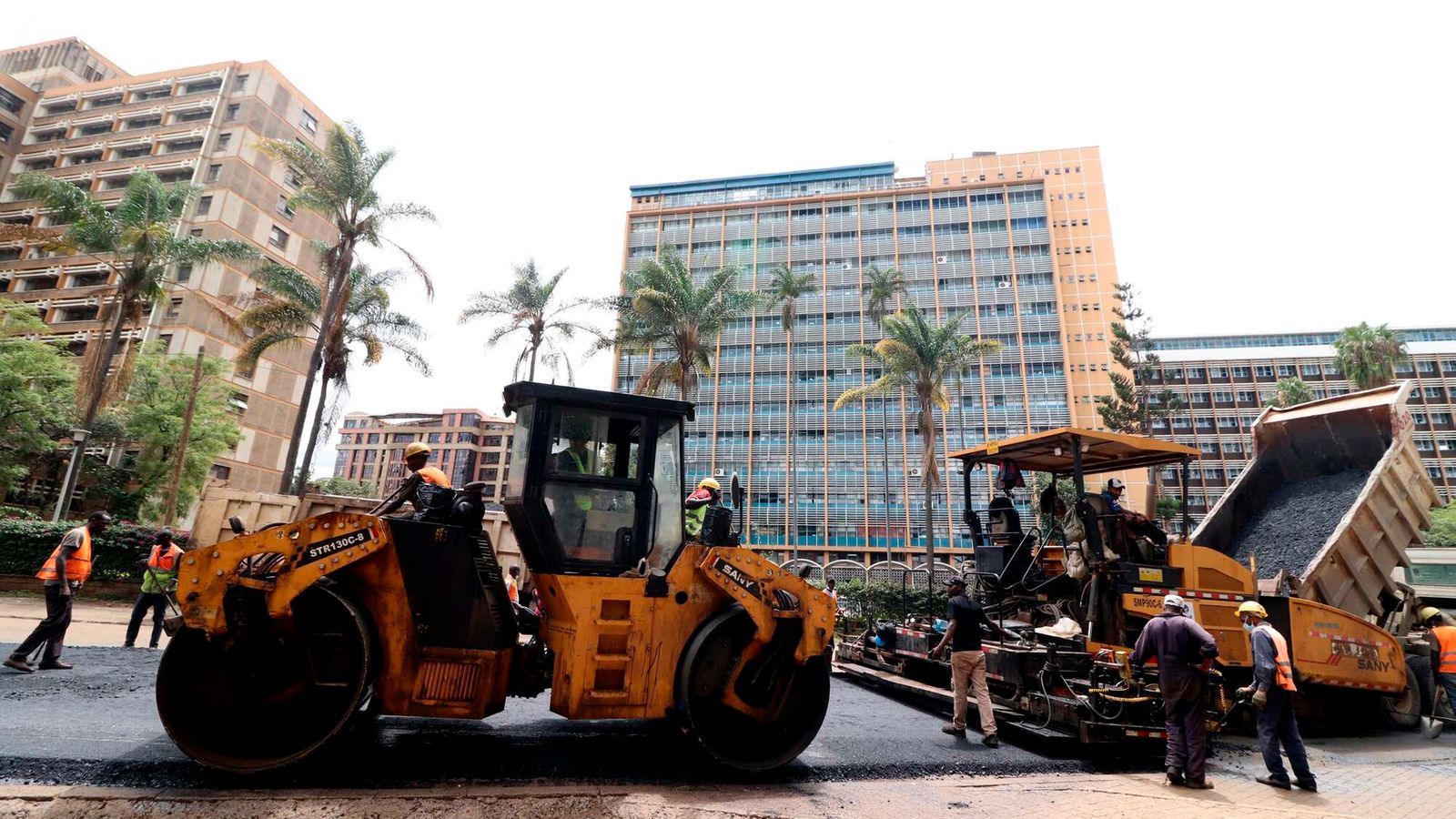
The government has cut outstanding road sector bills by Sh68.59 billion, largely using fuel levy backed financing to clear historical obligations to contractors that reached a record high two years ago.
The latest budgetary review report shows that pending bills for the State Department for Roads fell by 23.5 per cent to Sh98.17 billion in the financial year ended June, extending a decline that began after the backlog peaked at Sh166.76 billion in 2023/24.
The arrears accumulated as the government failed to provide enough money to pay for road works. Some contractors abandoned projects, while others faced the risk of having their assets auctioned by financiers, including banks, over unpaid loans.
The latest figures show that pending bills fell by Sh30.19 billion in the year to June, following a Sh38.40 billion reduction in the previous financial year.
The combined decline amounts to 41.1 per cent of the peak backlog, helping ease cash flow pressures that had left contractors struggling to finance work, pay suppliers and service bank loans.
The State Department for Roads credits the securitisation of the Road Maintenance Levy Fund (RMLF) with helping settle outstanding payment certificates and accelerating road construction.
“Securitisation of the Road Maintenance Levy Fund (RMLF)…enabled the settlement of pending payment certificates and accelerated the implementation of road projects,” the department said in a budgetary report to the Treasury.
Under the securitisation scheme, the State has committed part of the RMLF collections to investors, using future fuel levy receipts to raise money to settle historical road sector obligations. The arrangement uses cash flows from underlying assets to secure financing from lenders or investors.
President William Ruto’s administration raised the road maintenance levy from Sh18 to Sh25 per litre of petrol and diesel in July 2024, increasing the amount collected for road infrastructure.
In April 2025, it committed Sh7 from every Sh25 collected per litre to raise Sh175 billion through bank bridge loans and bonds. The money was intended partly to clear old road sector bills.
The Cabinet approved a further Sh5 per litre in November 2025, increasing the portion committed to investors to Sh12 from every Sh25 collected. The money will be used to repay financing secured against future levy income.
The arrangement has helped the government settle some of the old bills without relying entirely on annual budget allocations. However, committing future fuel levy collections to investors also leaves a smaller share available for other road needs.
President Ruto said in March that the government planned to bring the RMLF securitisation bond to the market and list it on the Nairobi Securities Exchange, allowing investors to trade the security.
“In the course of this year [2026], we will be bringing to the market the road maintenance levy fund securitisation bond, which has enabled us to settle the pending bills crisis that had stalled road projects everywhere in Kenya,” Dr Ruto said.
“The RMLF has raised for us Sh175 billion, and we will be bringing it here (to the Nairobi Securities Exchange) so people can trade it as well.”
The planned bond will help refinance part of the estimated Sh175 billion in bank loans used to clear historical road sector bills accumulated up to December 2024. Investors will receive payments from the fuel levy collections committed to the scheme.
Despite the reduction in arrears, the pace of road construction has slowed, with the department reporting that 2,089.25 kilometres were built in the three years to June 2026, compared with 3,805 kilometres in the preceding three years.
This represents a decline of 1,715.75 kilometres, or 45.1 percent.
The figures show that financing road projects through securitisation arrangements has yet to coincide with a return to the previous three year pace of road building.
The remaining Sh98.17 billion in pending bills also highlights the continuing pressure on contractors awaiting payment and the importance of ensuring that new project commitments are matched by adequate budget provisions.
The government is separately pursuing a broader settlement of verified pending bills. Last Friday, the Ruto chaired Cabinet approved payment of 28,726 verified claims worth Sh23.74 billion, covering bills of Sh50 million and below.