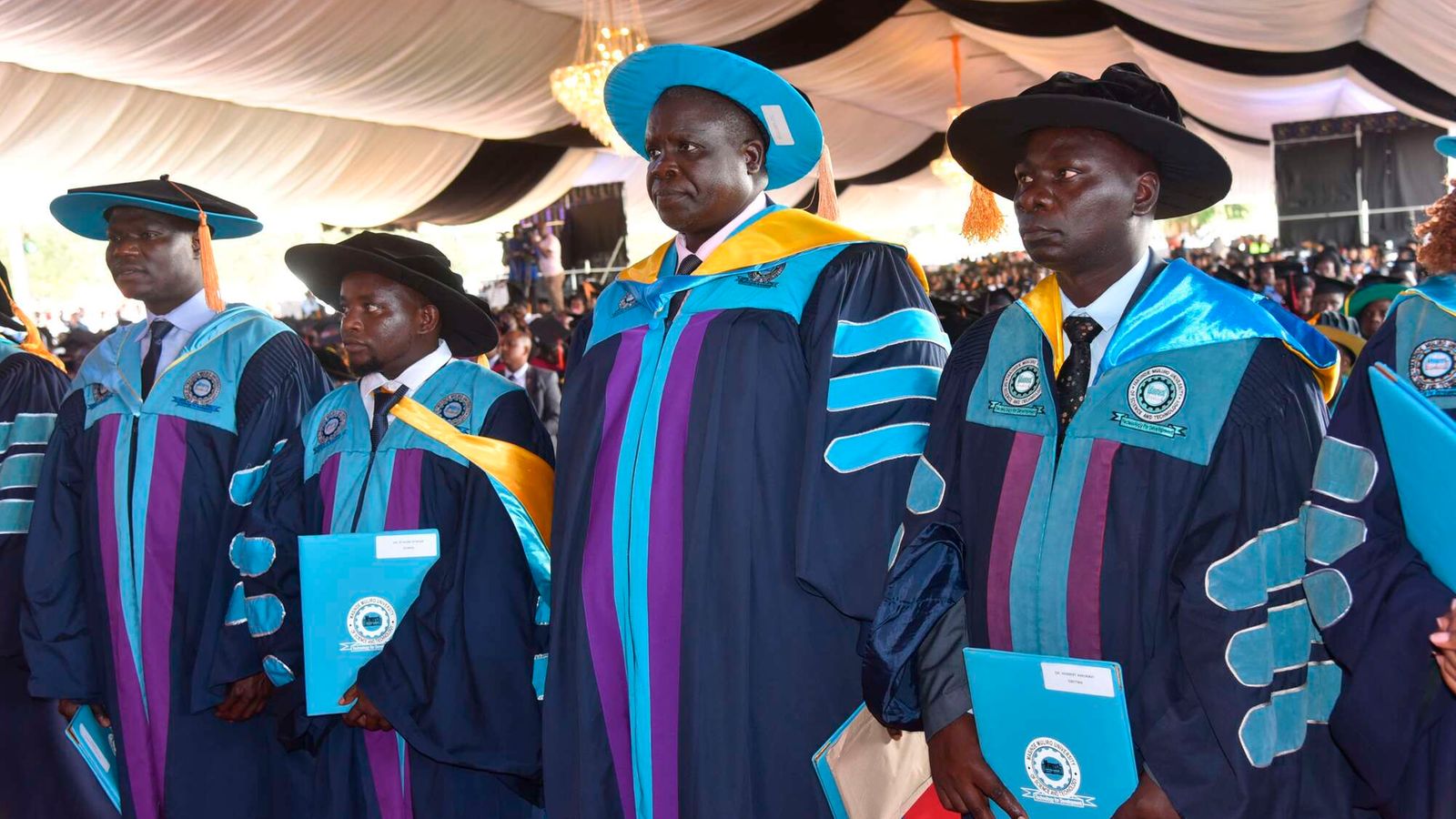
The number of PhD graduates fell 16.6 percent last year amid a crunch in research funding, which could worsen the faculty shortage of professors.
New disclosures from the Commission for University Education (CUE) show PhD graduates fell to 852 down from 1,022 in 2024, translating to a reduction of 170 graduates in one year.
The University regulator earlier reports indicated that the share of professors has been shrinking, while enrolment in undergraduate and Masters programmes has risen.
The commission warns that the faculty shortage looks set to dim the generation of knowledge and mentorship in the universities.
“The 16.6 percent single-year PhD decline is a concerning finding, potentially signaling reduced research funding or fewer supervisory positions,” said CUE.
“Policymakers should consider targeted postgraduate bursaries, research fellowships, and industry-linked doctoral programmes to arrest the PhD decline.”
Most public universities are struggling to meet their expenses, including staff salaries that have made lecturers’ jobs less attractive—hurting the talent pipeline.
Young graduates with Masters now prefer to seek careers outside universities as budget cuts at research universities have had a negative impact on the size of doctoral programmes.
CUE data shows lecturers declined from 6,627 in 2024 to 6,606 last year, while tutorial fellows fell from 3,117 to 2,970, raising questions about the pipeline for replenishing teaching and research staff.
Adjunct academic staff, by contrast, more than doubled from 758 to about 1,611, accounting for most of the overall increase in academic staffing, a shift that makes the composition of university workforces as important as their total numbers.
The decline in PhD graduates came as total university graduate numbers edged up to 124,905, exposing a growing contrast between expanding higher education output and the shrinking number reaching the highest academic qualification.
The figures show doctoral graduates accounted for just 0.7 percent of university graduates in 2025, compared with 0.8 percent the previous year.
The contraction was sharper among men, whose PhD graduations dropped from 615 to 472, while women’s numbers fell from 407 to 380 over the same period.
Women, consequently, accounted for 44.6 percent of doctoral graduates in 2025, up from 39.8 percent a year earlier, narrowing the gender gap despite declining numbers overall.
The drop in completions follows a reduction in doctoral enrolment, which fell 5.6 percent to 8,180 students in 2025 from 8,666.
This comes as separate data shows that only about 11 percent of students admitted at the PhD level complete their studies within the stipulated period of three years, against a national benchmark rate of 20 percent.
“There are several factors attributed to this including but not limited to inadequate support programmes and facilities in public universities, funding constraints, poor supervision, untimely feedback to students, uncoordinated irregular student-supervisor meetings and low level of qualified academic staff,” wrote contract management consultant Otieno Panya in a recent Business Daily commentary.
“Best practice requires that research supervision, especially at the doctoral level, should aim at providing a transformative experience, designed to initiate regular consultations, clear-cut and appropriate feedback, a supportive and collegial relationship, and professional mentorship.”
Doctoral graduates form the pool from which universities recruit future supervisors and research leaders, while supplying expertise for government policy, industry innovation and specialised professions.
The CUE report warns that sustained weakness in doctoral output could constrain universities’ ability to supervise future candidates, weaken original research, as well as limit Kenya’s competitiveness for international research funding and collaboration.
Kenya’s annual doctoral output also falls well short of a national target of 2,400 PhD graduates, cited in earlier CUE reporting, highlighting the scale of the gap facing policymakers and universities.
At 852 graduates, the country produced 35.5 percent of that annual target last year.
The concern comes as universities absorb growing student numbers, with total enrolment rising 12.5 percent to 707,150 in 2025, increasing demands on teaching staff, facilities and student support.
Academic staffing grew 6.8 percent to 16,434 during the year, but public chartered universities recorded a slight decline in academic staff even as they remained the largest employers.
The student-to-academic-staff ratio in public chartered universities worsened from 44.36 students per academic staff member in 2024 to 51.12 in 2025, increasing pressure on teaching and research supervision.
The report also records mixed research performance, with staff publications rising 12.5 percent to 6,018 in 2025, while student publications fell 25.1 percent and staff innovations declined 31.3 percent.
The report draws on data submitted through the university education management system, with 79 of the 83 institutions covered by the exercise submitting the required information.