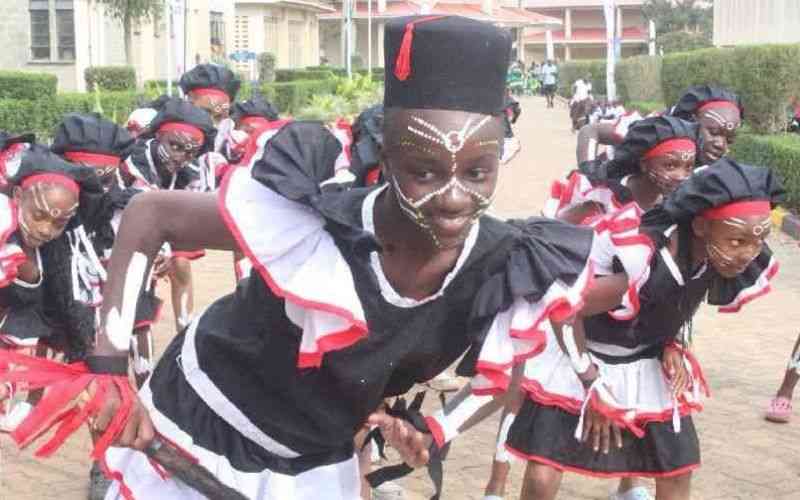
Rockside Academy students rehearsing during the National Music Festivals at Kibabii University in Bungoma on August 2, 2026 [Benjamin Sakwa, Standard]
Kenya’s music festivals are increasingly moving beyond school halls and major urban centres, giving communities outside Nairobi a platform to showcase their culture while creating opportunities for musicians, educators, tourism players and businesses.
From Kisumu and Kilifi to Lamu and Mumias, cultural and contemporary festivals have helped nurture talent, preserve traditions and draw audiences to destinations that are often overlooked by the country’s mainstream entertainment industry.
School music festivals have played a major role in laying the foundation, producing generations of musicians, choirs, music teachers and trainers while inspiring events such as the International Hymn Festival (IHF), Voice of the Lake Music Festivals, Lamu Cultural Festival, Blankets and Wine, Beneath the Baobabs and International Choral Fellowship Festivals.
The events have also created opportunities for music teachers, lecturers, trainers and other creative professionals, widening the contribution of music festivals to Kenya’s creative economy.
Faith-based festivals have similarly become part of this growing cultural circuit. The International Hymn Festival brings together Anglican churches from across East Africa for a non-competitive celebration of hymnody, choral education and fellowship.
The Anglican Church of Kenya’s Cathedral Church of the Good Shepherd in Nakuru will host the 12th edition of the festival from October 28 to 31, with 51 churches from Kenya, Uganda, Tanzania and South Sudan expected to participate.
The festival focuses on melodies, arrangements, fellowship and choral education, while promoting the performance of classic Anglican hymns in their original tunes across East Africa.
Unlike conventional music competitions, IHF centres on collaboration rather than producing outright winners in different categories. It incorporates traditional hymnody, staff notation and psalm chanting, making it particularly popular among Anglican Church choirs and an aspiration for Praise and Worship teams seeking to join main choirs.
“We are out to make it more competitive and entertaining compared to the past editions,” said event director Geoff Mwangi.
Two Britons will serve as chief adjudicators after the festival received the blessing of the Church of England.
“We are ready for it and everything is and will be top-notch. It should be one of the best compared to past editions and the strategy is to make everyone happy,” Mwangi told The Sunday Standard
Last year’s festival, held in Mombasa, was won by St Apollo Anglican Church of Namirembe Diocese of Uganda.
In the Lake Region, the Voice of the Lake Music Festivals is focused on scouting, moulding and nurturing young talent.
Coordinator Jagpal Sandhu said Kisumu’s recognition as a UNESCO City of Music provides an opportunity to raise the region’s creative profile and attract more musicians from Western Kenya.
“With this kind of international recognition, we are ready to give the festivals a new lease of life and build and refine them to higher levels in our next editions so that they could attract other musicians from Western Kenya,” he said.
Beyond talent development, the festivals are also drawing audiences, artistes, vendors and service providers to destinations outside Nairobi, creating a link between culture, tourism and local business.
The growth of these events points to an expanding festival culture in which music and performance are increasingly being used not only for entertainment, but also to create opportunities for artists and give communities space to showcase their identities.