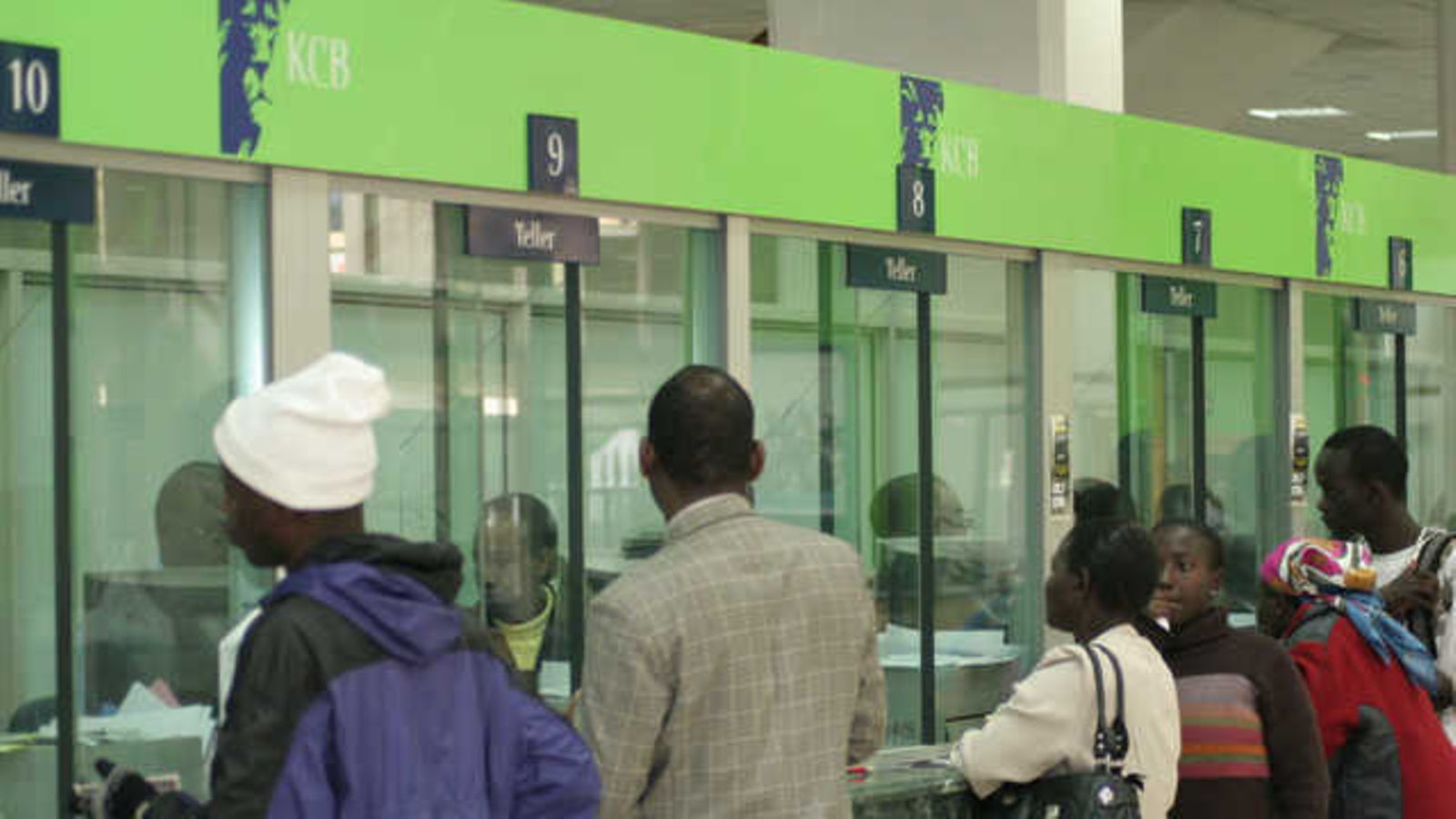
The number of bank accounts holding more than Sh500,000 increased by 5.7 percent last year amid rising income inequality as top earners and firms increased their savings.
Central Bank of Kenya (CBK) data shows that the high-value accounts rose to 781,977 as at December 2025 from 739,803 a year earlier, reversing a decline of 2,753 accounts that was reported between 2023 and 2024.
The increase in the moneyed accounts came in a year when the economy grew at a slower pace of 4.6 percent from 4.7 percent in 2024.
The share of high-quality depositors accounted for 0.97 percent of all 80.68 million bank accounts, offering a sneak peek into Kenya’s growing income inequality, where wealth is concentrated in the hands of a small segment of the population.
Kenya’s economy has grown on average by 5.0 percent annually over the past decade, but the benefits have not been equally distributed, and the gap between the rich and the poor is rising, analysts say.
The number of super-rich in Kenya is among the fastest-growing in Africa, yet the economic benefits have not trickled down to the majority of citizens quickly enough.
Banks’ high-value accounts are split between a few wealthy individuals and a combination of private and public enterprises, pension funds and fund managers.
The share of high-value accounts would have been smaller had the total number of deposit accounts not fallen from 114.24 million in 2024, following a clean-up of inactive accounts.
More people are also opting to open transactional accounts via digital and mobile platforms, growing the number of lower-value accounts at a much faster pace compared to the larger ones.
Mobile banking accounts also allow users easier access to credit and savings facilities from banks, adding to their growing popularity as some people opt to open multiple mobile accounts.
Riding on this shift to digital banking platforms, NCBA, Equity Bank and KCB remained the banks with the largest number of deposit accounts in the industry at 36.3 million, 13.8 million and 12.3 million respectively, together accounting for 77.5 percent of the industry’s total accounts.
But their share of high-value accounts trailed the smaller banks such as Citi Bank, Victoria Commercial Bank and Bank of India.
KCB operates a mobile banking platform known as KCB-M-Pesa, while NCBA runs the M-Shwari, both offering loans and savings in partnership with Safaricom’s M-Pesa.
The share of bank accounts with over half a million shillings in NCBA, Equity Bank and KCB stood at 0.1 percent, 1.0 percent and 1.1 percent, respectively.
Some tier two and tier three banks, however, held a larger share of quality accounts compared to their total number of accounts, a result of their policy of catering to niche clients.
Citibank Kenya led with 61.3 percent of its 2,223 total accounts holding balances of more than half a million shillings, followed by Victoria Commercial Bank at 53.6 percent out of 8,769 accounts and Bank of India at 51.2 percent of its 12,702 accounts.
The half-a-million-shilling deposit threshold is an important peg for depositors, given that it is the upper limit of refundable deposits in case of a bank’s collapse.
The Kenya Deposit Insurance Corporation (KDIC)—an independent State agency that manages deposit refunds for collapsed banks—in July 2020 raised the compensation ceiling for depositors in collapsed banks to Sh500,000 from the previous Sh100,000, to ease the discomfort with the smaller lenders following the closure of three such banks in 2015 and 2016.
This increase in the compensation threshold was the first in 30 years, making it necessary to keep up with inflation and the growth in volume of cash held in banks over the three decades.
KDIC is funded by charging commercial banks a small percentage of their deposits in the form of insurance.
The wealthy have, however, been accumulating their savings at a faster pace compared to smaller depositors, leading to a larger volume of deposits falling outside the insurance window.
Banks held Sh6.12 trillion in customer deposits in December 2025, growing 11.7 percent from Sh5.48 trillion in 2024.
As per the latest report that was published Tuesday, deposits valued at Sh1.195 trillion were insured, equivalent to 19.5 percent of the industry’s total deposits.
This means 80 percent, or Sh4.92 trillion, of deposits fell above the insurable threshold, effectively representing the cash held in the high-quality accounts.
The deposit insurance scheme coverage is also just shy of the 20 percent mark that is considered best practice by the International Association of Deposit Insurers (IADI).
The last time the coverage met the global standard was in 2022 at 20.6 percent, when total deposits stood at Sh4.76 trillion.