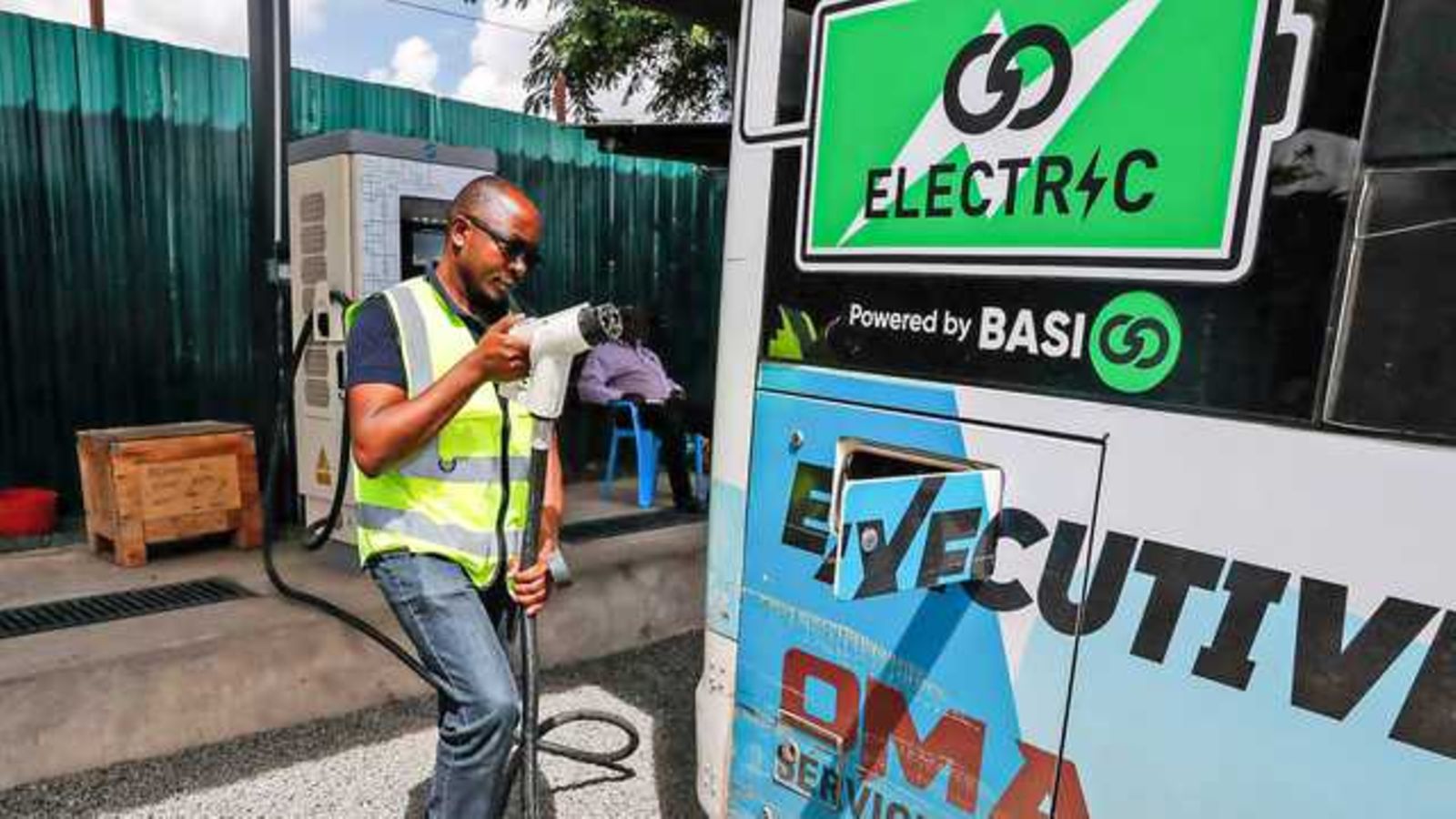
The energy regulator has capped power prices for electric vehicles (EVs) in fresh efforts to lower costs and boost e-mobility adoption amid the global fuel crisis.
The Energy and Petroleum Regulatory Authority (Epra) has allowed charging stations to charge the special tariff beyond the monthly consumption limit of 15,000 kilowatt-hours (KhW).
This means that electric motorbikes, cars and buses will be charged Sh16 per KhW, with the rate falling to Sh8 per unit during off-peak hours between 10pm and 6am.
Previously, the special e-mobility tariff was capped at 15,000 kWh a month, and owners of EV charging stations charged motorists up to Sh5 extra per KhW after exceeding the limit.
The significance of the change, contained in an amendment to the 2023 electricity tariff schedule published in the Kenya Gazette on September 18, is that an operator is no longer faced with a sharp tariff penalty simply because its business has grown beyond 15,000 kWh a month.
It forced some charging station operators to limit the number of electric vehicles they could serve at a single facility to avoid crossing the threshold and incurring higher electricity costs.
For motorists, it offers a less costly and predictable tariff.
“The cap was removed so that mass charging stations, particularly for buses or busy battery swapping stations, can benefit more from electricity consumption and reduced tariffs,” an Epra official told the Business Daily.
The global energy crisis sparked by war in the Middle East has supercharged African demand for electric vehicles, delivering a boost for China, which dominates the market.
A surge in orders for electric motorbikes and buses assembled in numerous African countries using Chinese components has coincided with record fundraising by start-ups rolling out EV infrastructure like charging stations and battery swapping facilities.
Some of Kenya’s biggest EV companies such as the bus maker BasiGo and Dubai-headquartered e-motorbike company Spiro have been exhausting the monthly limit at their charging stations.
Removing the cap allows EV firms to charge more electric vehicles or swap batteries at a single facility without losing access to the special tariff.
Industry analysts say this also gives EV companies room to expand their charging stations countrywide and open them up beyond their vehicle brands, creating room to accommodate more Kenyans switching to electric vehicles.
“With more power consumption headroom, we can expand our charging infrastructure beyond buses to serve other forms of transport: two-wheelers, vans and even private EVs,” said Moses Nderitu, vice-president of the Electric Mobility Association of Kenya (EMAK).
Mr Nderitu is also the managing director of BasiGo Kenya—which operates 17 charging stations in the country, a majority of them having been exceeding the monthly cap.
Spiro, which operates Kenya’s largest e-motorbike fleet, said more than 20 of its 500 battery-swapping stations exceed the monthly cap.
“Investors, charging infrastructure providers and fleet operators have greater confidence to plan, expand and scale based on actual market demand rather than tariff limitations,” said Flora Limukii, the firm’s head of government relations in Kenya.
Kenya has seen an increase in EVs over the past decade as consumers and businesses seek alternatives to fossil fuels.
Electricity is cheaper than petrol or diesel, and rising fuel prices have been driving EV uptake.
East Africa leads Africa’s EV usage, which was already increasing before Iran closed the Strait of Hormuz, through which about a fifth of the world’s oil and liquefied natural gas previously flowed.
Average daily petrol costs for a motorbike taxi have risen more than 20 percent from Sh540 a day to Sh670 since the war, according to industry estimates, which indicate electric bikes can do the same distance for Sh300.
For governments, the adoption of EVs seeks to offset huge fuel import and subsidy bills and reduce reliance on oil supplies from the Gulf.
Data from the National Transport and Safety Authority (NTSA) shows the country had 35,661 registered electric vehicles as of January 2026, including 33,374 motorcycles, 1,065 three-wheelers, 591 station wagons, 98 buses, 54 minibuses and matatus, 67 saloons, 13 vans, four lorries and two prime movers.
Motorcycle and car taxis, as well as public buses, find EVs attractive.
In the year to December 2025, electricity consumption linked to charging EVs increased 188 percent to 8.43 million kWh, from 2.9 million kWh in 2024, according to Kenya Power, underlining the growth.
Industry analysts have called for more regulatory incentives to encourage EV owners and operators to charge during the 10pm to 6am off-peak period when electricity demand is typically lower.
The United Nations Economic Commission for Africa (ECA) recently placed Kenya as the second-most developed EV charging network in Africa in 2025, behind Egypt.
Kenya’s private sector has taken the lead in installing EV charging stations, but most are clustered in the capital Nairobi and its satellite towns such as Kikuyu and Athi River.
Across Africa, Rwanda, Ghana and Egypt have dedicated EV charging tariffs. Rwandan charging station operators are billed at the preferential industrial electricity rate of about $0.10/kWh (Sh12.95), half the standard commercial rate.