What does it mean to be literate in Kenya in 2026? For generations, the answer was straightforward, the ability to read, write and perform basic arithmetic. Today, that definition is no longer enough.
A person may read a newspaper yet fall victim to online misinformation. They may own a smartphone but lack the skills to use it for learning, employment or entrepreneurship.
As we mark International Literacy Day, we must move beyond celebrating literacy rates and ask a more fundamental question: Are we giving every Kenyan the knowledge, skills and opportunities needed to participate meaningfully in the economy and society? Literacy is no longer simply an education issue. It is an economic issue, a social justice issue and increasingly, a question of national competitiveness.
Kenya has made significant progress in expanding access to education. According to the Kenya Demographic and Health Survey 2022, 91 percent of women and 94 percent of men were literate. These figures are encouraging, but national averages can conceal the Kenya that is less visible.
The Commission on Revenue Allocation’s State of Inequality in Kenya report, drawing on KNBS data, showed literacy levels ranging from 94 percent in Embu to 81 percent in Samburu. Counties such as Garissa, Tana River, Turkana and Samburu have historically faced some of the greatest educational disadvantages.
Behind these statistics are real children and young people whose circumstances can determine how far their education takes them.
If education is the great equaliser, then education financing must be designed to reach those who have the least ability to finance it themselves. This is why we cannot have a serious conversation about literacy without having an equally serious conversation about financing education. Every level of education matters.
This calls for investment not only in classrooms and teachers, but also in libraries, connectivity, electricity, digital devices, adult education, TVETs and innovative education financing models. The journey from literacy to prosperity is neither automatic nor guaranteed.
But without a literate, educated and skilled population, that journey becomes harder.
In today’s economy, we must therefore speak not only about reading and writing, but also about digital literacy, financial literacy, health literacy, media and information literacy, data literacy, scientific literacy and civic literacy.
Early childhood education establishes the foundation for learning; primary education develops foundational literacy and numeracy; secondary education builds knowledge and prepares learners for further training. TVET equips young people with practical and technical competencies, while universities and postgraduate institutions produce professionals, researchers, innovators and future leaders. A weakness at one level eventually manifests itself at another.
A child who fails to acquire foundational literacy is likely to struggle later. A young person who cannot access secondary education has fewer opportunities to acquire advanced skills. Likewise, a student who qualifies for university or TVET but cannot afford tuition, accommodation, books or basic upkeep may never get the opportunity to convert potential into productivity. Education financing should therefore not be viewed merely as a budgetary expense. It is an investment in Kenya’s productive capacity.
The responsibility of government, education institutions, development partners, the private sector and society at large is therefore to ensure that financial circumstances do not become the ceiling on a person’s aspirations.
There is also a compelling economic argument for investing in education and human capital. Countries such as Singapore, Finland and South Korea followed different development paths, and their success cannot be attributed to literacy alone. However, each placed education, skills development and human capital at the heart of national transformation.
The lesson for Kenya is not to copy another country’s education system, but to recognise that sustained investment in people creates the capabilities needed to move economies from low-productivity activities towards higher-value production, innovation and technology.
The World Bank estimates that, globally, each additional year of schooling is associated with an average 9 per cent increase in hourly earnings. Education also contributes to long-term economic growth, innovation, stronger institutions and social cohesion.
A literate and skilled population is better positioned to participate in formal employment, entrepreneurship, agriculture, manufacturing, financial markets, technology and the digital economy. Education gives people not only knowledge, but also the capacity to make better decisions, adapt to change and create opportunities.
The smartphone has become a classroom, workplace, bank, marketplace and information centre. But access to technology alone is not enough. Young people must know how to use technology productively and safely. Citizens must be able to distinguish credible information from misinformation.
Workers must be prepared to learn new technologies throughout their careers, while entrepreneurs must understand digital finance and markets.
Kenya must consequently move from a narrow conversation about literacy rates to a broader national commitment to lifelong learning and functional literacy. And if we are serious about this, we must take literacy to the margins.
Educational opportunities cannot be concentrated only where schools, universities, libraries and technology already exist. We must deliberately reach arid and semi-arid counties, informal settlements, remote rural communities, refugee-hosting communities and other areas where poverty, geography, disability, gender and social exclusion continue to limit access to learning.
A talented young person in Nairobi may access a university, TVET institution, online course or digital library with relative ease, while another equally talented young person in Turkana, Marsabit, Mandera, Wajir or Tana River may face entirely different barriers.
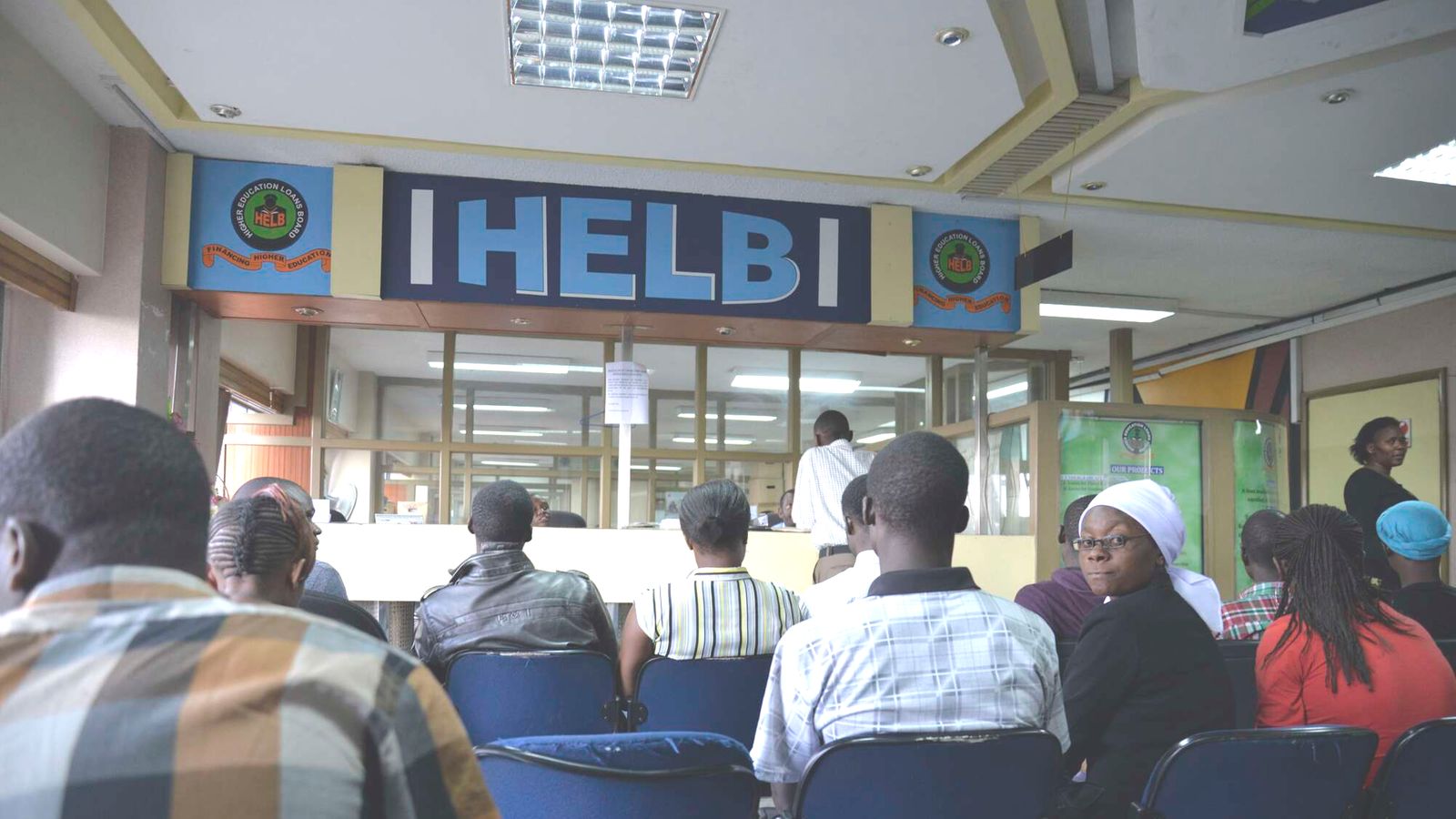
HELB’s mandate sits squarely within this national mission. Since its establishment, the Board has evolved from supporting a relatively small number of students into a major pillar of Kenya’s higher education financing ecosystem.
HELB has empowered more than 1.23 million students through its financing programmes. Every time financing enables a young Kenyan to enter university, TVET or another professional programme, we are helping build an individual who can participate more effectively in the economy.
Every student who acquires a technical skill, professional qualification or advanced area of knowledge becomes part of Kenya’s human capital. When graduates enter the workforce, establish enterprises, innovate, pay taxes, employ others and contribute to their communities, the original investment in education begins to multiply. That is the real return on education financing.
But access alone is not enough. We must also ask what learners are being taught and whether those skills can translate into productive livelihoods. Kenya’s universities and TVET institutions must remain connected to the changing needs of the economy. Training must respond to emerging opportunities in artificial intelligence, cybersecurity, renewable energy, advanced manufacturing, healthcare, agritech, financial technology and the creative economy.
We need graduates who can read and write, but also analyse, create, innovate, communicate, collaborate and solve problems. We need young people who can use technology rather than merely consume it. We need citizens who can navigate an increasingly complex information environment confidently and responsibly.
Geoffrey Monari is the Chief Executive Officer, Universities Fund