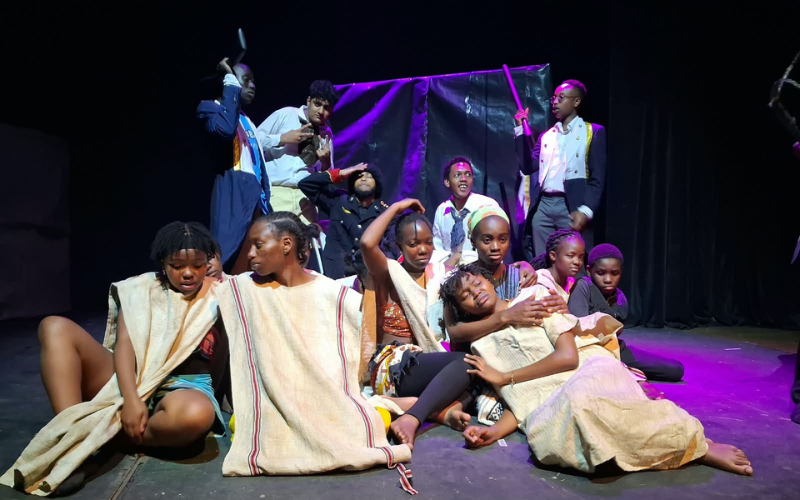
Exodus, an original African spectacle-theatre production that explores power, colonial ambition, betrayal and the struggle for freedom, was staged at the Kenya National Theatre on August 29.
Presented by A Kazins Entertainment, it was written and directed by Kennedy Hillary “Kenhillary” and produced by Calcine Anyango. Irene Munene is the stage manager. The play featured Jowi by singer-songwriter Coster Ojwang.
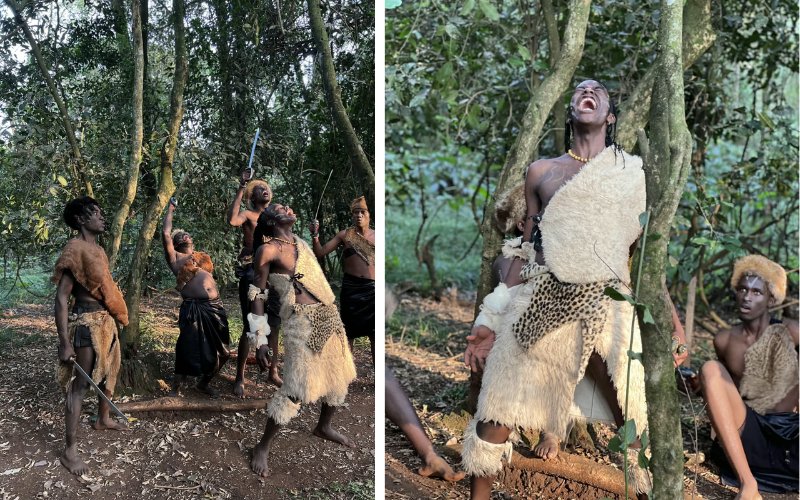
Set in the fictional Kingdom of Jokager, Exodus is inspired by fragments and themes of the precolonial past. It combines fight sequences, dance, and music to examine what happens when a community’s struggle for liberation is threatened not only by an external invader but also by divisions within.
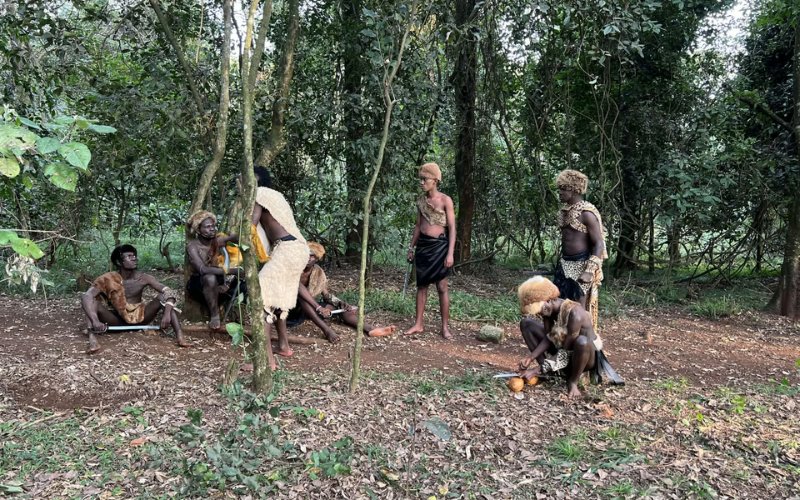
King Larius (Ler Jawar) is a warrior king determined to protect his kingdom and preserve its autonomy. As colonial forces encroach on Nyayombe and alliances fracture, Larius confronts betrayal in his family and community.
Anyango (Nyar Ruoth) is the first wife of Larius, whose role explores the role of women in a traditional community. Her responsibility is to maintain stability within the homestead, bringing together the children, wives and returning warriors. While the men are away fighting, she helps create a sense of community and provides them with a home to return to.
“What drew me to the role is that I could not imagine how you live with three other women without feeling some type of jealousy because you are the first lady. I wanted to challenge myself and experience something I would never do in real life,” she says.
Her role as a wife and mother, however, is a deep longing for peace. As a child, Nyar had a vibrant community where people depended on one another. They became their own enemies, and then colonialists came to invade their lands.
Nyar longs for the return of the village she remembers from her childhood, where people shared food and lived collectively.
“Once Nyayombe was a happy community. People slept in one house, and if you did not have food, you could go to another house. But now people are betraying each other and have to survive by collaborating with the white person,” she says.
Unlike the men who go to war, she does not have the power to fight physically. Her contribution is protecting the children, teaching them and keeping the homestead together. She is fearful because she has seen what they do to people who do not collaborate.
She begins the play as a joyful woman, dancing and nurturing her community, but the violence and uncertainty erode her hope.
“She changes from being a happy woman always dancing. As the play goes on, my hope stops being there. I feel tired and leave it to the ancestors to come through for us,” Anyango says.
The threat to Nyayombe does not come solely from the colonial forces. A major conflict develops within Larius’ family through his brother, Ojwang (Ken Hillary), who works with the colonialists and wants the position of king.
Ojwang is the first-born son of Larius’ father’s second wife, while Larius is the first-born son of the first wife. Though the two are only months apart, tradition dictates that Larius should inherit the leadership.
Ojwang is also a warrior, though he is not considered as swift as Larius. His resentment is rooted in a lifetime of living in his brother’s shadow.
“At the end of the day, when things have to work, teamwork is the best strategy despite our differences. Slavery is also not always physical,” she says.
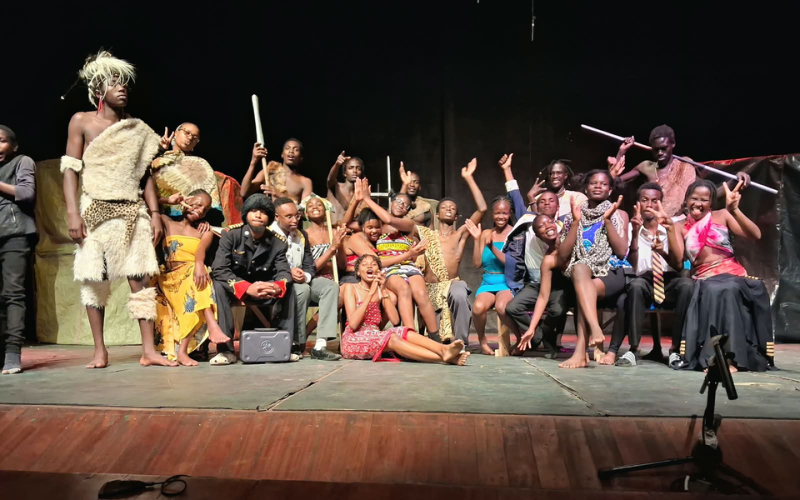
The play features a cast of about 40 people, making its scale one of the biggest challenges of putting the play together.
Anyango drew on personal observations and studied the mannerisms, speech and behaviour associated with first wives, including her stepmother, who is a first wife, as well as conversations with her mother.
“I had to call my mother and ask if a Mikayi can do what I had been given by the scriptwriter,” she says.
She also watched videos and conducted research to understand how first wives might speak, move and respond to different situations.
The research was important because the cast includes performers from different communities. While many of the actors can speak Luo, their accents, intonation and speed of speech differ.
“Out of a cast of 40 people, only a few are Luos. Teaching them the accent and how to say the words was really funny,” she says.
The play incorporated fight sequences, dance and music.
The fight sequences represent the sacrifices made in the struggle for freedom, while dance becomes a form of celebration and communal support. Dance and music are used to connect the community to its cultural traditions and to honour those who go to war.
“We praise and dance for the men who went to war. We were ululating and showing off. In return, we also give them food and beverages,” Anyango says.
King Larius is a leader of Jokager, a kingdom set in precolonial Kenya in the 1800s. The character is a warrior and protector whose leadership is defined by his willingness to fight alongside his people.
“The way of the sword is how he speaks. He believes in putting himself on the front line. He is the embodiment of how you can protect your men to die for you when you cannot die for them,” he says.
Larius is also ruthless and instinctive. When his authority is challenged, he listens to advice but ultimately trusts his own judgement. His desire for independence is captured in his belief that it is better to die on his feet than live on his knees.
But the colonial threat presents Larius with an enemy unlike those he has encountered before.
Jawar says that it was not only a physical invasion but also an invasion of the mind to undermine African spirituality and cultural systems. The result is an inferiority complex because your own culture has been wiped out. Larius represents the kind of resistance that refuses to surrender that cultural identity.
“While I had previously studied colonial expansion, I got to learn the true nature of colonial brutality. It is a lie that it is through gun power they were able to colonise us. Since brutal force didn’t work out, they sort to colonise the spirit,” he says.
The fight for sovereignty is not only about defeating an external enemy; it is also about preserving the relationships, traditions and sense of community that make a society worth defending.
Even though Exodus features warriors, battles and colonial conflict, Jawar believes that the women in the production are essential to the story. If there were no women in the play, he says, it would be empty and it would be about war.
The women give the warriors a reason to return home and provide the emotional and social foundation of the community. They build the play with joy, reason and light.
Jawar hopes that the story encourages audiences to reconnect with a sense of African pride and to examine their own cultures and histories.
“I don’t know if going back is the right way, but if we could find the kind of African pride that our forefathers possessed through our own inquisition of our cultures, there are elements of spirituality,” he says.