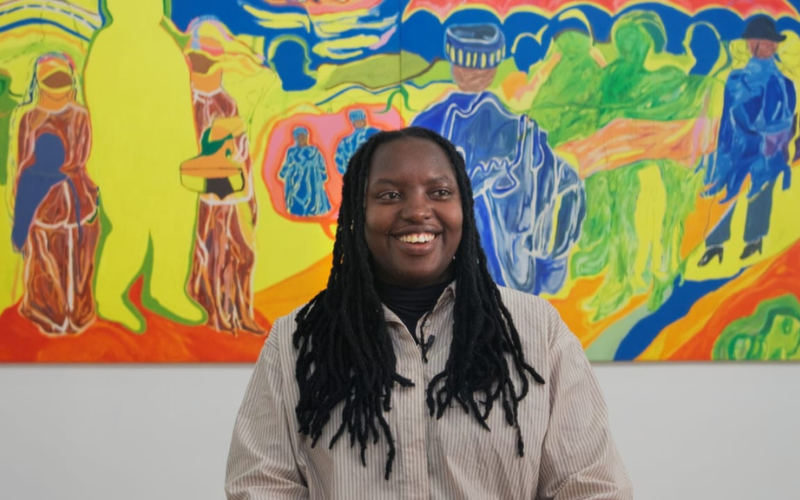
Kenyan artist Chemu Ng’ok’s exhibition titled Those We Remember or Are Yet to Meet examines themes of memory, ancestry, communication, and the invisible connections between generations.
The solo exhibition, running from July 25 to September 19, 2026, at Goodman Gallery Cape Town, features nine paintings recently completed in Ng’ok’s Nairobi studio.
The works are six large-scale acrylic and oil paintings on canvas, among them a diptych measuring more than three metres in length, as well as two gestural abstractions that explore the style of work presented in her 2023 London debut solo exhibition, The Longing.
Ng’ok says the title was inspired by ideas she encountered while studying African traditional religion in school. She chose it to represent what she says is the full cycle of life: the living, the living dead, ancestors and the unborn.
“I chose this title because I felt it represented the full cycle of life, of the living, the living dead, the ancestors and the unborn. I wanted it to be a portrait of both a seen and unseen community,” she says.
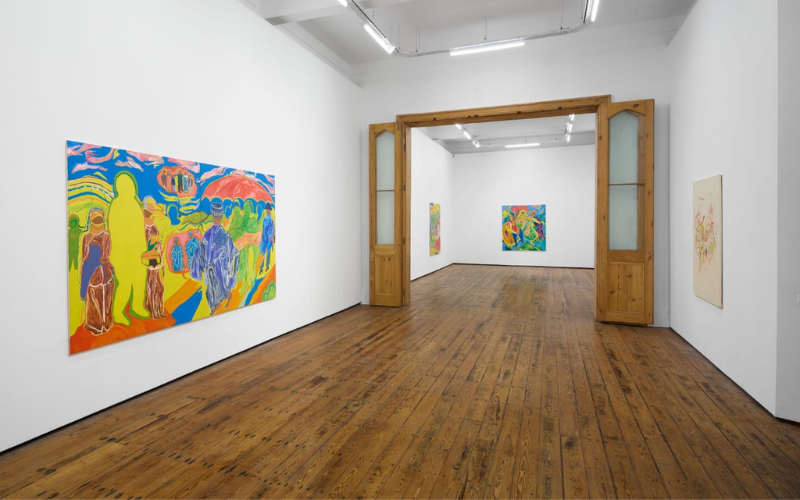
Ng’ok explains that those remembered are the ancestors and people who are no longer physically present but exist through memory. Those yet to be met represent unborn children and future generations.
The title, however, is deliberately open-ended, as she says it can also refer to audiences, communities, ideas, symbols and memories and anything else that is yet to come to be.
The paintings explore the relationship between the physical and spiritual worlds, depicting groups of figures that are connected even when their personal identities are unclear.
In Transition (2026), figures move upwards towards an unknown destination to occupy a space between formation and dissolution.
“I wanted the figures to feel ethereal. They exist in an in-between space where the spiritual and physical worlds meet,” she explains.
Another piece, Dreaming/A Nation (2025), uses a speech bubble to represent dreams, thoughts and imagination. A male figure wearing a hat is caught between dreaming, remembering and imagining the future. She also leaves room for viewers to bring their own experiences to the work.
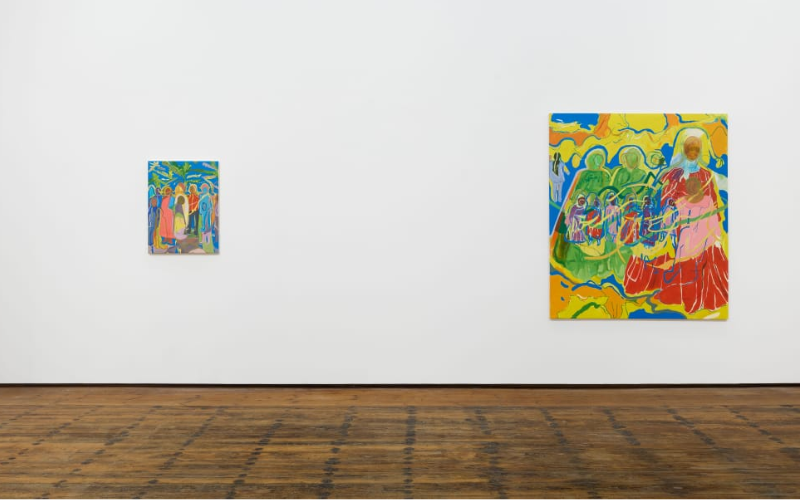
She dives into themes of memory and ancestry by understanding that the present needs an acknowledgement of the people, traditions and experiences that came before. She believes that in order to know who we are now, we need to look at what we have experienced and where we have come from.
Her painting Odyssey (2025) represents a spiritual journey through layered large and small figures to show an outward journey and an inward search.
“These characters are going on a spiritual voyage, and the destination is unknown. By playing with scale and repetition, I wanted to create both an inner and outer journey,” she says.
The figures in every artwork represent different members of a community, such as families, children, elders, chiefs and parents. Their clothing varies from suits to African garments to depict different identities and generations in the same environments.
Her works depict her interest in turning psychological states into physical form. The figures are simultaneously present and elusive to create works that show a community in the process of forming.
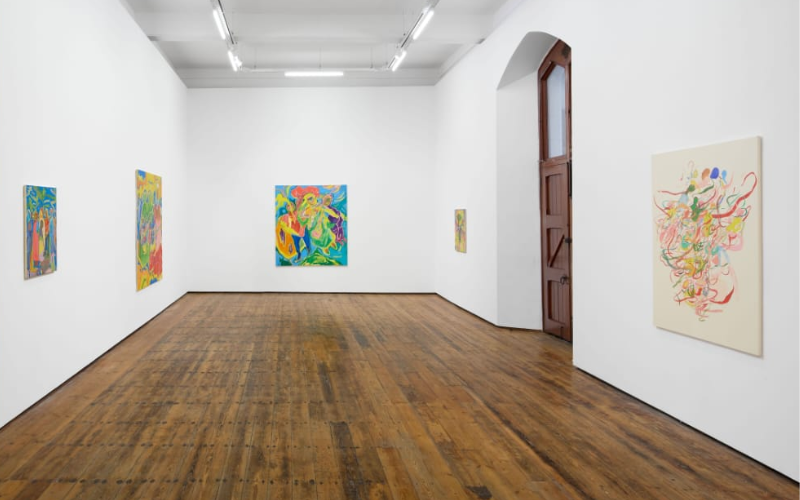
The paintings also use vivid yellows, pinks and other bright tones to create a sense of energy and celebration. She wanted the paintings to have a vividness to them.
Yellow, she says, was important in coming up with the palette because it shows vitality, sunlight streaming into a room, warmth, and fire.
While creating the works in Nairobi, she kept a journal as part of her studio practice. The writing allowed her to articulate ideas behind the paintings while also recording technical discoveries made during the process.
“My journal helped me find the words to describe the visual world I was building. It also became a place to record technical discoveries, such as how layering white beneath yellow made the colour much more vibrant,” she says.
Ng’ok’s journal describes painting as a way of giving physical form to experiences that might otherwise be intangible, like memories, feelings, longings and fleeting moments.
She hopes the exhibition encourages viewers to reflect on their own connections to others, including those who came before them and those who are yet to arrive.
“I hope they experience a sense of kinship and connection. And I hope they enjoy the exhibition and keep coming back to revisit the works,” she says.
Photos: Courtesy