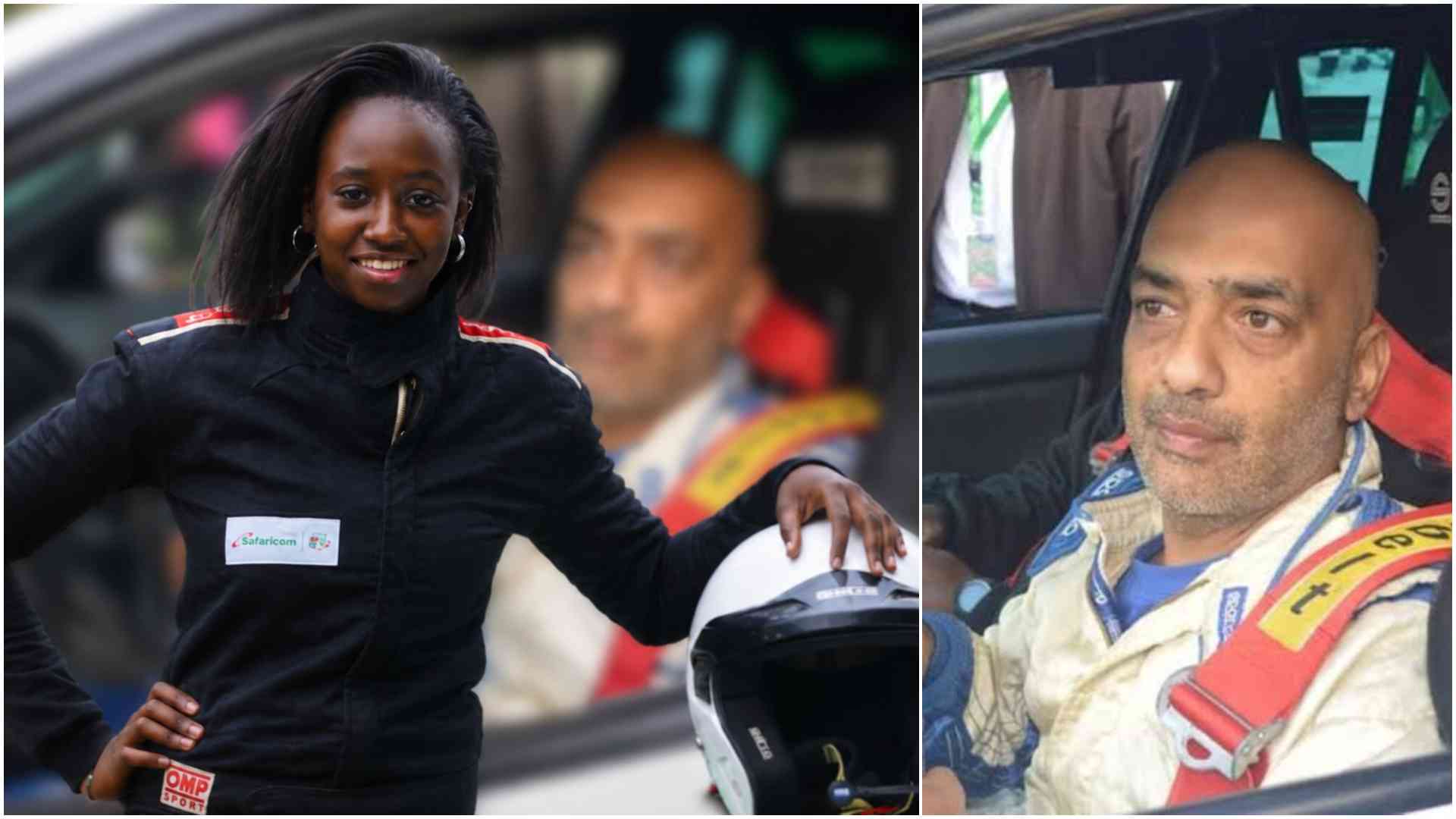
Three years after she was accused of murdering her boyfriend and fellow rally driver Asad Khan, former rally driver Maxine Mirigo Wahome walked free this week after the High Court acquitted her
Justice Lillian Mutende acquitted Wahome after finding that the prosecution had failed to establish a prima facie case linking her to Khan’s death, bringing to an end one of country’s most closely watched murder trials.
“In totality, after evaluating all the evidence before the court, the case presented by the prosecution has failed to establish a prima facie case warranting the accused person to be placed on her defence,” Justice Mutende ruled.
“In the result, she is acquitted under Section 306(1) of the Criminal Procedure Code.”
The decision capped months of testimony from pathologists, police investigators, forensic experts and civilian witnesses who sought to piece together what transpired inside the couple’s Kileleshwa apartment in the early hours of December 12, 2022.
Khan later died while undergoing treatment after suffering a deep cut to his leg and head injuries sustained during the incident.
In a detailed ruling, Justice Mutende held that while the prosecution had proved the fact and cause of Khan’s death, it failed to establish the crucial link that Wahome unlawfully inflicted the fatal injuries to enable the court find her with a case to answer.
The prosecution had relied heavily on circumstantial evidence, arguing that only Wahome and Khan were inside the apartment when the fatal injuries were sustained.
However, the court found that the evidence left significant gaps and failed to eliminate other reasonable explanations.
Justice Mutende observed that none of the prosecution witnesses saw the incident that resulted in Khan’s injuries.
She further noted that forensic evidence presented during the trial did not directly connect Wahome to the injuries.
Government analysts testified that DNA recovered from blood-stained exhibits collected at the scene matched Khan’s profile but did not implicate Wahome.
The judge also revisited dramatic evidence presented during the hearing, including thousands of photographs, videos, call logs and WhatsApp messages extracted from Wahome’s iPhone by Directorate of Criminal Investigations digital forensic examiner Timothy Nyande.
Nyande told the court that investigators retrieved a staggering 76,000-page digital extraction before compiling a condensed 22-page report containing material considered relevant to the investigation.
Among the exhibits was a distress video recorded moments after the incident in which a visibly emotional Wahome was heard speaking to her father while police officers waited outside the apartment.
“Daddy, he cut himself. He kicked the window pane. I was the one who was beaten up,” she said in the clip played before the court.
The video showed blood stains near the doorway as Wahome repeatedly maintained that Khan injured himself after kicking a glass door.
Nyande also produced photographs showing blood stains inside the house and another image depicting Khan leaving the apartment with a bleeding leg.
Despite the extensive digital evidence, the forensic examiner conceded there was no video capturing the alleged altercation between the couple.
“There was no altercation on the distress video. I did an independent analysis as I prepared the report,” Nyande testified.
The expert also dismissed claims by the defence that he had manipulated evidence, insisting he had not been influenced by investigators while preparing his report.
“I was not misled or assisted to doctor the report,” he told the court.
Medical evidence equally featured prominently during the trial.
Three pathologists agreed that Khan eventually died from septicaemia arising from an infected wound, although they differed on aspects of the injuries and subsequent medical treatment.
The defence argued that inadequate medical care and complications following treatment contributed to Khan’s death.
Justice Mutende held that while medical issues arose during treatment, the decisive question remained whether the prosecution had proved beyond the required legal threshold that Wahome caused the fatal injuries.
The investigating officer also admitted during cross-examination that she had not obtained evidence disproving Wahome’s account that Khan injured himself after breaking the glass door during an argument.
The judge found that the prosecution’s circumstantial evidence did not irresistibly point to Wahome’s guilt and failed to exclude other reasonable hypotheses consistent with the evidence.
With that finding, Justice Mutende entered an acquittal, ending a case that had attracted nationwide attention nearly four years ago.