Kenya is emerging as a destination for international investment in specialist healthcare, with foreign and regional providers moving in to address the growing burden of non-communicable diseases and the shortage of advanced cardiac, cancer, and neurological care.
The Ministry of Health’s data show that non-communicable diseases (NCDs) accounted for 61.7 percent of all registered deaths in Kenyan health facilities in 2024, up from 52.4 percent in the previous year.
Cancer, for instance, claimed more lives than cardiovascular disease in 2024, with 8,954 deaths (7.9 percent of all facility deaths) against 7,478 cardiovascular deaths (6.6 percent).
For decades, patients seeking complex treatment have been travelling abroad to India, Asia, and the Middle East, a trend that Rashid Khalani, chief executive of Aga Khan University Hospital Nairobi (AKUH-N), linked to roughly $7 billion(Sh906.8 billion) in annual medical spending leaving the African continent.
“Many believe treatment abroad is cheaper, yet when airfare, accommodation, and post-treatment care are factored in, that perception often proves false,” said Mr Khalani.
New hospitals, partnerships
That trend, however, is beginning to change, with several providers, including Alameda Healthcare, Egyptian telemedicine platform Vezeeta, and Apollo Hospitals, announcing new clinics, hospitals, and partnerships in Kenya over the past year.
The most recent of these is Alameda Healthcare, a specialist clinic that opened in Kenya in April. It offers cardiac sciences, oncology, neuroscience, renal care, orthopaedics, spine, and gastrointestinal services.
Alameda Healthcare Group CEO Neeraj Mishra said the move is part of a broader Africa growth strategy. “Nairobi is a natural gateway for our regional ambitions,” he said.
“When healthcare providers collaborate across borders, they bring clinical expertise as well as operational models, quality assurance frameworks, and institutional cultures that can be adapted locally. Over time, this leads to the development of resilient healthcare systems that are less dependent on external referrals and better equipped to manage complex cases.”
Meanwhile, Apollo Hospitals and its local partner are committing to a much larger footprint upcountry. In March 2026, Apollo announced a partnership with Kenyan firm Balmer Healthcare to build a Sh26 billion ($200 million) specialist hospital in Eldoret, covering more than 20 medical specialities.
Apollo Hospitals Enterprise Ltd (AHEL) is one of Asia’s largest integrated private healthcare groups, running more than 75 hospitals across India and operating in over 140 countries through its various business lines.
The group has long served as a preferred destination for Kenyans travelling abroad for advanced treatment, and the Eldoret deal builds on a relationship with Balmer that dates back to an MoU first signed in 2022.
Under that agreement, Apollo committed to a phased role spanning technical and strategic consulting, project management, commissioning, and eventually brand and operations management once the hospital opens.
The Eldoret facility, once complete, is expected to serve a catchment of more than 50 million people across Kenya and the wider East African region, marking Apollo’s most significant physical investment in the country to date.
Under the deal, Balmer will handle construction while Apollo manages operations and deploys specialist medical staff, with financing arranged through an Indian bank.
“This is a project to benefit Kenyans and transform access to healthcare,” said Balmer Healthcare CEO Koima Langat.
However, not every new entrant is putting up buildings. Alongside Alameda’s clinic launch, Egyptian providers have also been active on the digital front: telemedicine platform Vezeeta expanded its services into Kenya after raising $40 million (Sh5.2 billion) in a Series D round, bringing online consultations and remote health management tools to Kenyan patients without requiring new physical facilities.
Operating through an app available in all 47 counties on a 24-hour, seven-day basis, the platform gives patients access to doctors across roughly 30 speciality areas, from general practice to dermatology, orthopaedics, and respiratory medicine, all registered with the Kenya Medical Practitioners and Dentists Council.
Studies have flagged shortages of chest specialists, hospital physicians, and emergency-care nurses in Kenya’s health system, with the impact felt hardest in rural areas, where roughly 70 percent of the population lives, and care has historically depended on community health volunteers and nurses offering basic primary services.
By letting patients book and complete specialist telehealth consultations from their phones, often at no platform fee, Vezeeta’s entry effectively extends specialist access to underserved counties without the capital expense of new hospitals.
Policy push
On the policy front, Kenyan authorities are actively encouraging this inflow. In late December 2025, the Social Health Authority (SHA) issued a notice inviting licensed overseas hospitals to apply to treat patients under the Social Health Insurance Fund and the Public Officers Medical Scheme Fund, but only for procedures confirmed as unavailable locally.
The move opens a direct route for international providers, including those now setting up in Kenya, to bill into the country’s national insurance system.
“The Authority is seeking overseas healthcare providers with demonstrated capacity to deliver medical interventions not readily available in the country,” SHA said in the notice.
At the same time, the government is also investing in domestic specialist capacity. The 2026/27 budget allocated Sh45.3 billion to referral hospitals for specialised care, including Sh300 million for cancer management at Kenyatta National Hospital and Sh150 million toward expanding the cancer centre at Kenyatta University Teaching, Referral, and Research Hospital.
Outside Nairobi, the Aga Khan network’s Kisumu hospital completed a Sh1.4 billion expansion in early 2024, growing from a 70-bed acute care facility to a 123-bed secondary-to-tertiary hospital with cardiology, oncology, neuroscience, and critical care units.
As a result, the expanded facility now anchors a catchment of roughly 6.6 million people across the wider Lake region, drawing patients from more than a dozen counties as well as cross-border referrals from Uganda and Tanzania.
It holds SafeCare Level 5 certification, the highest tier under the regional quality accreditation framework, and offers care across more than 30 clinical specialities and subspecialities, including the region’s first dedicated neonatal intensive care unit and first sleep lab.
The hospital has also extended this reach through a “hub and spoke” model, building out a network of 15 outreach health centres that feed referrals into the main facility, effectively pulling specialist diagnostics and treatment closer to communities that previously had to travel to Nairobi or Kisumu town for care.
Meanwhile, the Aga Khan Development Network, French development agency AFD, and the Gates Foundation launched a $12 million (Sh1.5 billion) East Africa Comprehensive Cancer Project last year, targeting women’s cancers across Kenya and Tanzania, expected to reach around 7.4 million people.
The project, which builds on an earlier Tanzania-only cancer programme that AKDN says treated 33,800 cancer patients before wrapping up, is being rolled out across four Kenyan counties of Mombasa, Kisumu, Kilifi, and Homa Bay, alongside six regions in Tanzania.
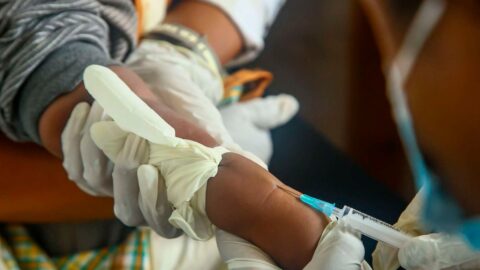
Its targets include breast and cervical cancer screening for 400,000 women and an HPV vaccination drive aiming to reach 2.4 million girls aged 10 to 14 in Kenya over the programme’s four-year run.