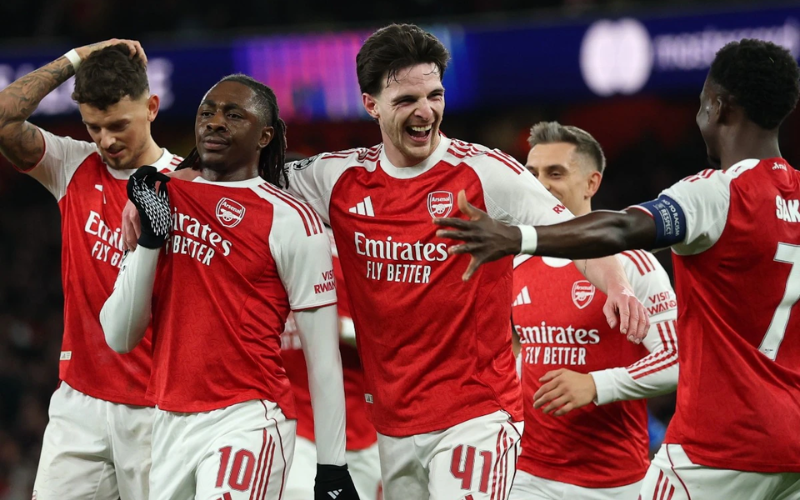
Arsenal has reinforced its reputation for faltering in high-stakes cup finals after a 2–0 defeat to Manchester City in the 2025–26 EFL Cup Final, a pattern that has haunted the club across generations.
Going into Sunday’s Wembley showdown, the Gunners were aiming to kick off a quadruple-winning season. Mikel Arteta’s side entered the final third of the campaign as favourites in all four competitions they were contesting. At the first hurdle, however, they fell short.
The match started promisingly, with City goalkeeper James Trafford forced into a triple save inside six minutes, but Arsenal struggled to impose themselves.
Goals in the 34th and 72nd minutes punished defensive lapses and a blunt attack, leaving Pep Guardiola’s men comfortable winners. The result set an unwanted record, with Arsenal losing more League Cup finals in succession than any other club.
History suggests the League Cup can sap a winner’s momentum, a tradition Arsenal hope affects City this season. For themselves, though, the trend of final heartbreak remains familiar.
The pattern dates back years. In 2018, Arsenal again faced Manchester City in the EFL Cup Final. City struck in the 18th minute, exploiting a high defensive line, and doubled the lead in the 58th. A third in the 65th minute sealed a 3–0 defeat as Arsenal’s possession remained sterile and their defence exposed.
Earlier, the 2011 final against Birmingham City left deeper scars. Arsenal were poised to end a six-year trophy drought but fell behind in the 28th minute. They equalised in the 39th, only to concede a dramatic winner in the 89th minute, losing 2–1 in one of the club’s most painful collapses.
In 2007, a youthful Arsenal side faced Chelsea. After taking an early 12th-minute lead, they conceded before halftime and were beaten by a header in the 83rd minute. The match ended in chaos, with late red cards overshadowing the defeat.
Dramatic reversals have long punctuated Arsenal’s history. In 1988, leading 2–1 against Luton Town late in the League Cup Final, Arsenal saw a missed penalty followed by two late goals, losing 3–2. In 1969, Swindon Town stunned Arsenal in extra time after a 1–1 draw, completing a 3–1 victory in one of English football’s greatest upsets. A year earlier, Leeds United’s 20th-minute goal proved decisive as Arsenal fell 1–0 in a tightly contested final.
From the late 1960s to the modern era, the story remains consistent: finals reached, hope ignited, only for it to slip away. For Arsenal, the biggest stages have too often delivered the same cruel ending, a record of heartbreak that continues to shadow the club even as it chases glory.