The Game: The Legend of Zelda: A Link to the Past (1991 Japan / 1992 North America)
Original Platform: Super Nintendo Entertainment System
Version We Played: SNES Online Library, Nintendo Switch
Verdict: An impressive urtext for action-adventure titles, undermined by some dated design choices.
I owe The Legend of Zelda a debt of gratitude.
If not for Zelda, it’s safe to say there’s no Ōkami, Ico, or Shadow of the Colossus. No Portal or Bloodborne or Beyond Good and Evil either. Heck, I don’t think something as oddball as NieR: Automata would exist, at least not in its heavily Zelda-influenced form.
Most of these aren’t Zelda-alikes, precisely, but they’re games which, in the decades since The Legend of Zelda debuted in 1986, have all adopted or iterated on its innovative gameplay, world design, and storytelling. Most of these games are strong contenders for Greatest of All Time. (Many of them appeared on my recent PS2 ranking, for that matter.)
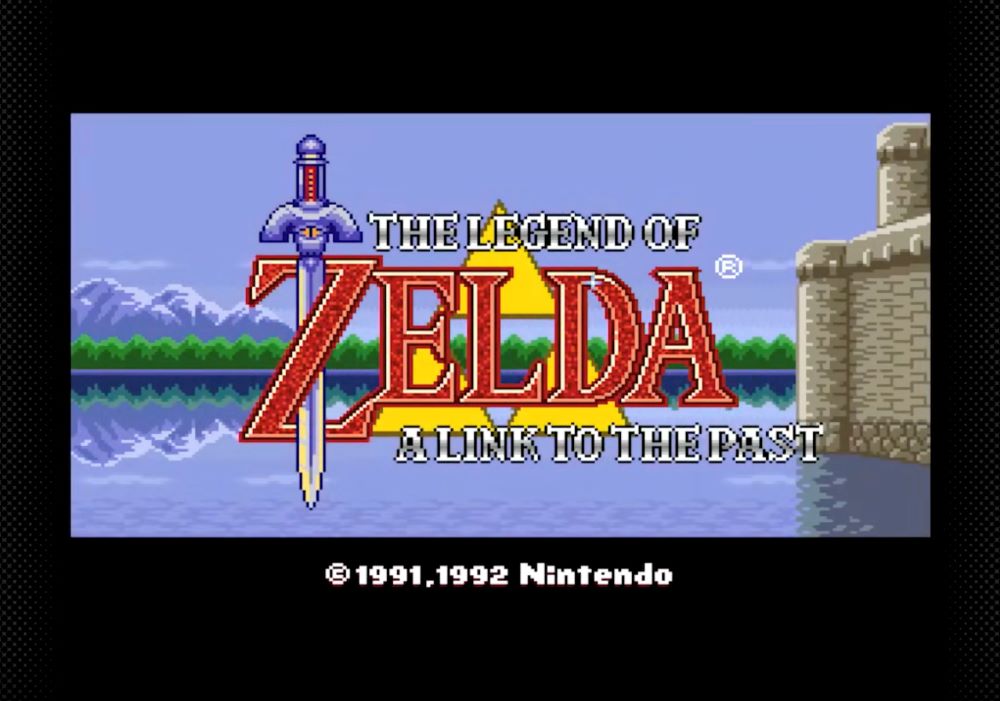
I came to the Zelda series late.
Ocarina of Time was the first entry I played, some ten years after it debuted. (As I’ve mentioned before, ours was a Sony household, so I was late to the game with many N64 classics, Super Mario 64 included.) I adored Ocarina, though it would take still more time before I got my hands on Twilight Princess (liked it), Skyward Sword (was mostly confused and bored), Wind Waker (loved it), and eventually the twofer of Breath of the Wild and Tears of the Kingdom, which I found enjoyable, compelling, and beautiful.
Zelda fans will have noticed the omissions. I’ve never touched the original Zelda or its bizarro-world side-scrolling sequel. I haven’t played any of the portable titles. I really want to play Majora’s Mask, but it’s just one of those things I’ve never gotten around to (and, to be honest, I’m kind of scared of it).
And then there’s Link to the Past.
The Legend of Zelda: A Link to the Past was the first game to receive a 39/40 score from fabled Japanese gaming magazine Famitsu. Entertainment Weekly named it the best game of all time in 2006. In 1997, both Electronic Gaming Monthly (rip) and Nintendo Power (rip) ranked it third in their respective best-ofs. More recently, the impressive – and rigorously assembled – GQ Magazine “Industry Poll” (think Sight and Sound, but for video games) – ranked Link to the Past 26th, based on the votes of 239 of the world’s greatest game developers, streamers, directors, writers.
The Legend of Zelda: A Link to the Past is kind of a big deal. And I can’t believe it’s taken me this long to experience it.
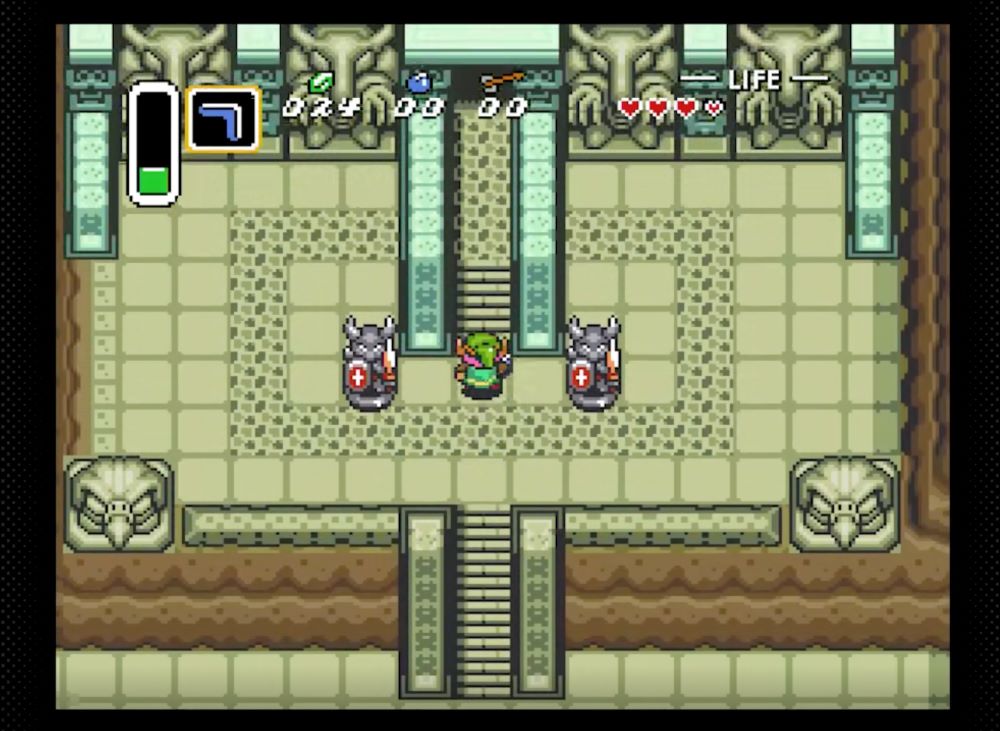
I was several hours into Link to the Past before it dawned on me this wasn’t the “It’s dangerous to go alone, take this!” game.
That quote, which forms such a core part of gamer identity, was among my very first encounters with Zelda. I’d seen it redone with kitties, and Samwise Gamgee (warning: may make you cry), and other, weirder memes. I always knew it was from Zelda; I just got the wrong Zelda.
But that quote is rather beautiful in its own way, distilling the entirety of not just Zelda but all gaming into two maximum-information sentences: This world can harm you. This weapon will help. Little surprise, then, that Zelda is the brainchild of Shigeru Miyamoto, who similarly found a way to distil the essentials in the famous World 1:1 Super Mario Bros. screen.
Link to the Past doesn’t have a “dangerous to go alone” moment. But it does, across its twenty or so hours, contain a multitude of iconic moments – and just as importantly, ideas – which would go on to inform and influence gaming all the way from its 1991 release to present. I have my qualms about it, which I’ll get to below, but I was continually impressed by, appropriately enough, its timelessness.
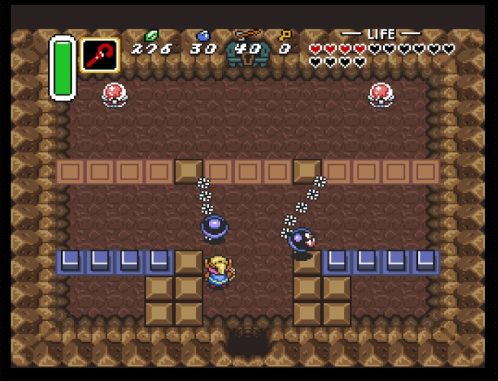
I must confess, I’ve never felt any particular affection for Zelda protagonist Link. He’s little more than a blank-slate character anyway; a bundle of pixels which serves as a conduit to doing cool things. Unlike, say, the colourful personalities of Final Fantasy, Link is just sort of there: a silent little dude who quietly does whatever you tell him to.
That said, Link’s personality (or lack thereof) allows gamers to immerse themselves in his world, projecting whatever they want onto Link – is he doing this all out of duty? a sense of adventure? love? – as he explores the incredibly realized world of Hyrule.
A world which you’re immediately thrown into, Link to the Past opening on the sleepy protagonist (you get to custom-name him, but let’s face it, he’ll always be Link) awoken in the middle of the night to rescue Princess Zelda from a nearby castle. Then, sooner than you might think, you’ll have found and seemingly rescued Zelda, acquired some fun new abilities, defeated your first major boss, only for the forces of evil to swoop in, sending you on an even larger journey than Link – or the player – could have imagined. (Even I was surprised by the scope of this thing.)
In particular, the revelation that Link will be travelling between two worlds – the Light and the Dark – dramatically shakes up the game, Nintendo swiftly demonstrating to players that there’s a lot more to see and do than first appearances suggest. It’s impressive enough today, but must have been genuinely mind-blowing back in 1991.
That opening also quickly establishes a pattern you’ll come to recognize: Link (and Link) always has something new and exciting to do, some new item or weapon to try out. It’s a “just one more thing” design philosophy which was surely the bane of 90s parents and babysitters everywhere.
Link to the Past also manages to avoid the kind of predictability that plagues modern AAA design: dungeons don’t necessarily resemble what you might associate with the word “dungeon”; characters do and say unexpected things; what appears at first to be a quick task may turn into a lengthy quest-line, unfurling in interesting, unexpected directions. The dichotomy between the Light and Dark worlds – a trope which Link to the Past basically invented – is impeccably handled, training you to recognize how something encountered in one world may be a clue to something that awaits in the other. (A delightful roster of NPCs, non-player-characters inhabiting both worlds, adds interesting twists on this set-up.)
Perhaps the best part is how much of Link to the Past unfolds organically, the story beats and gameplay developments rarely feeling forced or “gamey”. Courtesy the tag-team of producer Miyamoto and director Takashi Tezuka, who also co-directed the first several Super Mario games, the world feels lived in, with believable (if cliché) stakes. Link isn’t just going from Point A to Point B because that’s what video games do; he – and by extension you, the player – is reacting believably to the world around him.
Whether that’s because he’s stumbled across a clue pointing to a remote corner of the map, or because there’s a new item/upgrade which needs testing, you’re always given a legitimate, logical reason to keep moving, keep exploring.
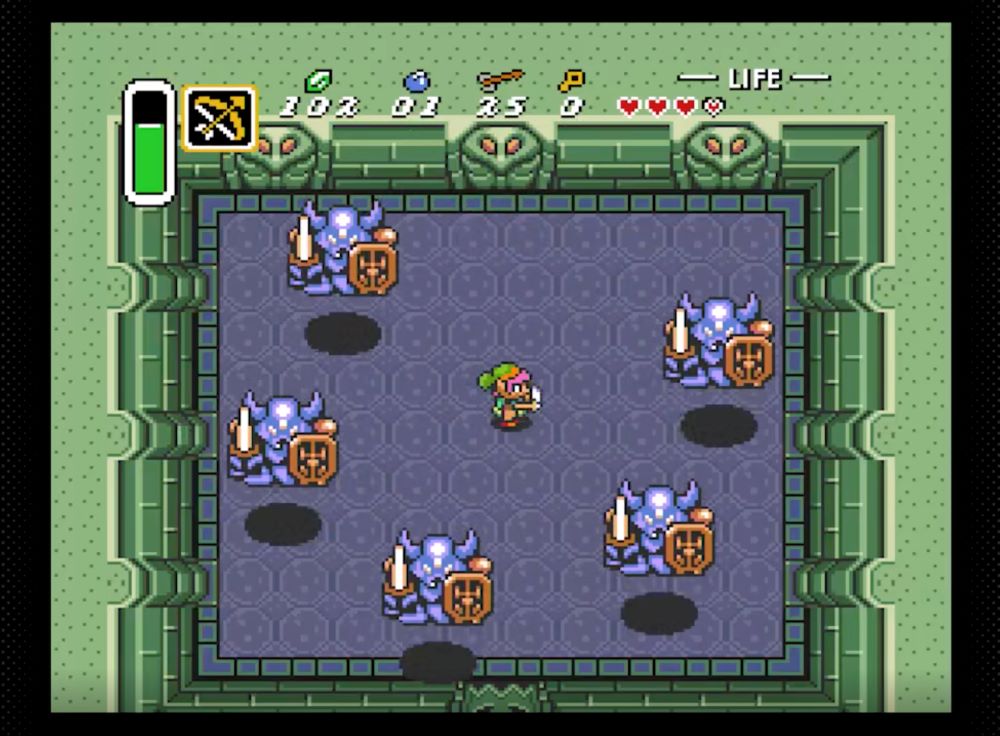
Link to the Past is undoubtedly a masterpiece. But it’s a thirty-four-year-old masterpiece, with all the graphical and technological archaisms that implies. It’s engaging and propulsive, the gameplay is fantastic, the music is great (if repetitive), and it’s genuinely hard to put down, especially in its portable-friendly Switch version. It doesn’t quite surpass Ocarina of Time – still the standard-bearer Zelda for me, and they say your first Zelda is always your favourite Zelda – but it’s easy to understand its enduring popularity.
Which is why it’s now time to talk about save states.
Also known as “suspend points”, I’m referring to the built-in save functionality available on the Switch’s SNES Emulator, which lets you manually save progress any time, anywhere. Used wisely, save states can smooth over a game’s rougher patches, allowing players to quickly and painlessly drop checkpoints just before a tricky challenge. Used unwisely, this function can be abused in the form of “save scumming”, where players obsessively save every few seconds, even in the middle of a boss battle, reloading every time something goes awry.
The Legend of Zelda: A Link to the Past was built for save states. In fact, I’d go even further: I cannot imagine playing this game without save states, and it’s a wonder my 90s classmates had the patience to deal with this game in its original form.
Let’s start with the backtracking.
The Zelda series has long had an annoying tendency to shepherd you all the way to a specific point, only to reveal you’ve missed something essential, elsewhere. In Link to the Past, it might be a missing item, or insufficient stock (like enough arrows or a full magic meter), or an overlooked clue. In Link, this is most pronounced when it comes to accessing the game’s dozen or so dungeons, which can rarely be accessed by walking up to the front door. Instead, Link to the Past forces you to trek all up and down the world map, swapping back and forth between the Light and Dark worlds, harvesting items and running into dead ends, until you figure out the correct combination of steps to gain entry. Some of this feels fair, and can precipitate interesting detours. Other times, it’s just a slog.
Then there’s Zelda’s ruthless, even cruel, dungeon design. Now, I’ll preface this by saying that, on the whole, there is much to admire about the way Zelda constructs its levels: the series generally does a great job of prodding you in the right direction, there are nice rewards for exploration, and the way everything threads together – typically, through the integration of Link’s newest power-up into the dungeon’s puzzles and boss fight – is quite impressive.
Unfortunately, Link to the Past – much like, say, Elden Ring – also has a nasty tendency of punishing players through that very same world design. Boss fights are often situated at the end of a brutal gauntlet of enemies and puzzles, with no checkpoints or health items to salve the player’s wounds. Some dungeons have annoying gimmicks – like a giant hand that drags Link back to the entrance – which serve as unfair impediments. This becomes a particular source of frustration towards the end of the game, with larger dungeons overrun with traps, dead ends, and other tricks that can easily set you back a not-insignificant amount. Purists may scoff, but I found “save states” to be an effective cure-all to these problems… so long as I avoided the temptation to save scum. (And believe me, it can be tempting.)
Link to the Past is also guilty of the sin of concealing or omitting information. This is not true of later Zeldas, and is probably the factor that will cause the most headaches for those attempting this game today. To take one example: two of the dungeons in Link to the Past are marked with distinct symbols which do not appear anywhere else in the game world. It turns out they’re associated with two secret medallions, unlocked by heading to completely arbitrary spots on the map, where you must fulfil certain, equally arbitrary, conditions. You either have to get lucky and stumble upon them (as I did for one medallion), or give up and consult a strategy guide (as I did for the other, thank you zeldadungeon.net).
To take another, far more egregious example: the final boss of the game cannot be defeated through conventional means. By which I mean, after having spent, conservative estimate, at least an hour-and-a-half attempting different strategies, repeatedly banging mine and Link’s head against a seemingly unpassable progression wall, I finally consulted a walkthrough… where I learned the boss quite literally could not be damaged until I acquired not one, but two secret weapons.
This rather important information is not communicated whatsoever by the game, not even through oblique hints. Back in the pre-Internet 90s, I’m guessing this resulted in a lot of toll calls to the 1-900 Nintendo Tip Line, and/or schoolyard conversations with friends whose uncles worked at Nintendo. Even in 2026, it simply feels unfair. (A cursory online search suggests I’m hardly alone in this.)
That said, a lot of my criticisms of Link to the Past are really just criticisms of the Zelda series as a whole. That tracks: Link to the Past basically set the template, so its weaknesses are also the weaknesses of Ocarina of Time and Wind Waker and even, to a lesser extent, Breath of the Wild – though those latter games are far more forgiving. If nothing else, Link to the Past is a reminder that the days of insta-death restarts, or labyrinthine dungeons with no checkpoints, are (mostly) behind us.
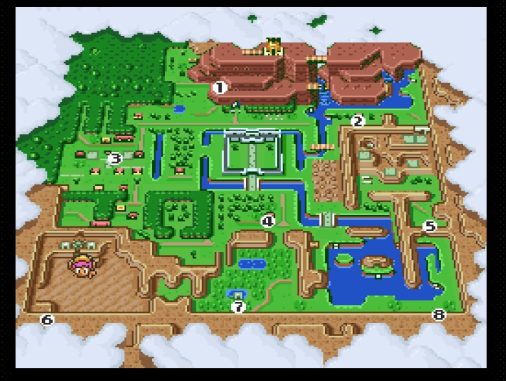
In the end, A Link to the Past’s age-related deficiencies do not undercut what is, in nearly every other respect, a remarkable achievement.
I like the subtle touches in Link to the Past, like the way environmental details are designed to catch your eye, encouraging exploration. (This is particularly true in the interplay between the Light and Dark worlds.) I like the way your sword automatically fires projectiles so long as you maintain full health – a feature which is never explicitly laid out, but which is present from the start. I especially appreciate the way Link’s abilities can be deployed to unexpected effect, like using the dash attack to clear a field of grass, or firing the hook-shot into a treasure chest to quickly bridge a gap.
There’s so much more to love. The thrill of entering each new dungeon, excited to see what challenges and new mechanics lie in store. Link’s diverse array of weapons, which are unsurprisingly excellent, ranging from standard fare like the bow-and-arrow or bombs, to more unique offerings like various magical canes. I’m a particular fan of the boomerang, which is vastly more effective at both defeating enemies and obtaining items than I was expecting. Sure, everyone loves the Master Sword, but I’d happily nominate the Link to the Past boomerang for entry in the Video Game Weapon Hall of Fame alongside it.
Mostly, I love the way Link to the Past’s many parts come together so effortlessly: the map which gently guides you to interesting places; the unlockable abilities which grant access to those places; the dungeons which subtly teach you how best to make use of those abilities. I love these dungeons, how meticulously plotted they all are, offering a steady stream of challenges and rewards for overcoming those challenges. What I said about Link to the Past playing out organically really holds true throughout: while it’s a meaty game, running a good twenty or so hours, it never feels overlong or overstuffed, since the game is always nudging you in the right direction for that next big thing.
It pains me, however, that Link to the Past is imperfect, even as a three-decade-old artefact, with certain archaic design elements which are borderline hostile.
I’d like to think that I write this with relative impunity: as someone who’s clawed and bled his way through three Fromsoftware titles, not to mention countless Ghosts ‘n Goblinses, I’m not immune to the charms of harsh checkpointing or inscrutable boss design. Still, I occasionally found myself struggling with – or rolling my eyes at – Link to the Past’s more player-unfriendly aspects, which, absent the rose-tinted glasses of someone who grew up with it, only underscore how much more important this is as a template, rather than a timeless classic which completely holds up today.
I’m thrilled that I finally got to experience Link to the Past (in its ideal, portable-friendly form, no less), but this is one time where I truly regret having been late to the game and missing out when this game was completely fresh.
***
The Legend of Zelda: A Link to the Past is available on SNES (expensive cartridges on eBay!) or via the SNES Online library with a Nintendo Switch online subscription.
The post Late to the Game: The Legend of Zelda: A Link to the Past appeared first on Toronto Guardian.