… I was scared I wouldn’t make it to the delivery room- Nursing mother
By CHIOMA OBINNA
At 28, Bolanle Bello still remembers the exhaustion of her first pregnancy, even standing for a few minutes left her dizzy.
She struggled to climb stairs and often could not cook for her family. Twice she was rushed to the hospital after nearly collapsing.
“I was scared I wouldn’t make it to the delivery room. Every day felt like a struggle. I kept thinking, what if I don’t survive this?” She told Good Health Weekly.
Her first pregnancy taught her the dangers of anaemia, a condition where the blood lacks enough healthy red cells to carry oxygen.
In pregnancy, anaemia can lead to severe fatigue, premature birth, low birth weight, and, in extreme cases, maternal death.
Introduction to MMS
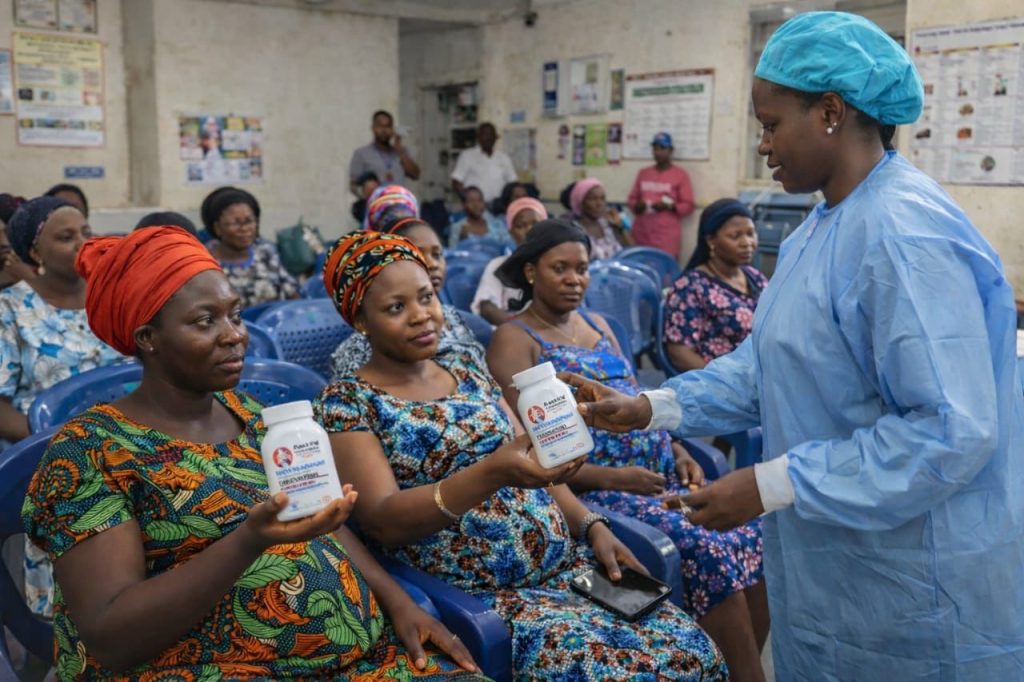
For her second pregnancy, Bolanle’s story changed. Early at a Primary Healthcare Centre in Iyana-Ipaja area of Lagos, she was introduced to Multiple Micronutrient Supplements, MMS.
“I was told to take one every day. They explained it would help build my blood and support my baby. I started feeling stronger. I could move around, go to my appointments, and take care of my family. I stopped feeling dizzy. My baby was healthy when she was born,” she said.
The MMS was provided free of charge at the clinic.
“I couldn’t have bought it myself.. Things are expensive, but they gave it to us. It felt like someone cared,” she said.
“Within weeks, I had energy to move around, attend my checkups, and care for my family. I felt stronger, and my baby was healthy at birth.”
According to medical experts, unlike traditional iron and folic acid tablets, MMS contains 15 essential micronutrients, including vitamins A, B-complex, C, D, E, folate, and minerals like iron, iodine, zinc, selenium, and copper.
This makes it especially effective for pregnant women in low-resource settings. The MMS is helping women like Bolanle overcome the maternal health crisis.
Challenge of anemia
The 2024 Nigeria Demographic and Health Survey (NDHS) says, nearly half of women aged 15–49 are anaemic, and 50 percent of pregnant women face complications from anemia.
For Bolanle, a bottle of MMS served her for about six months and the second bottle lasted till she gave birth.
“It was like magic and I could not compare it with my experience during my first pregnancy. I am grateful to the government and other companies who provided for us. I could not have bought them easily.
“I know my baby is strong because I took care of myself. If this small tablet helped me, it can help so many others.”
However Good Health Weekly’s investigation showed that her story reflects a larger truth in a country grappling with anaemia, MMS can transform lives, families, and communities. With sustained funding, reliable distribution, and widespread education.
A nurse at the centre, under anonymity told Good Health Weekly, that she has witnessed the change firsthand.
“Since we started distributing MMS, the difference is clear. Women complain less about extreme weakness and dizziness. They are attending checkups regularly and carrying pregnancies to term without severe complications.”
She noted that many women arrive at clinics already nutritionally depleted.
“Some eat only once or twice a day,” she said. “Protein, fruits, and vegetables are often unaffordable. MMS helps fill those gaps and supports both mother and baby.” But the supply is inconsistent.
“There are weeks when we run out. When that happens, women are disappointed. Some cannot afford to buy MMS privately. Interruptions in supplementation reduce the benefits for both mother and child. You cannot save lives from a warehouse. Supplements must reach the women who need them, when they need them.”
MMS as cornerstone
Advocates like the Executive Secretary of the Civil Society Scaling Up Nutrition in Nigeria, CS-SUNN, Mr. Sunday Okoronkwo, MMS could become a cornerstone of Nigeria’s maternal health strategy, ensuring more women survive pregnancy, thrive in motherhood, and give their children healthy start.
Giving a broader perspective Okoronkwo said: “Pregnant women traditionally receive iron and folic acid — just two micronutrients. MMS provides about 15 essential micronutrients, including vitamins A, B-complex, C, D, and E, and minerals like zinc, iodine, selenium, and copper.
“When a woman is pregnant, her body requires more nutrients to support her own health and the baby’s development. If deficiencies are widespread, it makes sense to address them comprehensively rather than partially.
“Regular supplementation with MMS can prevent anaemia, improve birth outcomes, and reduce fatigue. It makes sense to introduce MMS widely and ensure pregnant mothers receive them.”
He explained that the Child Nutrition Fund (CNF), allows states to procure nutrition commodities like MMS, Ready-to-Use Therapeutic Food (RUTF), Small-Quantity Lipid-Based Nutrient Supplements (SQ-LNS), and Micronutrient Powders (MNP) for children. “For every naira a state contributes, donors match it. That doubles the resources available for these life-saving interventions.”
Removing bottlenecks
Okoronkwo pointed out that administrative bottlenecks and logistical challenges remain major hurdles.
“Some commodities remain in warehouses while primary healthcare centers report shortages. Adequate planning must account for procurement, storage, and distribution. Only then can these supplements reach mothers and children effectively.
“MMS should be manufactured in Nigeria at prices lower than imported alternatives. This guarantees accessibility for all women and adolescent girls, especially those who cannot afford nutrient-rich meals.
“Some states, including Lagos, have released funds for nutrition interventions, but the rising prevalence of malnutrition demands more robust action,” he said.
Speaking, the Assistant Director at the Federal Ministry of Health and Social Welfare, Mrs. Helen Achimugu, took a public health perspective.
Preventing anemia
“Anaemia during pregnancy significantly increases the risk of maternal death, premature delivery, and poor child outcomes. Addressing micronutrient deficiencies is essential to improving maternal and child survival in Nigeria.”’
Kunle Ishola, Acting Programme Manager at a maternal nutrition group, stated, “Investing in MMS is far less costly than treating complications from severe anaemia. It is preventive medicine that saves lives and resources,” he said.
Also in a report, Mrs. Fadairo Taiwo, Lagos State Nutrition Officer who provided the Lagos state’s statistics said: “NDHS 2023 shows 17.3 percent of under-five stunted children are in Lagos. Wasting affects 6 percent, and 14.3 percent are underweight,” she said.
“Lagos has fully embraced MMS, but consistent supply and monitoring are vital to maintain progress. In Lagos, the government has approved counterpart funding for procurement through UNICEF. This paves the way for wider distribution across public health facilities,” Taiwo stated.
For Bolanle, the statistics translate into personal reality.
“This tablet helped me carry my pregnancy safely. I know my baby is strong because I took care of myself. If it helps me, it can help many others.”
Her story, echoed by health workers and policy experts, illustrates the transformative potential of MMS.
According to them, it is a small tablet with enormous impact, offering hope for healthier pregnancies, stronger mothers, and brighter futures for Nigeria’s children.
The post Maternal health: How micronutrient supplement is tackling Nigeria’s anaemia crisis appeared first on Vanguard News.