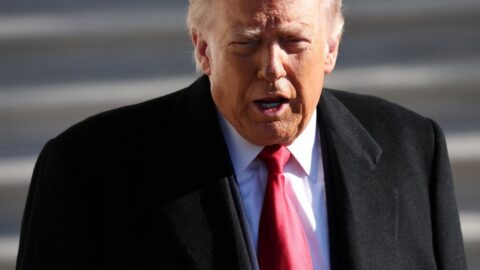
Donald Trump has ordered the world’s largest carrier to sail from the Caribbean Sea to the Middle East in an effort to increase pressure on Iran amid discussions over curbing its nuclear and ballistic missile programmes.
The USS Gerald R Ford and its supporting warships should take about three weeks to return to the region, where it will join the USS Abraham Lincoln, dramatically increasing the military firepower available to the US leader.
On Tuesday, Trump said he was “thinking” about sending a second carrier strike group to the Middle East, in an interview with Axios, though at that point he said he believed Tehran was willing to strike a nuclear deal.
The US and Iran held a round of indirect negotiations in Oman last week, and further discussions were expected to follow, but so far no date has been scheduled.
Reports began circulating in US media on Thursday that the Ford was the carrier that had been nominated to set sail, a day after Trump met Israel’s prime minister, Benjamin Netanyahu, in Washington to discuss the emerging negotiations with Iran.
Iran has indicated it is willing to curb its nuclear enrichment programme in return for sanctions relief, but has rejected other demands. Israel wants Iran to limit its ballistic missile programme and cut support for Hezbollah and other proxy groups as well.
Trump’s rhetoric about Iran has changed markedly over the past month. At first he appeared to suggest that he wanted to intervene – telling people protesting against the country’s regime that “help is coming”. But at the time the US had few military assets available.
That changed with the arrival of the Lincoln carrier strike group, but by then the Iranian regime had largely regained control of the streets by killing thousands of people, and possibly tens of thousands, in the most brutal crackdown in the country’s recent history.
Meanwhile, the US president’s focus appeared to have moved to curbing Iran’s nuclear programme – already set back in a summer bombing campaign by Israeli and US air forces during last summer’s 12-day war.
The Ford carrier strike group had been sent from the eastern Mediterranean at the end of October, and arrived in the Caribbean Sea in mid-November as Trump increased pressure on Venezeula’s former president Nicolás Maduro.
It played a central role in the extraordinary seizure of Maduro by US forces in early January, and had remained in the Caribbean. However, sending the carrier and its allied warships back to the Middle East makes for an unusually long deployment: it left the US in June 2025 and has no obvious date of return.
On Thursday Trump warned Iran that failure to reach a deal with his administration would be “very traumatic” and said he hoped talks would conclude shortly.
“I guess over the next month, something like that,” Trump said in response to a question about his timeline for striking a deal with Iran on its nuclear programme. “It should happen quickly. They should agree very quickly.”