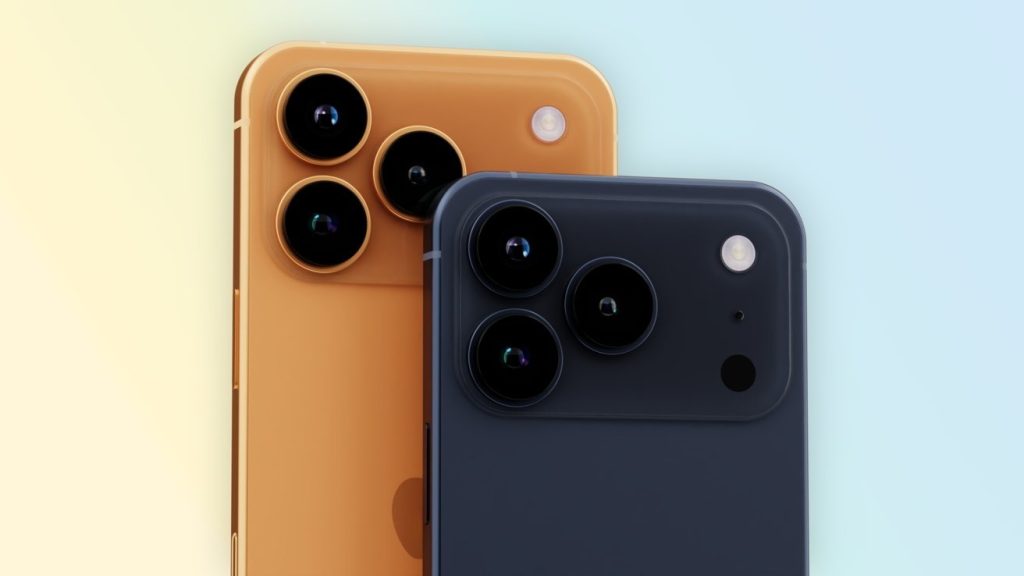
Apple’s standard iPhone 17, released in September 2025, has proven to be a commercial hit. Starting at $799, the device reportedly sold out in several markets during the preorder window and remained in short supply through mid-December.
Its strong sales were driven by premium features that narrow the gap between the base model and the Pro variant.
The iPhone 17 sports a 6.3-inch OLED display with ProMotion 120Hz refresh rates and an Always-On display. It also includes a 48-megapixel main and ultra-wide camera system, a minimum of 256GB storage, and Apple’s A19 chip. While the Pro version adds a telephoto lens, better battery life, and a more advanced A19 Pro processor, those upgrades come at a $300 premium.
Still, Android buyers—especially those open to Chinese brands—have access to several flagship devices launched in late 2025 and early 2026 that push beyond Apple’s standard model in performance, cameras, and battery technology.
OnePlus 15
OnePlus, an Oppo subsidiary, continues to be one of the most accessible Chinese brands in Western markets. The OnePlus 15 starts at $899.99 and offers up to 12GB RAM, surpassing the iPhone 17’s 8GB memory. Powered by Qualcomm’s Snapdragon 8 Elite Gen 5 chip, the phone delivers strong benchmark scores, particularly in multi-core performance.
The device features a 6.78-inch display with refresh rates up to 165Hz for select gaming scenarios, triple 50-megapixel rear cameras including a telephoto lens, and a 32-megapixel front camera. Its standout feature is a massive 7,300 mAh battery with 80W wired and 50W wireless charging, easily outperforming the iPhone’s battery capacity and charging speeds.
Xiaomi 17
Xiaomi’s base 17 model matches the iPhone 17’s 6.3-inch display size but offers higher peak brightness and an ultrasonic fingerprint scanner. Running on the same Snapdragon 8 Elite Gen 5 chip, it also delivers faster benchmark results and offers up to 16GB RAM and 1TB storage.
The phone includes three 50-megapixel rear cameras with Leica optics and a 50-megapixel selfie camera. It supports 8K video recording and packs a 7,000 mAh battery with 100W wired and 50W wireless charging, plus reverse charging functionality.
Realme GT 8 Pro
Realme’s GT 8 Pro features a customizable rear camera module design and a 6.79-inch high-resolution display with 144Hz refresh rates and extremely high brightness. It also uses the Snapdragon 8 Elite Gen 5 chip, paired with up to 16GB RAM and 1TB storage.
Camera hardware includes a 200-megapixel periscope zoom lens, along with 50-megapixel wide and ultrawide sensors. The phone’s 7,000 mAh battery supports ultra-fast 120W wired and 50W wireless charging, and advanced cooling technology helps manage heat during gaming and heavy use.
Nubia Z80 Ultra
The Nubia Z80 Ultra stands out with its under-display selfie camera, delivering an uninterrupted full-screen experience. The device has a 6.85-inch display with 144Hz refresh rates and a boxy design.
Its triple-camera system includes 50-megapixel main and ultrawide sensors and a 64-megapixel telephoto lens. With up to 16GB RAM, 1TB storage, and a 7,200 mAh battery supporting 80W charging, the Z80 Ultra competes strongly with Apple’s flagship hardware.
Honor Magic 8 Pro
Honor’s Magic 8 Pro features a pill-shaped display cutout enabling 3D facial recognition similar to Apple’s Face ID, along with an ultrasonic fingerprint scanner. The 6.71-inch OLED display supports 120Hz refresh rates and extreme brightness levels.
The phone offers a triple 50-megapixel camera setup plus a 200-megapixel telephoto lens optimized for low-light photography. It also integrates AI features and voice-controlled functions. Battery capacity reaches up to 7,100 mAh, with support for fast wired and wireless charging.
Why These Phones Were Selected
The base iPhone remains one of the world’s most popular smartphones, with the iPhone 16 ranking as the top-selling phone of 2025. However, Apple’s upgrades to the iPhone 17 have encouraged comparisons with premium Android flagships.
The listed Chinese devices were chosen, per BGR, for their flagship-level performance, display technology, camera systems, and battery advancements. Availability varies by region, with OnePlus and Nubia easier to purchase in the U.S., while Xiaomi, Realme, and Honor are more accessible in Europe and other markets.
While many other competitors exist, these five models highlight how Chinese smartphone makers are pushing hardware boundaries, offering compelling alternatives to Apple’s latest base-model flagship.
The post 5 Chinese smartphones that compete with new iPhone 17 appeared first on Vanguard News.