In the digital age, it’s easy to hit “agree” and scroll past the dense legalese in an app’s Terms of Service (ToS). But if you’ve ever wondered what rights you actually give up when you post content to apps like TikTok, as well as smaller Canadian platforms, the answer may be more troubling than you think.
A Trap in Plain Sight
Most platforms still include a clause that says users own the content they create, this includes your videos, photos, text, and everything you upload. At first glance, that sounds reassuring. But beneath that reassurance lies a broader legal reality: by uploading, you usually grant the company a license to do almost anything with your content.
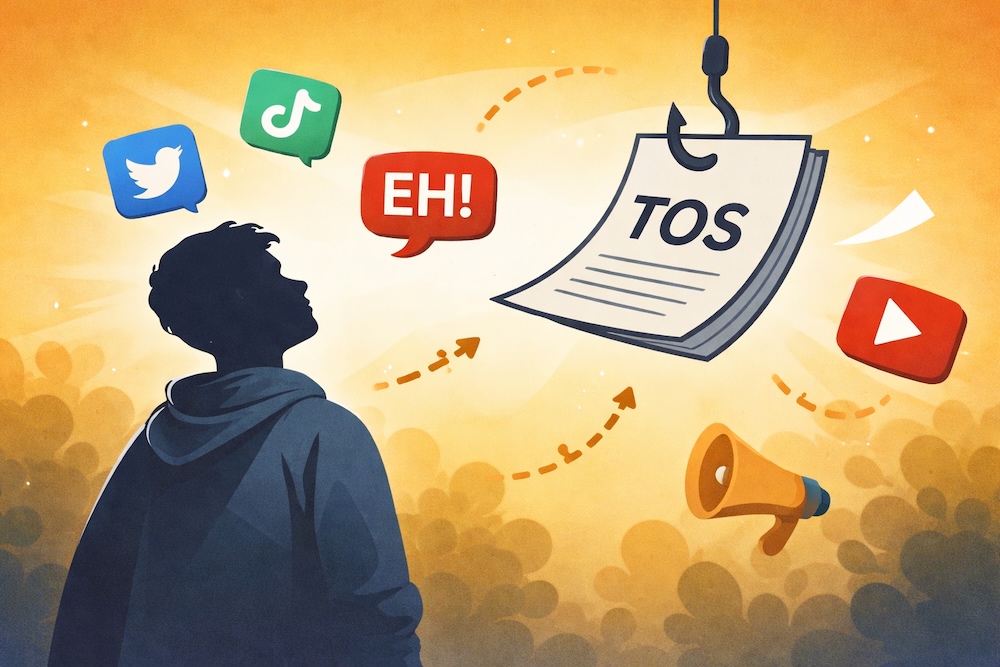
For example, TikTok’s U.S. Terms of Service state that while you retain copyright, by posting content you grant the platform an “unconditional, irrevocable, non-exclusive, royalty-free, fully transferable, perpetual worldwide license” to use, adapt, distribute, publish, and even authorize others to use your material.
In other words, TikTok doesn’t own your videos, but it can use them forever — even in ways you might not expect — and without paying you anything.
What That Really Means For You
Here’s the practical side of this legal language:
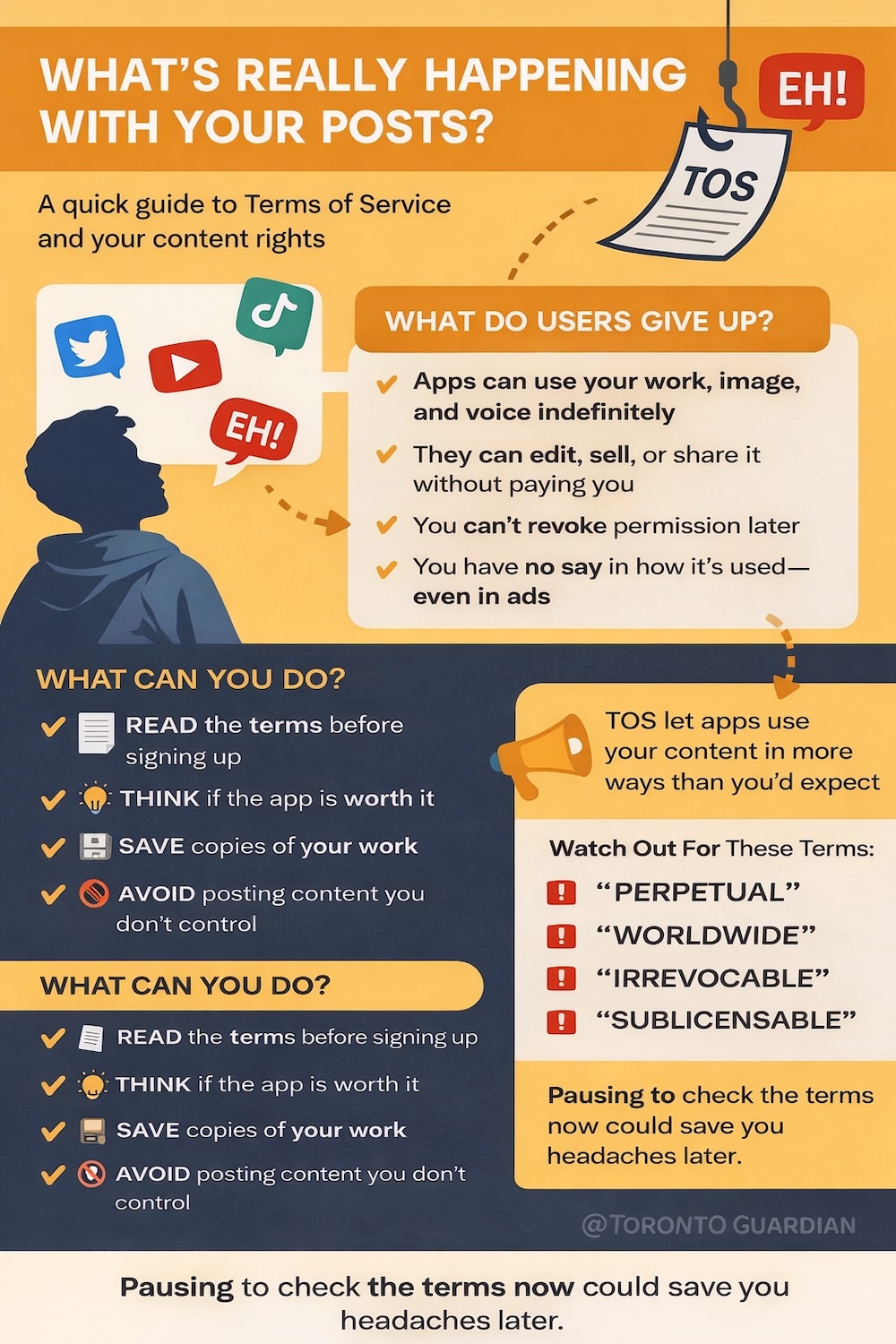
- The platform can reuse your work in ads, promotions, or products without compensation.
- They can modify it, make derivatives, or even share it with others.
- You can’t object later if they use your name, image, or voice in ways you don’t like.
- You don’t get a cut of any revenue generated from your content.
Even though you “own” the original material, the rights you grant are so broad that ownership becomes nearly academic.
It’s Not Just TikTok
The warning applies far beyond TikTok. Many newer apps and services, including Canadian ones, adopt similar terms. For example, the Terms of Service from a Canadian social media company called EH! asks users to agree that any content they post can be:
- used, copied, reproduced, or resold
- adapted or incorporated into other works
- sub-licensed to third parties
- published and distributed in any media, forever
This isn’t limited to videos or text, it can apply to your name, photos, logos, and personal images too. In some cases, users even waive “moral rights,” meaning they lose the legal ability to stop certain uses of their own work. This broad license applies “now known or hereafter developed,” meaning any future technology can also be used with your content.
Why Platforms Ask for These Rights
From a business standpoint, this broad license allows companies to:
- build features like recommendation algorithms
- create derivative products
- run ads tied to user content
- allow other users to remix or reuse content
- even license user content to partners
For them, it’s about flexibility and growth. But for creators, especially young or emerging ones, it can feel like handing over the keys to your digital work.
Should You Be Worried?
Not everyone reading these terms is a professional artist or brand. Sometimes you’re just sharing a fun video. But the concern grows when:
- your content goes viral
- it appears in marketing or ads
- other companies reuse it without credit
- you later regret having granted such broad rights
And importantly, a typical user has no real negotiating power when presented with a TOS. It’s take it or leave it. The legal term for this kind of contract is a “contract of adhesion” – one party with much more power dictates the terms.
What You Can Do
If this seems unfair or concerning, here are a few practical steps:
- Read the terms before signing up (yes, practice!)
- Decide whether the platform is worth the rights you grant
- Keep copies of your content offline
- Avoid posting things you wouldn’t want reused commercially
- Use platforms with more favourable creator terms
Platforms aren’t going away. But the next time an app asks for “worldwide, perpetual rights,” it’s worth pausing to think before you tap agree.