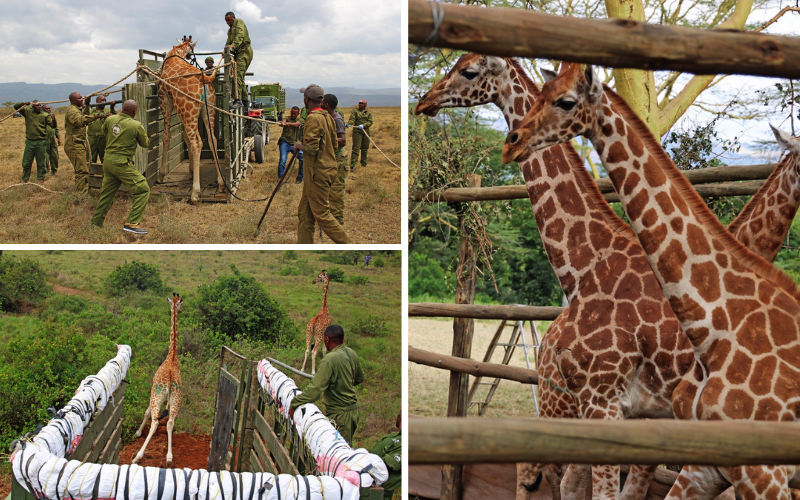
The Kenya Wildlife Service (KWS) has relocated three young Rothschild’s giraffes from Soysambu Conservancy in Naivasha to the Nairobi Giraffe Centre, marking a key step in efforts to conserve the endangered subspecies.
The move aims to enhance genetic diversity, prevent inbreeding, and support long-term population sustainability.
The giraffes, aged between two and three years, underwent a carefully planned translocation carried out in collaboration with the Giraffe Centre and Soysambu Conservancy.
“Aged between 2–3 years, the giraffes were relocated to strengthen genetic diversity, prevent inbreeding, and secure the long-term sustainability of the Nubian giraffe population through continued breeding,” KWS wrote on its official social media pages.
Kenya Wildlife Service successfully completed the translocation of three young Rothschild giraffes from Soysambu Conservancy, Naivasha, to the Giraffe Centre in Nairobi.
Aged between 2–3 years, the giraffes were relocated to strengthen genetic diversity, prevent inbreeding, and… pic.twitter.com/6KBEF6IMze
— Kenya Wildlife Service (@KWSKenya) January 21, 2026
Rothschild’s giraffes, also known as Nubian giraffes, are distinguished by their white “stockings” on the lower legs and coat markings that stop above the knees.
They may also have up to five ossicones, commonly referred to as horns.
Kenya hosts a significant share of the global Rothschild’s giraffe population, making conservation initiatives critical amid threats such as habitat loss and population decline across East Africa.
KWS has emphasised that genetic diversification is essential for the survival of the subspecies, which is listed as endangered.
Introducing unrelated young giraffes into the Giraffe Centre’s breeding programme helps reduce inbreeding risks that can weaken herds and impair reproduction, while improving overall health and boosting chances for future reintroduction into the wild.
Located in Karen, Nairobi, the Giraffe Centre offers an ideal setting for conservation, combining research, breeding, and public education.
Visitors can interact with the giraffes from elevated platforms, promoting awareness, while scientists monitor genetics and behaviour.
KWS says such initiatives underscore the importance of partnerships in driving Kenya’s wildlife conservation agenda and supporting the tourism economy, while safeguarding biodiversity against challenges such as climate change and human-wildlife conflict.
Similar conservation efforts also help distinguish Rothschild’s giraffes from other species, such as the Maasai and reticulated giraffes found in different parts of the country, including Nairobi National Park.