Iceland is one of the top destinations in the world for northern lights—aka the Aurora Borealis—sightings. The best time to catch them is generally between September and April. You can rent a car and venture away from city lights, hire a private guide, or join a tour operator. But what I knew going in was that it’s not always as simple as arriving in Reykjavík, Iceland’s capital, bundled up in a warm coat and looking up at the sky.
I had been to Iceland once before, about eight years ago, and booked a northern lights boat tour during a four-night stay in late November. That year, we had no luck due to heavy cloud cover. Yes, we fully understood there were no guarantees—but trying again has been on my mind ever since.
To say I’ve been obsessed would be an understatement. And based on my social media algorithm feeding me everything Aurora Borealis, I know I’m not alone (honestly, it’s way better than doom scrolling). For the past year and a half, I’d been monitoring aurora activity around the world. What became clear was that this natural phenomenon has been exceptionally active this year, with forecasters saying it will continue into 2026. My thoughts? TIME TO GO!
Arriving in mid-December turned out to be one of the most magical times to visit Iceland. Reykjavík sparkles with beautiful holiday lights, and with a bit of research—and a whole lot of manifesting—my dream of seeing the northern lights finally came true.
Below are tips and things you should know before heading out to see the northern lights in Iceland.
Tour vs. Hunt
As mentioned, there are many ways to try to find the lights—but not all tour operators are the same. Some tours follow a predetermined route within a set timeframe, often in large buses. A hunt (or chase), however, is a completely different—and far more thrilling—experience.
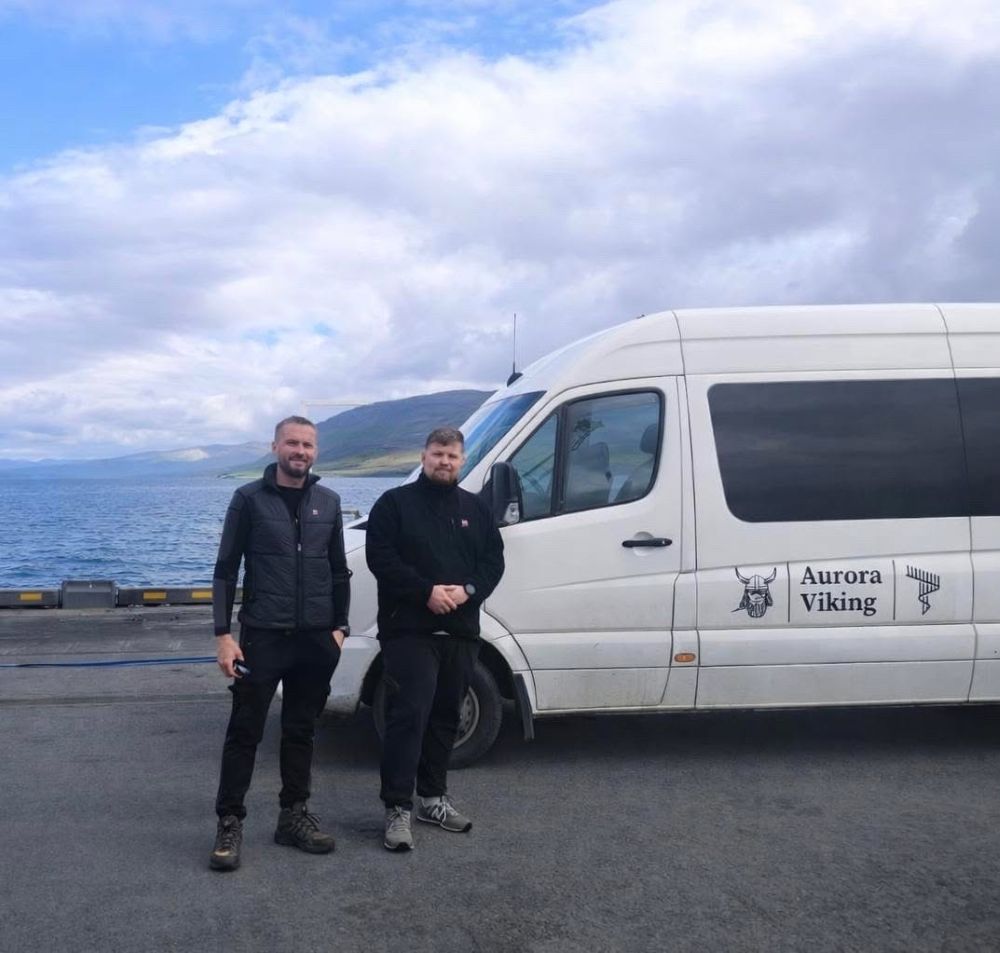
This time, we opted for a hunt with a small, locally run team called Aurora Viking. I had been keeping an eye on Reddit and social media, and while Aurora Viking wasn’t mentioned as often as some larger operators, the feedback was incredibly consistent. Everyone talked about their persistence and determination.
What I quickly learned is that Aurora Viking bases their northern lights hunts on science, data, and deep local knowledge. As 34th-generation Norse settlers, founders Emil and Kolbeinn wanted their experience to connect guests more deeply to Viking heritage. As seasoned guides, they’ve combined passion, experience, cultural storytelling, and forecasting technology to create an unforgettable northern lights hunt—fun and insightful.
Emil and Kolbeinn are genuinely passionate about finding the lights. With the latest technology, they can forecast solar activity in real time—about one hour in advance of a potential sighting. That’s enough time to reliably drive out of Reykjavík and position themselves in the most ideal locations.
If you’re in it for the thrill of the chase, this is absolutely for you!!
The Night of the Chase
Pickup was conveniently close to our hotel—just a five-minute walk. Our ride was a small, comfortable, heated van. Our hunter and guide, Tomas, wasted no time hitting the road, explaining that we were racing against incoming clouds and would be heading north that night. Inside the van, a monitor displayed live data showing growing Aurora activity in real time.
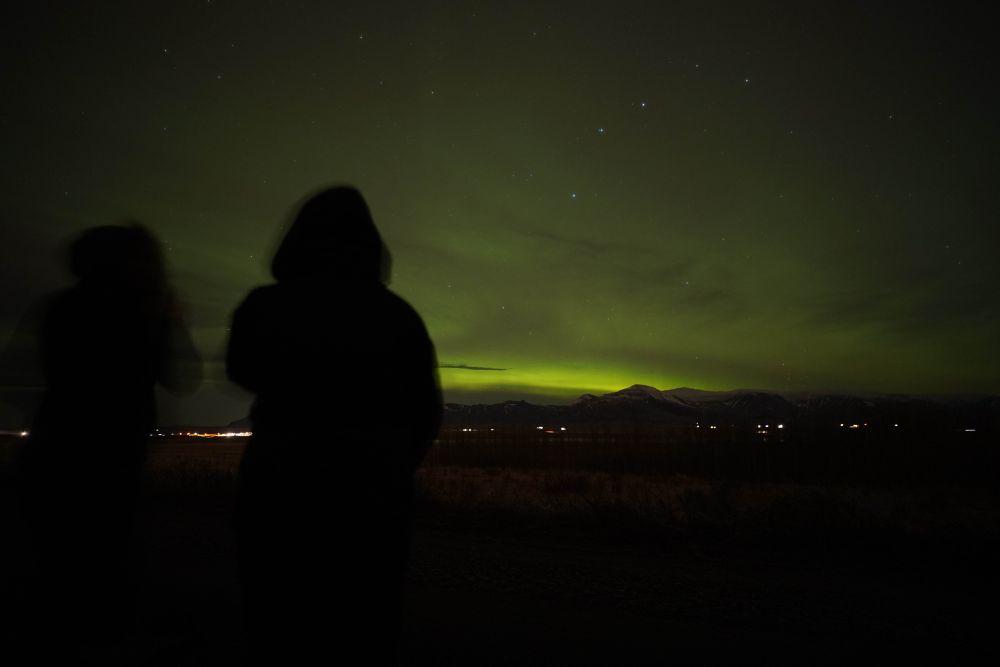
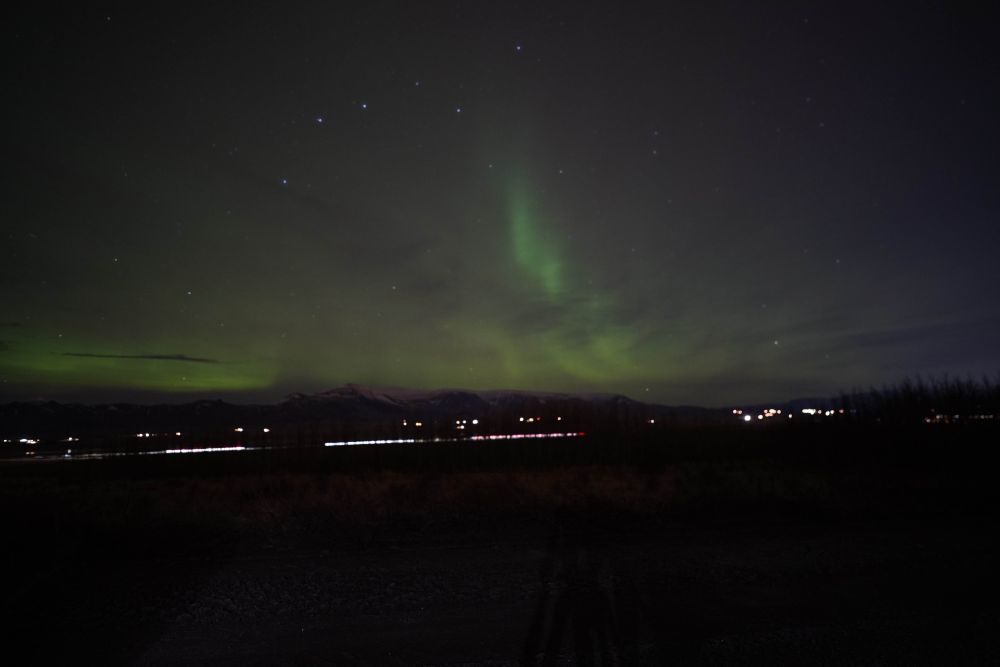
Our first stop, on the outskirts of the city lights, revealed faint auroras on the horizon, set against a mountain backdrop. Tomas quickly jumped out, camera in hand, and captured a few photos of us before the lights faded. But he was convinced we could see more. We all eagerly agreed with his excitement to keep going. Back into the van we went, chasing the lights another hour north—farther into the darkness.
The second stop was a chaser’s dream come true.
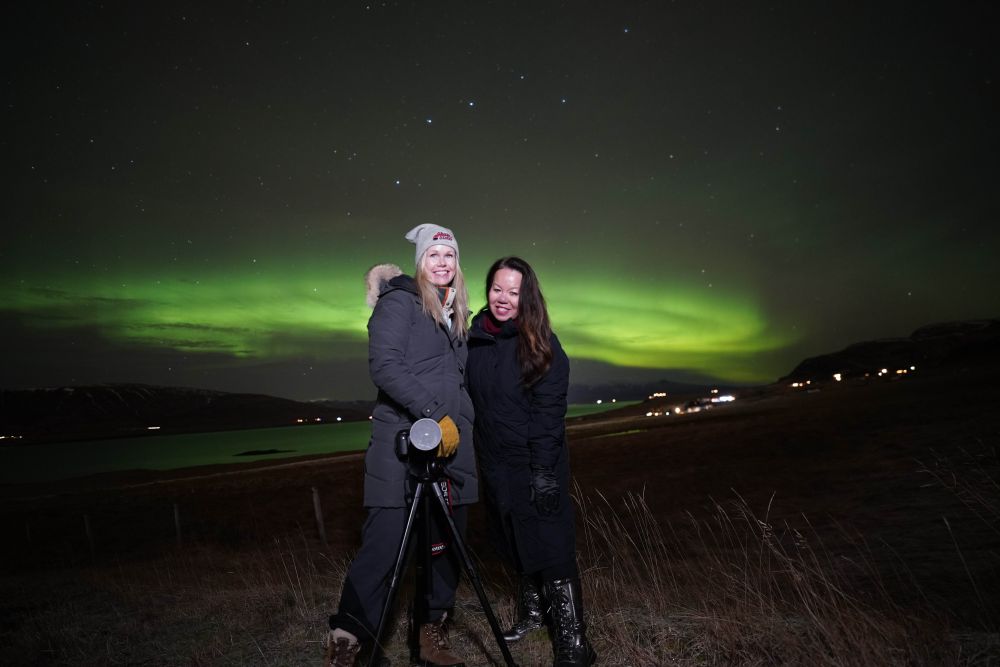
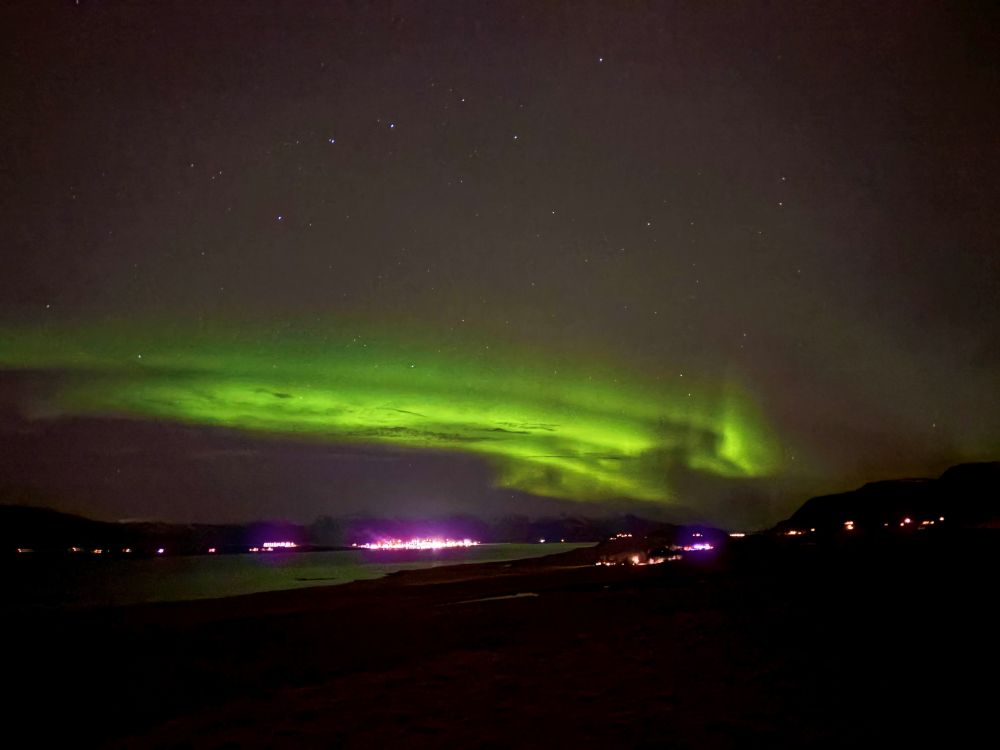
Tomas jumped out of the van with excitement, and my heart started racing. What was in front of us was surreal! A stunning display of lights was visible across the sky, and lingering. Tomas mentioned that auroras often last only a few minutes, but that night, they stayed with us for well over an hour. We were completely in awe.
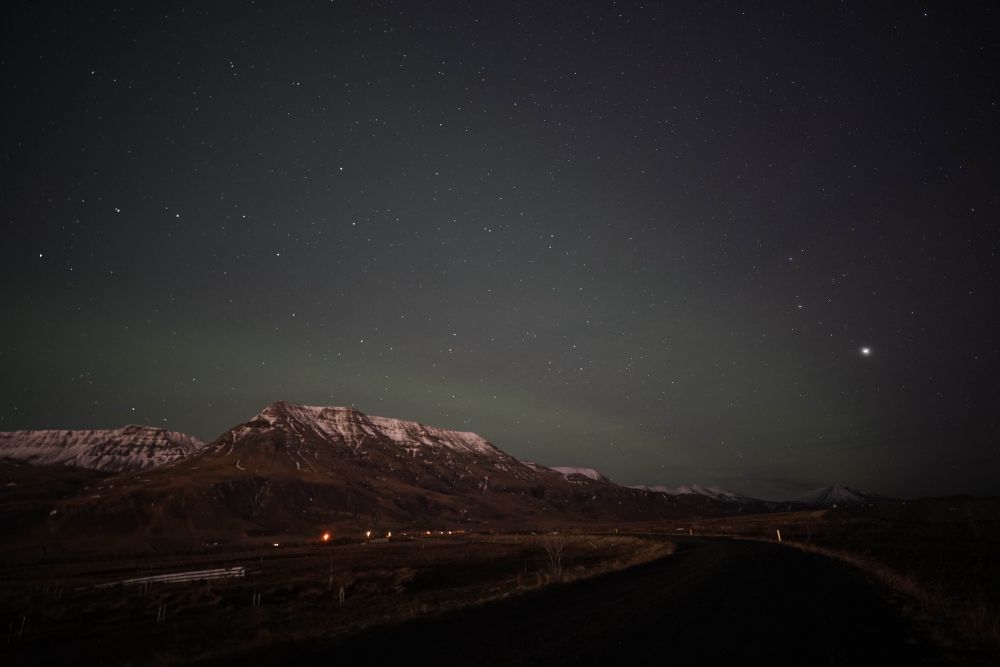
Adding to the magic were the Viking myths and fascinating facts Tomas shared along the way. One story explained how Vikings believed the lights danced when elves were making babies. (And yes—elves are a huge part of Icelandic folklore. I’ll save that for another post.)
He once again set up his camera and tripod to photograph us—for us. Even though we had our own phones and cameras, he knew exactly how to capture the glow, angles, and movement of the Aurora lights.
I joked that he must have been relieved to have such a perfect night—and it was clear how committed his team is to delivering an unforgettable experience. He mentioned only once that sightings are never guaranteed, yet his confidence that evening was reassuring.
Once Aurora Viking commits to a chase, they’ll go anywhere from three to six hours, depending entirely on conditions. There’s no standard route—just spectacular, remote lookout points with no other tour buses in sight. It’s also worth noting that their smaller vans also allow them to access incredible viewpoints that larger buses simply cannot access.
Best Time of Night to Go
Winter is ideal since daylight hours are short. In December, the sun rises around 11:30 a.m. and sets around 3:30 p.m. On our night, we boarded the van at 8 p.m. and returned around midnight.
That said, Aurora Viking operates year-round and offers several ways to experience the magic of the northern lights.
Other Tips
Often, people say the lights aren’t as vibrant to the naked eye—and while that can be true, once my eyes adjusted (and with my glasses on), I could definitely see hints of green. Cameras, however, are far more sensitive to colour. Green is the most common hue since it occurs at lower altitudes in Earth’s atmosphere, but auroras can also appear pink, blue, purple, yellow, and even white.
To capture the lights on my iPhone 16 Plus, I made sure Night Mode was turned on and held the phone as still as possible so it could process the image properly. Videos work too—just avoid moving too quickly to keep the footage crisp.
It’s also worth noting that your eyes need about 20–30 minutes to fully adjust to the dark. Bundle up, stay off your devices, and maybe count the stars while you wait.
Northern lights aren’t limited to ribbon-like waves. That night, we also spotted rare Valkyries, which shoot straight upward like flames, along with angel forms and light pillars.
Be sure to wear proper footwear, a warm coat, hat, and gloves. It feels significantly colder outside the city, and Aurora Viking’s stops are often rugged and off the beaten path. Expect uneven ground, slippery surfaces, and very dark conditions.
If you’re staying in Reykjavík for several days, book your northern lights experience early in your trip. That way, you have flexibility to reschedule in case of unfavourable weather.
And if everything works in your favour, you just might get your Viking moment—Tomas even brought a few fun props for photo ops.
Oh—and one last thing: use the bathroom before you go. There are no rest stops.
Happy chasing!