President William Ruto has brokered a deal that has seen Sudan lift its 20-month ban on Kenyan tea imports, signalling a thaw in relations between Nairobi and Khartoum while reopening an important export market.
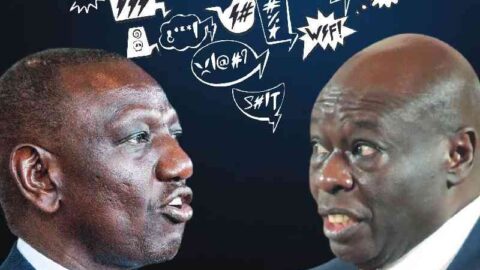
Dr Ruto said on Wednesday that he secured the breakthrough following an engagement last month with Sudanese Prime Minister Kamil Idris on the sidelines of the Common Market for Eastern and Southern Africa (Comesa) summit in Harare, Zimbabwe.
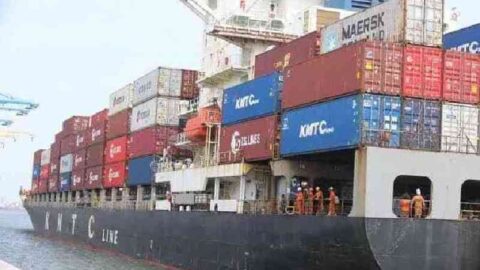
The decision restores access to a market that has historically bought significant quantities of Kenyan tea, offering exporters an opportunity to revive lost business and recover shipments that had been stranded following the trade dispute.
Official data shows Kenya exported 15.9 million kilogrammes of tea valued $29.6 million (Sh3.8 billion) to Sudan in 2023.
The recorded shipments fell to 7.61 million kilogrammes valued at $11.33 million (Sh1.47 billion) in 2024, before reaching 6.8 million kilogrammes worth $11.62 million (Sh1.51 billion) in 2025.
“Kenya welcomes and appreciates this decision, which reopens an important market for our tea, restores opportunities for our exporters and supports the livelihoods of our farmers and their families,” said Dr Ruto.
“This progress demonstrates what dialogue and constructive diplomacy can achieve. We look forward to strengthening our bilateral relations, expanding trade and working together for peace, stability and shared prosperity in our region.”
Sudan’s Minister of Industry and Trade, Mahasin Yaqoub, had earlier announced the lifting of the ban, noting that the decision was anchored on a Cabinet resolution in Khartoum on November 8, 2026.
The trade restriction, imposed in March last year, was triggered by Kenya’s decision to host RSF leader Mohamed Hamdan Dagalo, popularly known as Hemedti, and other political and armed groups in Nairobi in February 2025.
The groups signed a political charter and a transitional constitution intended to establish a parallel authority in Sudan, which was already engulfed in a war between the RSF and the Sudanese Armed Forces.
Khartoum viewed the meetings as an affront to its sovereignty and accused Kenya of providing political backing to the paramilitary group, while Nairobi maintained that it was offering a platform for dialogue.
Sudan first recalled its ambassador from Nairobi before announcing on March 13 the suspension of all imports originating from Kenya through its ports, airports and land crossings.
The latest reversal follows a gradual reopening of diplomatic channels, with Sudan’s ambassador to Kenya, Kamal Gubara, holding discussions with tea industry representatives in Nairobi in August 2026.
The ambassador subsequently indicated that Sudan was willing to reopen dialogue on trade, while by late October he said the process of lifting the restriction had reached its final stages.
By August 2026, more than 3.44 million kilogrammes of tea valued at over $10.3 million (Sh1.34 billion) were still reported to be held in Mombasa warehouses, according to industry accounts.
The prolonged trade disruption also affected demand for particular tea grades, including BP1, which traders say Sudanese buyers had purchased in significant quantities and which proved harder to redirect to alternative markets.