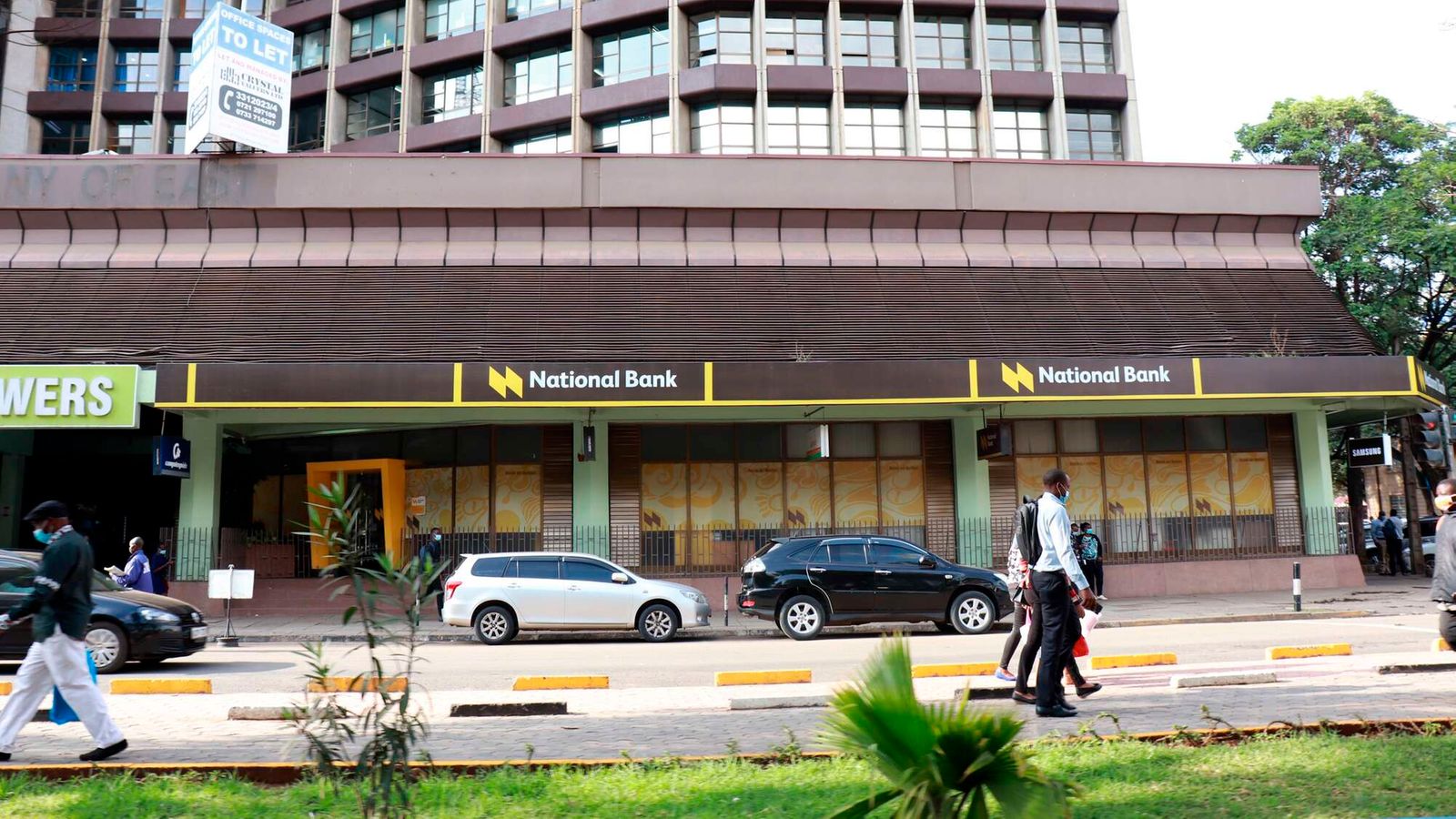
National Bank of Kenya (NBK) has secured a court order allowing it to recover Sh146.8 million from a construction company over a defaulted Shariah-compliant financing facility.
The High Court entered judgment in its favour after finding that it had proved the outstanding amount advanced to Golden Cara Investments Ltd under a Musharakah financing arrangement.
“Final judgment is entered for the Plaintiff against the Defendants, jointly and severally, for the liquidated principal sum of Sh146,874,691,” the judge said in a ruling on November 9.
The court, however, declined to award the bank additional profit claimed on the outstanding amount from July 27, 2020, to the date the suit was filed, saying the claim had not been supported by evidence.
It also rejected the bank’s prayer for commercial interest, ruling that imposing conventional interest on a Shariah-compliant financing arrangement would undermine the principles governing the contract.
“The court is unable to award the claim for profit where no evidence was adduced, and no substantive submissions were made in respect thereof,” the judge said.
Instead, the court awarded statutory interest at court rates on the principal sum of Sh146.87 million from the date of judgment until payment in full.
The dispute arose from a financing agreement entered into to facilitate the Kenya Informal Settlements Improvement Project in Nakuru.
Under the arrangement, NBK provided capital to Golden Cara for the joint venture, while Hamdi Abdi Mohamed and Mohamed Adan Bare executed personal guarantees, undertaking joint and several liability for the obligations.
The bank told the court that the company defaulted on its repayment obligations, while the two guarantors failed to honour their commitments despite statutory demand notices. The notices triggered the acceleration of the outstanding debt and the enforcement of the guarantees.
The defendants did not participate in the proceedings, prompting the Deputy Registrar to enter default judgment on October 14, 2021.
NBK’s witness, Morris Tiema, presented financial ledgers, debentures and guarantees in support of the claim. The court found the documentary evidence sufficient to establish the outstanding principal.
In determining the outstanding claims, the court examined the principles governing Islamic financing, noting that Musharakah arrangements are based on profit-and-loss sharing rather than conventional interest-bearing lending.
The court said parties were bound by the terms of their specific agreement, under which returns were to be generated through the joint venture’s profits rather than predetermined conventional interest.
However, the bank failed to provide evidence establishing the profits accrued before the filing of the suit.
On commercial interest, the court said awarding conventional interest on a Shariah-compliant Musharakah agreement would effectively rewrite the contract and convert an equity-based partnership into an interest-bearing debt.
The court invoked the principle against rewriting contracts, saying it could not impose commercial interest where the parties had entered into an arrangement governed by Islamic financial principles, which prohibit Riba (interest).
It noted that Islamic finance recognises Ta’widh, a form of compensation for late payment intended to discourage default, but said it could not award commercial interest during the contractual period in the circumstances of the case.
The judge said statutory court rates would instead apply after judgment to secure enforcement of the decree without imposing prohibited interest.