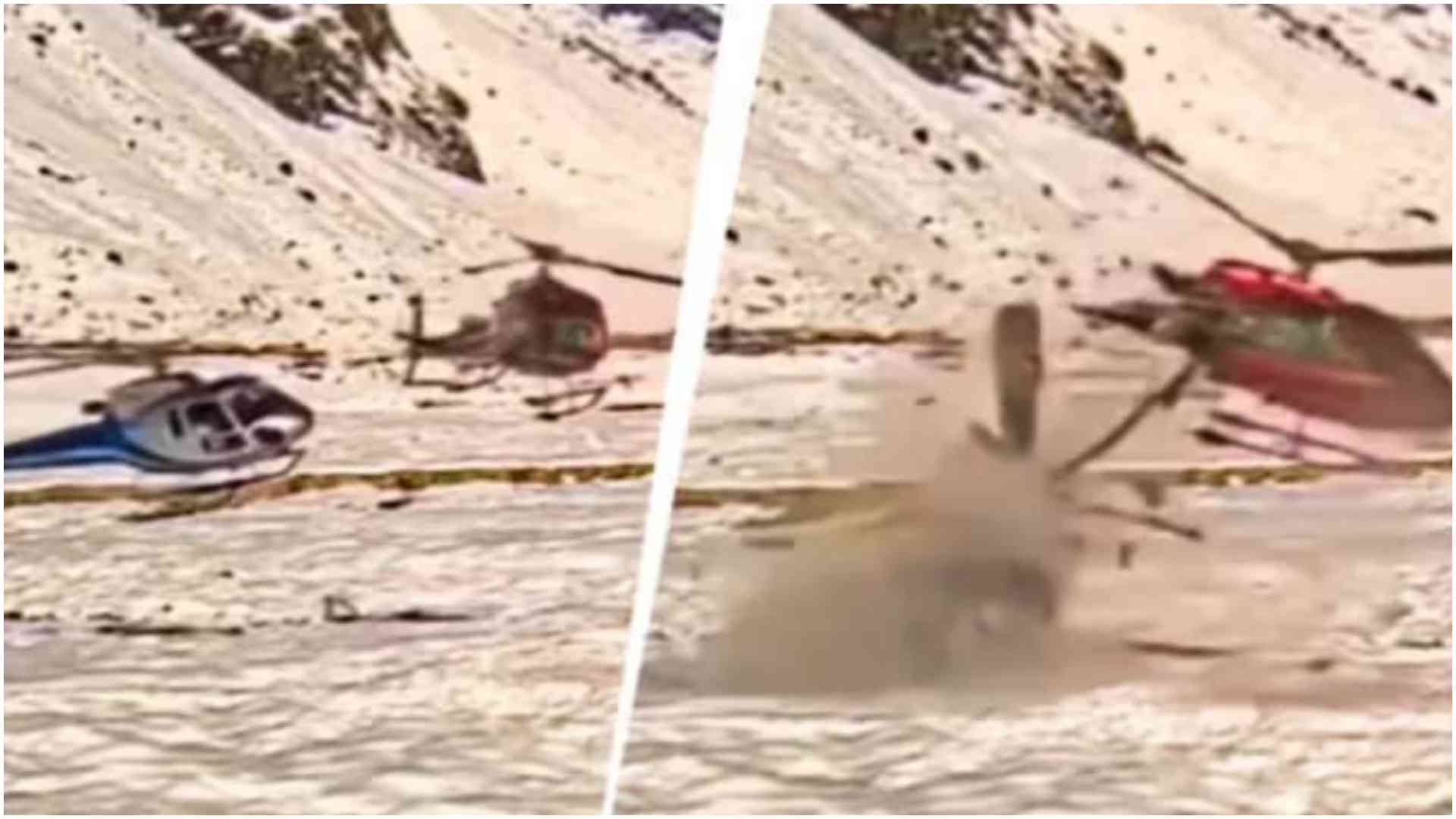
Indian tourist killed as helicopters collide near Mount Everest [Photo/Courtesy]
An Indian tourist was killed and three other people injured after two helicopters collided while attempting to land at a high-altitude helipad near Mount Everest in Nepal.
The accident occurred at around 8:11am local time on Tuesday, November 3, 2026, at Pheriche helipad in the Solukhumbu district, approximately 4,200 metres (13,780 feet) above sea level.
The deceased was identified as 47-year-old Vasanth Kumar Balaramaramadu, a tourist from Chennai, India, who reportedly died at the scene.
Preliminary reports indicate that the collision involved a Fishtail Air helicopter carrying rescued trekkers and an Air Dynasty helicopter transporting cargo.
The aircraft collided when their rotor blades struck each other during landing, causing the accident at the helipad, which serves as a key transit point for trekkers heading to Everest Base Camp.
A 53-year-old tourist from New Zealand, who was aboard the Fishtail Air helicopter, sustained injuries and was airlifted to Kathmandu for medical treatment.
Both pilots survived the collision. The Fishtail Air pilot was taken to a hospital in Kathmandu for treatment, while the Air Dynasty pilot sustained minor injuries.
Authorities from the Civil Aviation Authority of Nepal (CAAN) suspect that possible miscommunication between the pilots may have contributed to the accident.
The helipad is outside the active air traffic control coverage of Lukla Airport, meaning pilots must coordinate their movements independently when approaching the landing area.
Heavy snowfall covering the helipad may also have created visibility challenges, potentially making it difficult for the pilots to assess landing conditions and the position of the other aircraft.
Authorities are expected to investigate the circumstances surrounding the collision to establish its exact cause.
The accident has once again drawn attention to the risks of helicopter operations in Nepal’s mountainous terrain, where aircraft are frequently used to transport tourists, trekkers and climbers along the popular Everest Base Camp route.