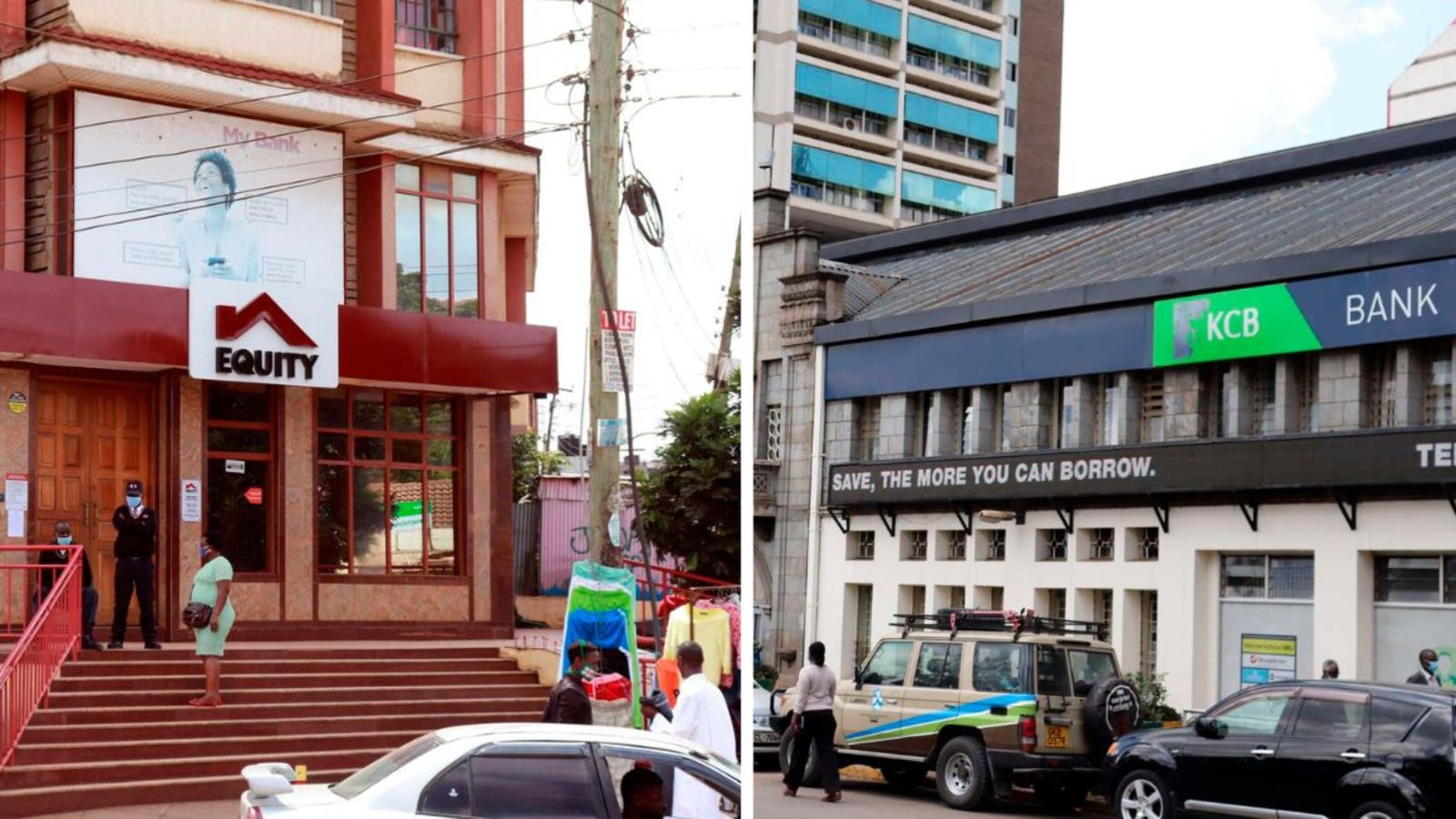
Kenyan banks fell off the list of the fastest-growing lenders in Africa, a new ranking by Financial Times (FT) showed, partly due to a stable shilling against the dollar.
The FT’s latest listing of the World’s top 1000 banks shows no Kenyan lender made it to the list of the top 10 highest movers.
Last year, four Kenyan banks ranked among the fastest-growing lenders in Africa, with KCB Group leading the pack followed by Co-op Bank, Equity Group and NCBA.
“The dramatic dollar gains the Kenyan banking sector enjoyed in 2024 thanks to the strengthening of the shilling were not repeated last year, with the currency largely unchanged against the greenback due to the central bank’s “crawling peg” strategy,” said The Banker.
“The stability of the shilling saw Kenyan lenders slip down the rankings at the expense of other lenders in countries where currencies strengthened against the dollar, even as all but one (Standard Chartered Bank Kenya, whose capital position slipped) recorded increases in Tier 1 capital, assets and pre-tax profits,” it added.
The shilling had traded in a tight band of Sh129.00 to Sh129.92 against the dollar -the most widely used currency in global transactions– for an extended period.
Kenya’s two dominant lenders, KCB Group and Equity Bank, both slipped by two places in Africa rankings, to 15th and 17th, respectively, despite rising in the global rankings.
Globally, KCB Group ranked at position 542, up from 590, while Equity was at position 573 compared to 590 the previous year.
I&M debuted on the list of the world’s largest banks that is published by FT’s The Banker magazine at position 945 which also had Co-operative Bank (842) and NCBA ranked 924.
The Banker ranks the world’s top lenders based on a number of parameters including the size of shareholders’ own capital (tier 1 capital), profitability, operational efficiency, asset quality, liquidity and return on risk.
Kenyan banks also missed out in the list of African banks with the top five return on assets – a parameter they previously dominated at a continental and global platform. Return on assets measures the efficiency of a bank.
The measure is largely driven by wide interest spreads, with the fall of Kenyan banks from the list signalling a narrowing of the spread in the country.
Kenyan banks were replaced on the list by lenders from Nigeria, Egypt and Morocco, which benefited from gains of their local currencies compared to the greenback.
“Following the sharp devaluation of the naira from 2023, the Central Bank of Nigeria in March 2024 significantly increased paid-in capital requirements for commercial, merchant and non-interest banks in 2024, obliging banks to change their licence status, inject additional equity or pursue mergers,” said The Banker.
“Widespread equity raising by lenders saw Tier 1 capital increase by 36 per cent in dollar terms during the year, with Stanbic IBTC Holdings, Standard Chartered Nigeria and Access Holding posting the largest overall gains,” it added.
Access Bank, which acquired National Bank of Kenya from KCB Group to deepen its presence in Kenya, and Zenith Bank, which acquired Paramount Bank to enter the Kenyan market, are some of the lenders who improved their rankings, overtaking Kenyan banks.
Fourteen of the banks ranked among the top 25 lenders in Africa have a presence in Kenya, underlining the lure of the Kenyan market as a launch pad into the East African market and the competitiveness of its banking sector.
Standard Bank Group, which retained its ranking as the top bank in the country, has a presence in the country through its subsidiary Stanbic Bank. Others are South African Absa Group, which ranked third; Nedbank, which bought into NCBA Bank, positioned 5th; Moroccan Bank of Africa (7th) and CIB Egypt (8th).
Kenyan banks are yet to expand to South and West African nations owing largely to their smaller size.
The Eastern African nations where Kenyan lenders have presence have been cash cows owing to their low financial inclusion that has allowed the banks to exercise technological advantage to reap huge.
Markets such as the Democratic Republic of Congo and South Sudan are considered to be volatile, limiting the number of entrants and allowing for wider margins to compensate for the risk.