Artificial intelligence has reached a point where photographs can be fabricated, voices can be imitated, and videos can show people saying things they never said. As the technology becomes more sophisticated, Canadians are facing a new challenge of how to determine what is real in a world where seeing is no longer necessarily believing.
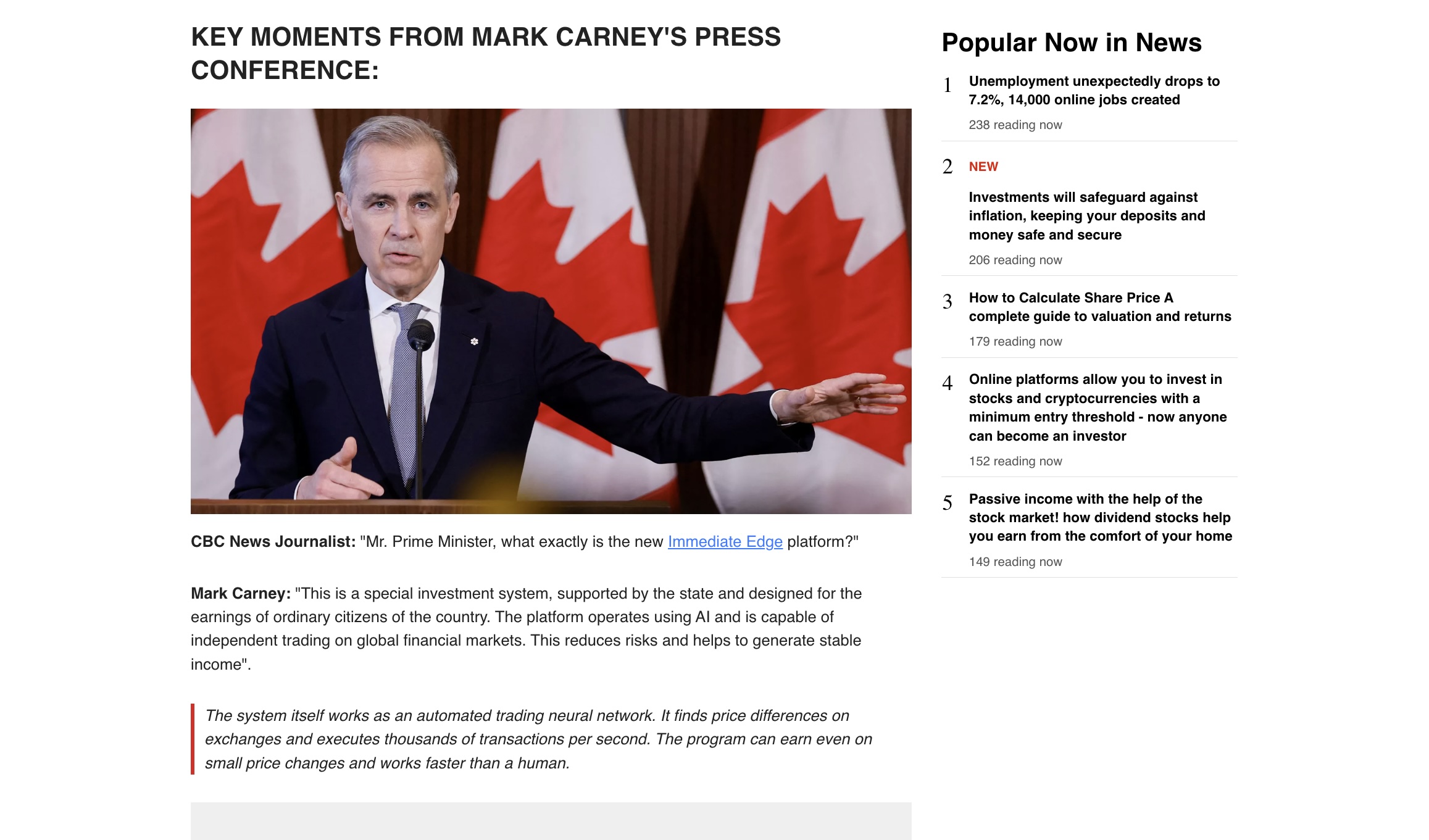
Recent reports of Canadians losing significant sums of money to scams involving AI-generated videos of public figures, including Prime Minister Mark Carney, have brought renewed attention to the dangers of deepfakes. But beyond financial fraud, the technology raises a much larger question about the future of photography, journalism and public trust.

To better understand how we arrived here and what Canadians can do to protect themselves, I spoke with Aviad Levis, an Assistant Professor in the Department of Computer Science at the University of Toronto, whose research in computational imaging uses some of the same generative AI technologies responsible for producing increasingly realistic synthetic content.
His central message was surprisingly straightforward. He believes that rather than trying to become experts at spotting deepfakes, Canadians should become better at verifying where information comes from in order to verify it.
Why AI Deepfakes Have Become So Convincing
For many people, the sudden improvement in AI-generated images and videos feels as though it happened overnight. According to Levis, the technology has actually been developing for years, but several advances have recently come together to accelerate its capabilities.
“I think it comes out of nowhere, not because it just started yesterday, but because we’re on an exponential curve,” he explained. “So it started off slow and now it’s speeding up really, really fast.”
Levis identified three major factors behind the rapid improvement. The first is the enormous quantity of digital information available to train AI systems from websites, social media and user generated content. The second is the increasingly powerful computing infrastructure that we ave available. The third is the significant advances in the algorithms themselves.
The internet provides an extraordinary collection of photographs, videos and other material that can be used to train these systems. Meanwhile, powerful computing clusters allow companies to develop increasingly capable models.
Perhaps most importantly for the average person, the technology has become remarkably easy to use.
Where creating a convincing fake once required considerable technical expertise, modern generative AI tools allow users to produce sophisticated content simply by describing what they want in everyday language.
That accessibility has created opportunities for artists, researchers and businesses, but it has also dramatically lowered the barrier for scammers.
Can We Still Spot a Fake Photograph or Video?
One of the first things I wanted to know was whether there are still reliable clues that ordinary people can look for when examining potentially AI-generated content.
Early AI images frequently contained obvious errors, including distorted hands, unusual facial features and impossible physical details. Those imperfections became familiar warning signs.
Unfortunately, Levis cautioned against relying on them.
“I wouldn’t actually rely on this because the clues are model dependent,” he said, explaining that telltale signs can differ between AI systems and disappear as those systems improve.
Images have already become particularly difficult to distinguish from authentic photographs.
“Images are really hard to tell. I can’t tell anymore,” he said.
Video generation remains more technically challenging because AI must produce a coherent sequence of images, maintaining consistency as objects move and camera angles change.
However, Levis has already encountered carefully produced examples of AI-generated video that he could not distinguish from genuine footage.
He emphasized that this does not mean every person or situation can already be convincingly recreated in video. Nevertheless, he believes the technology is moving rapidly in that direction.
When I asked how long it might take before realistic AI-generated videos become effectively impossible to identify by sight, he declined to give a firm timeline but suggested it could happen within the coming years.
Why Deepfake Detection Software Isn’t a Complete Solution
There are already software tools designed to identify AI-generated images and videos, but Levis warned that these systems face many of the same challenges as the people using them.
He compared the situation to the longstanding battle between computer viruses and antivirus software.
As one system becomes better at detecting threats, new techniques emerge to evade those protections.
AI detection presents an additional challenge because the detection tools themselves often rely on artificial intelligence. They must be trained on examples of generated content, meaning they may struggle when entirely new models begin producing images and videos with different characteristics.
Levis believes these tools still have an important role, particularly within large organizations such as banks and government institutions.
However, he does not consider it realistic to expect individuals to constantly analyze every photograph or video they encounter across social media, messaging applications and news websites.
Instead, he believes the focus needs to shift from identifying visual imperfections to evaluating the credibility of the information itself.
“The more durable thing to do is instead of asking if you can spot whether it’s fake, just ask, where did this come from and who published it?” he said.
“Is there some original source? Is it being reported or corroborated somewhere else?”
In other words, the same critical thinking skills used to evaluate questionable written claims must now be applied to photographs and videos.
How Canadians Can Protect Themselves From Deepfake Scams
When it comes to financial scams, Levis identified urgency as an important warning sign.
A convincing video of a politician, celebrity or financial expert encouraging viewers to act immediately should prompt additional scrutiny, particularly if the message involves transferring money, investing in cryptocurrency or sharing personal information.
Even if the person in the video looks and sounds authentic, the claim itself should be independently verified.
Last year I posted about websites that were scamming seniors with AI Deepfake videos that appear to be from the CBC website after I received a call from a concerned senior who thought it was real.
Levis also discussed the relationship between publicly available personal information and the ability of AI systems to imitate individuals.
Public figures are particularly vulnerable because enormous amounts of photographic, video and audio material featuring them are already available online.
Ordinary Canadians may be able to reduce some of their exposure by limiting the amount of personal content they share publicly.
However, Levis acknowledged that this protection has limitations.
AI systems are becoming increasingly capable of learning a person’s appearance from relatively few examples, a technique known as few-shot learning.
As a result, restricting publicly accessible photographs and videos may reduce the risk of impersonation, but it cannot eliminate it.
His most practical advice was to verify the original source, seek independent confirmation and avoid making immediate decisions when money, personal information or strong emotions are involved.
The Other Danger: When Real Photographs Are Accused of Being AI
During our conversation, I shared an experience from one of our own publications that illustrated another troubling consequence of generative AI.
For a historical feature on our Halifax website, we published an archival photograph of Peggy’s Cove from 1951.
Despite the image being an authentic historical photograph, some readers immediately began commenting that it was AI-generated. Others questioned why we would use artificial intelligence when genuine historical photographs were available.

Over the following couple of weeks, the discussion gradually shifted as more readers recognized that the image was real and began challenging the original accusations.
It was a small example showing that people are no longer simply being fooled by fake photographs. They are also beginning to distrust genuine ones.
Levis agreed that this development presents significant concerns, particularly when images involve politics or controversial subjects.
If someone encounters authentic visual evidence that conflicts with their existing beliefs, dismissing it as AI-generated can become an easy way to avoid confronting the information.
“This creates a really serious problem for journalism in society in general,” he explained, “because they don’t just make it easier to fabricate evidence. It also makes it easier to cast doubt in something genuine.”
This may ultimately prove to be one of the most damaging consequences of deepfake technology.
A fabricated photograph can mislead an audience, but widespread suspicion about photography itself threatens the credibility of genuine evidence.
When Does an AI-Enhanced Photograph Stop Being a Photograph?
Our discussion also moved beyond deliberate deception into a more complicated question about the future of photography.
Levis described attending a conference where a representative from a major technology company demonstrated an experimental image-enhancement capability.
In the demonstration, a dog appeared so far away in a photograph that it occupied only a handful of pixels. Using AI, the system produced a detailed, high-resolution image of the animal.
The result looked like a photograph, but the missing details had not actually been captured by the camera.
“It’s an AI-generated image of what the AI thinks that dog looks like,” Levis explained.
The distinction is important.
Traditional photography records light from a scene, even when software subsequently adjusts exposure, colour or sharpness. Generative AI can go further by creating visual information that was never recorded in the first place.
Levis suggested that future photography could increasingly involve using an original image as a reference from which AI generates a more polished version.
He also pointed out that smartphone photography already relies heavily on computational processing.
Photographs of sunsets or the northern lights, for example, can appear more vivid on a phone screen than the scene looked to the human eye.
Generative AI may simply extend a process that has already been changing photography for years.
Levis stressed that his predictions about the future of photography are speculative, but they raise interesting questions about what people will eventually consider an authentic image.
Should Social Media Platforms Change How They Label AI Content?
Another challenge involves how social media platforms identify material created or modified using artificial intelligence.
Levis believes platforms should provide more specific information about how AI was used rather than simply applying a broad AI-generated label.
During our conversation, I mentioned an experience in which we arranged six genuine food photographs into a collage and used AI to add captions identifying the dishes.
Instagram subsequently labelled the resulting image as AI-generated, despite the photographs themselves being authentic.
Levis noted that situations like this can create problems for photographers, artists and other creators.
As AI becomes integrated into ordinary editing software, a simple AI label may no longer communicate whether an image is entirely fabricated, substantially altered or merely edited.
He believes greater transparency about the specific modifications would help audiences make more informed decisions.
Could AI Make Human Imperfections More Valuable?
Toward the end of our conversation, Levis raised an unexpected possibility. As AI-generated content becomes more polished and widespread, people may begin to place greater value on imperfections.
He described reviewing academic papers, graduate applications and other written materials that increasingly share the same polished, grammatically consistent style.
When he encounters writing that feels distinctly human, including small mistakes and individual quirks, he sometimes finds it refreshing.
He wondered whether a similar shift could eventually occur in photography, music and other creative fields.
Rather than always seeking perfectly enhanced images, flawless performances or technically polished writing, audiences may begin appreciating the characteristics that distinguish human work from machine-generated content.
The imperfections that technology has spent decades helping us eliminate could become part of what makes creative work feel authentic.
Three Things Canadians Should Do Before Trusting Online Content
Despite the complexity of the technology, Levis’s advice for navigating an increasingly AI-generated internet comes down to three practical habits:
- Check the original source. Determine who first published the image, video or claim, and whether that source is credible.
- Look for independent confirmation. See whether established news organizations or other trustworthy sources are reporting the same information.
- Avoid acting immediately. Be especially cautious when content creates urgency, provokes a strong emotional reaction or asks for money or personal information.
Common sense remains important, but Levis cautioned that something appearing unusual or implausible does not automatically make it fake.
The goal is not to assume everything is artificial. It is to recognize that both genuine and fabricated content require thoughtful evaluation.
For Levis, the most important change is how we approach information in the first place.
“I wouldn’t ask people to become experts in detecting deepfakes, but rather, verify the sources of information,” he said.
As AI-generated photographs and videos become increasingly indistinguishable from reality, that may be the most important lesson of all.
We may no longer be able to trust everything we see, but we can become more careful about deciding what to believe.