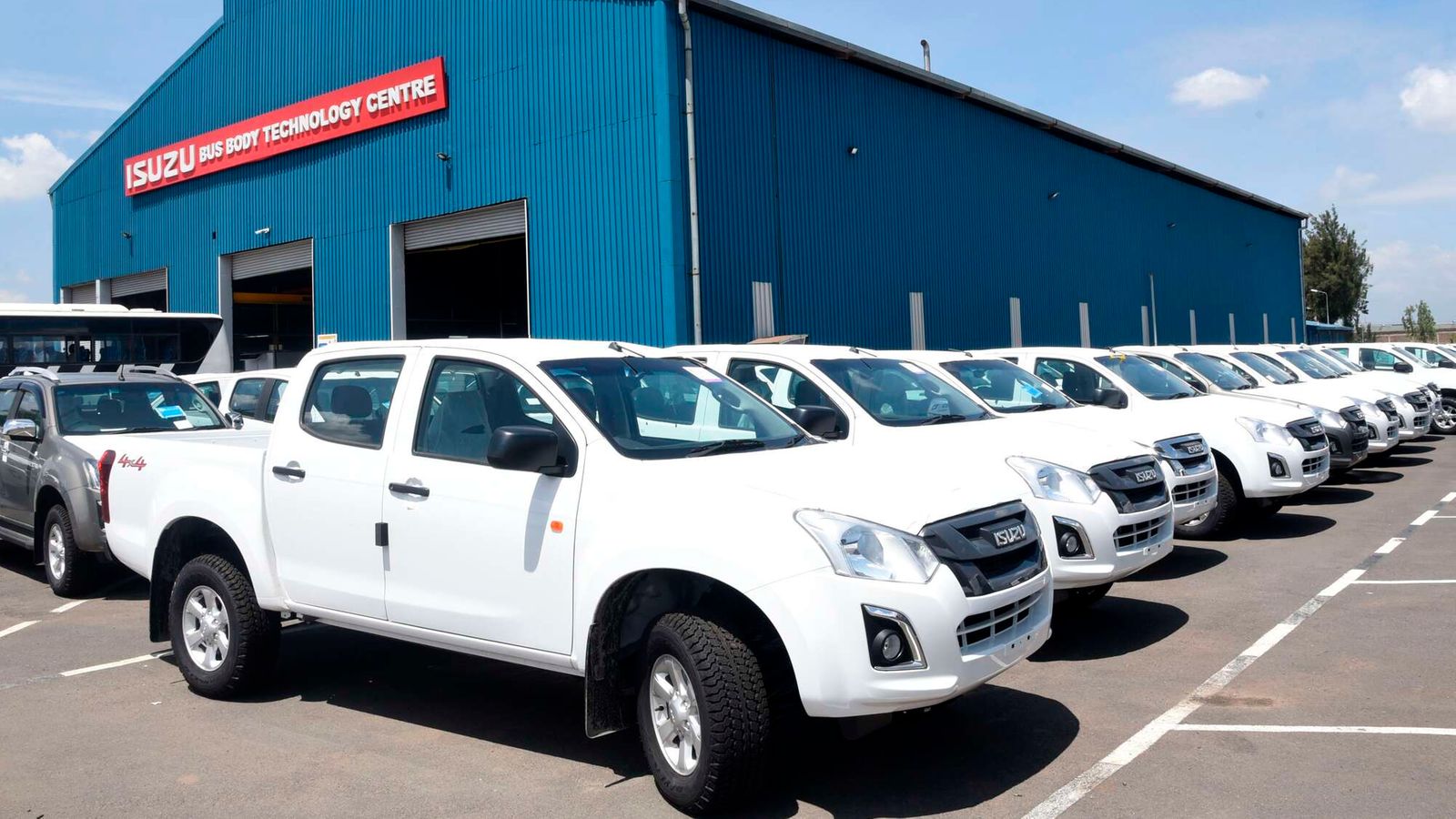
New vehicle dealers have recorded a 27.03 percent jump in sales, largely driven by government payments to road contractors and renewed infrastructure activity that boosted demand for trucks, pick-ups and prime movers.
Dealers sold 12,606 showroom vehicles between January and September 2026 compared with 9,924 in the corresponding period last year, according to Kenya Motor Industry Association (KMI) data.
The increase represents 2,682 additional units, the highest since the pre-Covid period.
The industry data shows truck sales rose 38.3 percent to 5,527 units from 3,997, while single-cab pick-ups posted a 55.9 percent climb to 2,089 from 1,340, signalling stronger demand for vehicles used in commercial operations.
Sales of prime movers, heavy-duty vehicles used to haul trailers, surged 63.6 percent to 1,088 units from 665, pointing to increased demand for freight transportation and heavy commercial equipment.
Isuzu East Africa, the market leader, attributed the industry’s expansion largely to the mobilisation of public funds to settle arrears to government contractors and restart road projects, which the firm said has stimulated demand for heavy commercial vehicles.
“Industry performance was primarily propelled by government fiscal intervention—specifically the mobilisation of Sh139 billion to clear contractor bills and restart road projects, which spurred heavy commercial vehicle demand,” Isuzu wrote in the KMI report.
The expansion comes as the government reduces arrears owed to road contractors, easing cash flow pressures that had forced some firms to abandon projects and exposed others to the risk of losing assets financed through bank loans.
Receiving overdue payments potentially helped release cash previously tied up in unpaid certificates, allowing contractors to meet obligations to suppliers, service loans and resume stalled works.
Renewed construction activity in turn potentially supported demand for trucks and other commercial vehicles.
KMI had earlier in the year identified increased economic activity in State-backed affordable housing construction, road maintenance and agribusiness as key drivers of showroom vehicle sales this year.
Isuzu sold 5,722 vehicles during the nine-month period, a growth of 22.5 percent from 4,670 a year earlier, and adding 1,052 units of largely pick-ups, buses, trucks and sport utility vehicles to the market. The Japanese-owned vehicle dealer’s share of total sales, nevertheless, declined from 47.1 percent to 45.4 percent.
CFAO Mobility Kenya, the dealer for Toyota, Mercedes, Volkswagen and Hino, recorded faster growth, with sales rising 39.6 percent to 4,562 vehicles from 3,268. The company added 1,294 units, the largest absolute increase among dealers in the KMI data.
CFAO’s market share climbed to 36.2 percent from 32.9 percent, narrowing the gap with Isuzu as the two companies strengthened their dominance of the market.
Together, the two dealers accounted for 10,284 vehicles, equivalent to 81.6 percent of total sales, compared with 80 percent in the first nine months of 2025. The gains point to a market expansion concentrated among the leading distributors.
Tata Africa Holdings posted the fastest percentage growth among the other listed dealers, with sales increasing 65.5 percent to 614 vehicles from 371, while Simba Corporation, which holds franchise for Mitsubishi, Proton, Ashok Leyland and Mahindra, posted an 11.7 percent growth in sales to 984 units.
Sales by other smaller dealers slipped 1.4 percent to 724 vehicles from 734, showing that the expansion was not evenly distributed across the industry.
The rebound in showroom vehicle deals coincided with easing lending rates, potentially reducing the cost of financing for businesses and individual buyers. The Central Bank of Kenya’s data show the weighted average commercial lending rate fell to 14.34 percent in August 2026 from 15.17 percent in August 2025.
The rate has declined from a peak of 17.22 percent in November 2024, although borrowing costs remain substantial for businesses financing trucks, delivery fleets and other capital-intensive equipment.
Vehicle purchases commonly rely on bank loans or asset-financing arrangements, making sales sensitive to lending conditions. Lower interest rates can reduce monthly repayments and make fleet expansion more affordable, supporting demand beyond construction-related businesses.
However, KMI has warned in June that improved sales volumes have not insulated the industry from operational and geopolitical disruptions, which have delayed deliveries and raised costs.
“A major trend is the shortage of number plates, affecting tens of thousands of vehicles, including motorcycles,” the association said, highlighting a domestic bottleneck that can prevent vehicles from reaching customers promptly.
The combination of stronger demand and delivery constraints complicates the outlook for dealers, who must manage rising sales while navigating supply-chain delays and higher operating costs.
While the report does not show how much of the purchases resulted from contractor payments, lower lending rates or activity in housing and agribusiness, the numbers point to an improving showroom market supported by infrastructure activity and gradually easing credit conditions.
The State Department for Roads credits the securitisation of the Road Maintenance Levy Fund (RMLF) with helping settle outstanding payment certificates and accelerate construction, providing contractors with a more reliable source of cash.
“Securitization of the Road Maintenance Levy Fund (RMLF)…enabled the settlement of pending payment certificates and accelerated the implementation of road projects,” the department writes in its latest Medium-Term Expenditure Framework report to the Treasury.
Securitisation allows the government to raise money against expected future income. The Ruto administration has committed nearly half of the fuel levy collected from motorists towards repaying banks and other investors providing the financing.