Soda ash, gold and salt exports topped Kenya’s mineral royalty earnings for the 2025/26 financial year, bucking a trend where Titanium ore was the country’s highest-earning mineral and top royalty generator for more than a decade.
Fresh official data shows that Kenya exported minerals worth Sh22.54 billion in the 2025/26 fiscal year, generating Sh592.34 million in royalties—a decline from the previous year when exports fetched Sh27.91 billion and Sh947 million in revenues and royalties, respectively.
“The reduction in export value and royalty revenues is partly attributed to the closure of Base Titanium operations in Kwale County and reduced demand of Soda Ash at the international level that has led to falling prices” the Mining Ministry said.
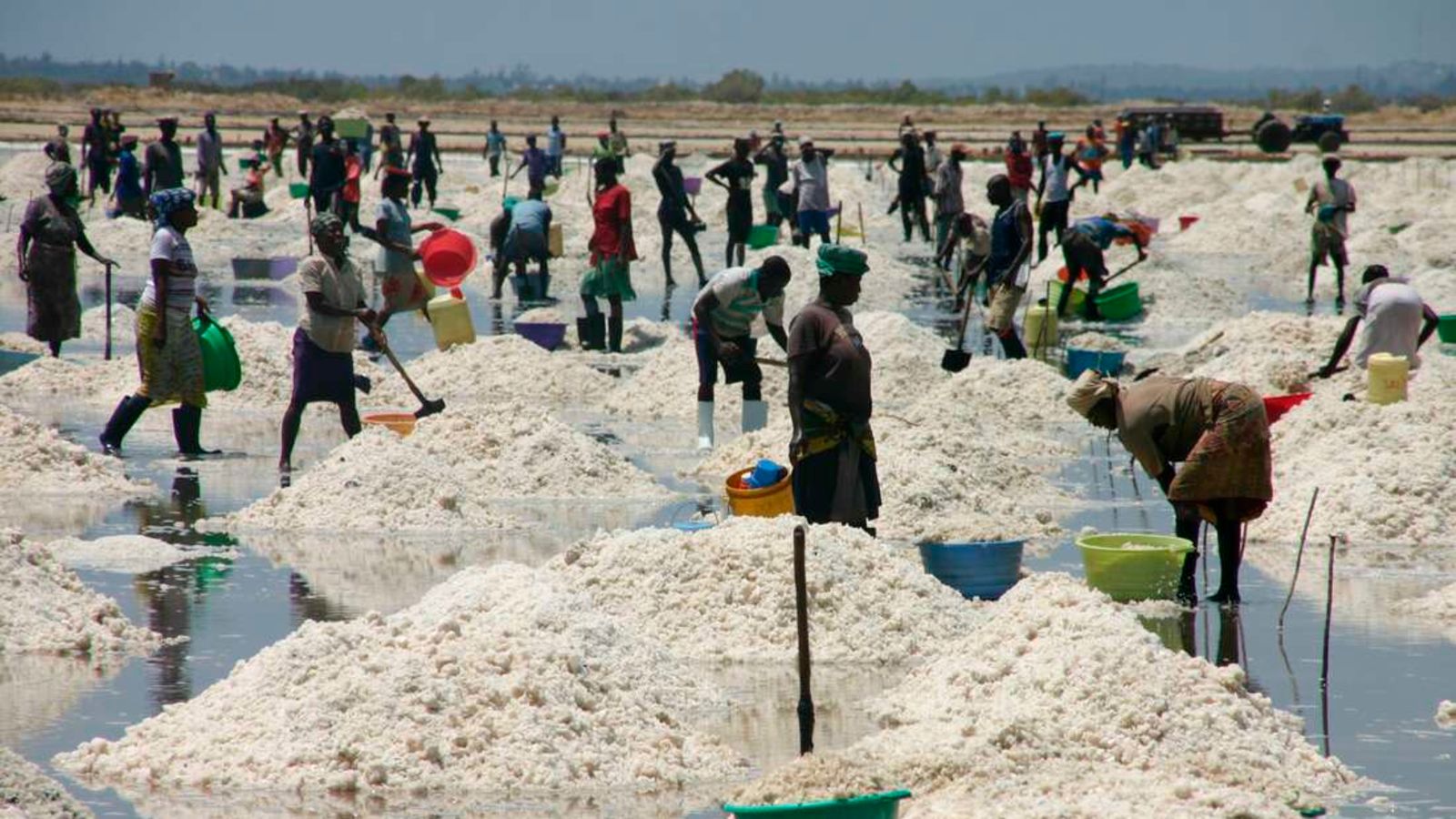
The 2025/26 performance saw soda ash, gold and salt become Kenya’s highest mineral export earners and royalty generators.
Soda ash topped the royalty-generator ranking in 2025/26 with Sh195.52 million, followed by gold (Sh175.21 million) and salt (Sh131.24 million).
Section 183 of the Mining Act, 2016 provides that any holder of a mineral right shall pay royalties to the State in respect of the various mineral classes won under the mineral right. The revenues arising from mineral royalties would then be shared amongst the national government, beneficiary counties, and communities.
According to the Mining (Mineral Royalty Sharing) Regulations, 2026, mineral royalties are split as follows: 70 percent to the National Government Consolidated Fund, 20percent to County Governments, and 10 percent to host communities.
Royalty on rare earth minerals such as titanium is set at eight percent of the gross value; metallic ores such as copper (five percent), precious metals such as gold (three percent), and gemstones (1- 6 percent) depending on type and quality.
Kenya’s mineral export earnings peaked in 2022 when collections stood at nearly Sh5 billion before easing to Sh3.7 billion in 2023 and dropping further to Sh3.2 billion in 2024, underscoring the lingering impact of the shutdown of the large-scale Base Titanium operations in Kwale.
The dip in 2024 followed the depletion of the titanium ores, which marked the end of one of the country’s most significant mining operations. Over its 11-year run, Base Titanium exported about 5.2 million tonnes of mineral sands, including 3.89 million tonnes of ilmenite, 804,000 tonnes of rutile, and 295,000 tonnes of zircon, alongside smaller quantities of other minerals.
“Beyond generating foreign exchange through mineral exports, the mining sub-sector significantly contributes to job creation by supplying essential industrial and construction raw materials such as sand, ballast, limestone, iron ore, and gypsum for domestic use,” the ministry said.
The Treasury in August revealed that counties had received Sh2.9billion in long-delayed mineral royalties, marking a boon for the devolved administrative units and the communities around mining sites.
The Treasury did not name the beneficiary counties, but previous records showed that 32 mineral-rich counties were marked for royalty payouts. Some of the mineral-rich counties include Kwale, Makueni, Taita Taveta, Homa Bay, West Pokot, Kericho, Kakamega, Elgeyo-Marakwet, and Kericho, among others.
The sharing of mineral wealth hadn’t been done over the years amid a legal gap. While a framework for sharing the mineral royalty revenue among the national government, county governments, and communities was developed, the Attorney General’s office in December 2022 advised the development of subsidiary regulations to the Mining Act to provide the mechanism for the transfer of these mineral royalties to the communities.
The United States has pledged to help Kenya build factories and other industries around its rare earth and niobium deposits on the Coast, following the exit of Base Titanium.
“As Kenya builds its strategic mining sector, we want in, and we will be a long-term strategic partner,” Mr Garcia said at the American Chamber of Commerce (AmCham) Business Summit 2026 in Nairobi in September.
“American companies are not here to extract and ship. That is not partnership; that is extraction. What we build with Kenya is very different. US firms invest in communities where they operate.”
The proposed partnership centres on the estimated $62.4 billion (about Sh8 trillion) rare earth and niobium deposit at Mrima Hill in Kwale County, which President William Ruto said in June was nearing a critical minerals agreement with the US.