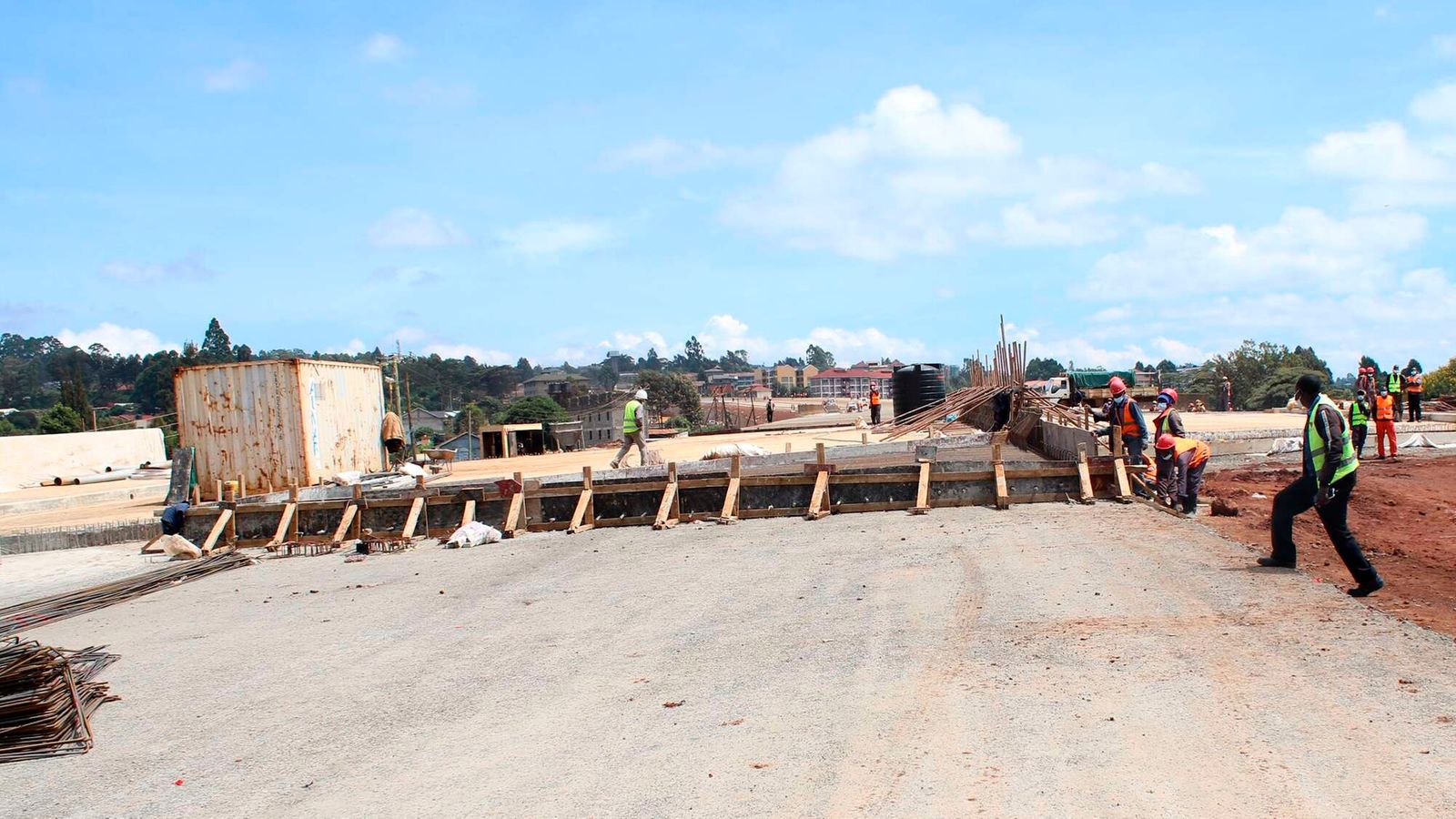
The government is looking for a private investor to complete construction works on the World Bank-funded James Gichuru Junction-Rironi Road and introduce tolling, a move that would require motorists to pay to drive from Mlolongo to Mau Summit.
Disclosures from the Public Private Partnership (PPP) Directorate, a unit of the National Treasury, show that the Kenya National Highways Authority (Kenha) is seeking a private investor to complete the outstanding works on this section and operate the road under a tolling arrangement for an unspecified period.
Construction of the road was initially valued at Sh16 billion, with a bigger chunk of the financing coming from the World Bank.
However, long delays in the completion of the project saw its total cost varied to Sh20 billion, even as works such as 24-foot bridges remained incomplete.
Now the government says it is scouting for a private investor to complete the remaining works, which includes building the footbridges, valued at Sh4 billion.
The investment will be recouped by the investor from charging motorists toll fees over a shorter period than the customary 25 to 30 years.
This is likely to revive a long-running debate over whether taxpayers should pay to use roads built with borrowed money, which they will also repay through taxes.
“The proposed James Gichuru–Rironi (A104/B3 Junction) Road is a brownfield project involving the rehabilitation and completion of outstanding civil works, together with the introduction of tolling under a management contract,” said the PPP Directorate in a status report for the period ending September.
A brownfield project is one that involves upgrading, rehabilitating or completing existing infrastructure, unlike a greenfield project, which is developed from scratch.
The James Gichuru–Rironi Road is part of the World Bank-supported National Urban Transport Improvement Project (NUTRIP), which involves widening and rehabilitating the JKIA–Likoni–James Gichuru–Rironi road.
“The project seeks to establish a sustainable framework for the operation, maintenance and long-term management of the corridor, which carries high volumes of commuter, passenger and freight traffic as part of the strategic Northern Corridor connecting Nairobi to western Kenya and the wider East African region,” adds the PPP Directorate.
Charging user fees, or tolling, under PPPs is one of the incentives the government has dangled before private investors with deep pockets to help bridge its infrastructure financing gap by designing, building and operating major projects.
Most PPP projects, however, have been greenfield developments that were not financed by the Exchequer, partly to avoid charging taxpayers twice for the same infrastructure.
Kenha officials insist that the private investor eventually selected for the project will have to complete some outstanding works after the government failed to provide its share of the financing.
The unfinished works include foot crossings, road markings and some road layers.
The government also argues that because the section from Mlolongo to James Gichuru Junction is already tolled, while the Rironi–Mau Summit section is being developed as a PPP, only the relatively short James Gichuru–Rironi section would remain untolled.
An official familiar with the project told the Business Daily that because the private investor’s required capital injection would be relatively small, the investor could operate and maintain the road for a short period—probably four to five years—to recoup the investment before handing it back to the government.
Additional toll revenues could also be used to service the existing loan, potentially relieving the government of part of the burden of repaying the debt.
The road was to be financed through a loan from the World Bank, with the government providing additional financing for relocation.
The government has increasingly turned to PPPs to help bridge an estimated Sh250 billion annual infrastructure funding gap, as constrained fiscal space and rising debt-service obligations limit its ability to finance new roads, dams, energy projects, bridges and ports through borrowing.
The Roads ministry has projected a financial gap from the ongoing roads at Sh1.8 trillion and Sh4 trillion for the five-year and 10-year planning periods respectively for the development, maintenance, and rehabilitation of roads.
The government reckons that tolling is a dedicated source of financing for road infrastructure that is not tied to the Treasury’s budgetary process.
After Kenya abolished road tolls in 1994 and replaced them with the Road Maintenance Levy Fund (RMLF), it took 28 years for tolling to return, with the Nairobi Expressway becoming operational under a tolling regime in 2022.
The existence of RMLF has also turned the spotlight on tolling, with critics arguing that motorists would effectively be taxed twice.
The government, however, argues that tolls and the road maintenance levy are different forms of user charges.
In the Draft National Tolling Policy 2025, it notes that the RMLF is expected to raise about Sh100 billion in the 2024/25 financial year, against annual road maintenance needs of Sh253.5 billion.
The draft policy also puts the broader financing gap for road development, maintenance and rehabilitation at Sh1.8 trillion over five years.
Some of the existing roads that the government plans to toll include the Nairobi Southern Bypass, Thika Superhighway and Kenol–Sagana–Marua Road, according to the draft policy.
With this section now subject to toll charges, motorists can drive from Mlolongo in Machakos to Mau Summit in Nakuru County on a user-paid road.
Already, construction is under way on the Rironi–Mau Summit highway, which is being developed under a PPP and will operate as a toll road once completed.
The Sh184 billion project has been split into two sections. The Rironi–Naivasha–Gilgil section, together with the Rironi–Mai Mahiu–Naivasha link, is being developed by a consortium of China Road and Bridge Corporation (CRBC) and the National Social Security Fund (NSSF) at an estimated cost of Sh96.3 billion.
The 94-kilometre Gilgil–Nakuru–Mau Summit section is being developed by Shandong Hi-Speed Road & Bridge International Engineering Co. Ltd.
The government is also considering extending tolling from Mombasa to Malaba, effectively turning the entire Northern Corridor into a toll road.