As we honoured the late Raila Odinga on Thusday, one question kept returning to my mind: Is this the end of the road for the Kisumu Molasses plant and for his grand plan of asset repurposing?
That plan was, in essence, a last-ditch effort to convert an unviable industrial asset, weighed down by heavy operating costs, into a high-yield, capital-intensive real estate master development: the proposed Sh120 billion Lake Victoria Marina waterfront project on the former Kisumu Molasses site.
If we truly want to honour Baba’s memory, the tribute must go beyond the empty speeches delivered by self-absorbed politicians at Migwena Sports Grounds in Bondo. The ultimate tribute would be to complete the grand project he began shortly before he passed on.
I have learnt from a recent discussion with some of the key players in the project that work has stalled because of disagreements among the parties. They should put their differences aside and complete what Raila started.
But what should become of the factory itself? Would uprooting the plant and merging its operations with those of the Muhoroni-based Agro Chemical and Food Corporation be viable?
A few weeks before he died, Raila confided in me during a conversation at his private offices in Kileleshwa that he was planning a strong bid for Agro Chemical and Food Company, which was already on the list of candidates for privatisation. His plan was to relocate the Kisumu plant to Muhoroni and merge the operations of the two ethanol producers.
For that plan to succeed under the current political circumstances, the Odinga family will have to marshal political goodwill from the very top. The alternative is stark: sell the equipment in parts or leave the massive Kisumu plant to continue rotting away.
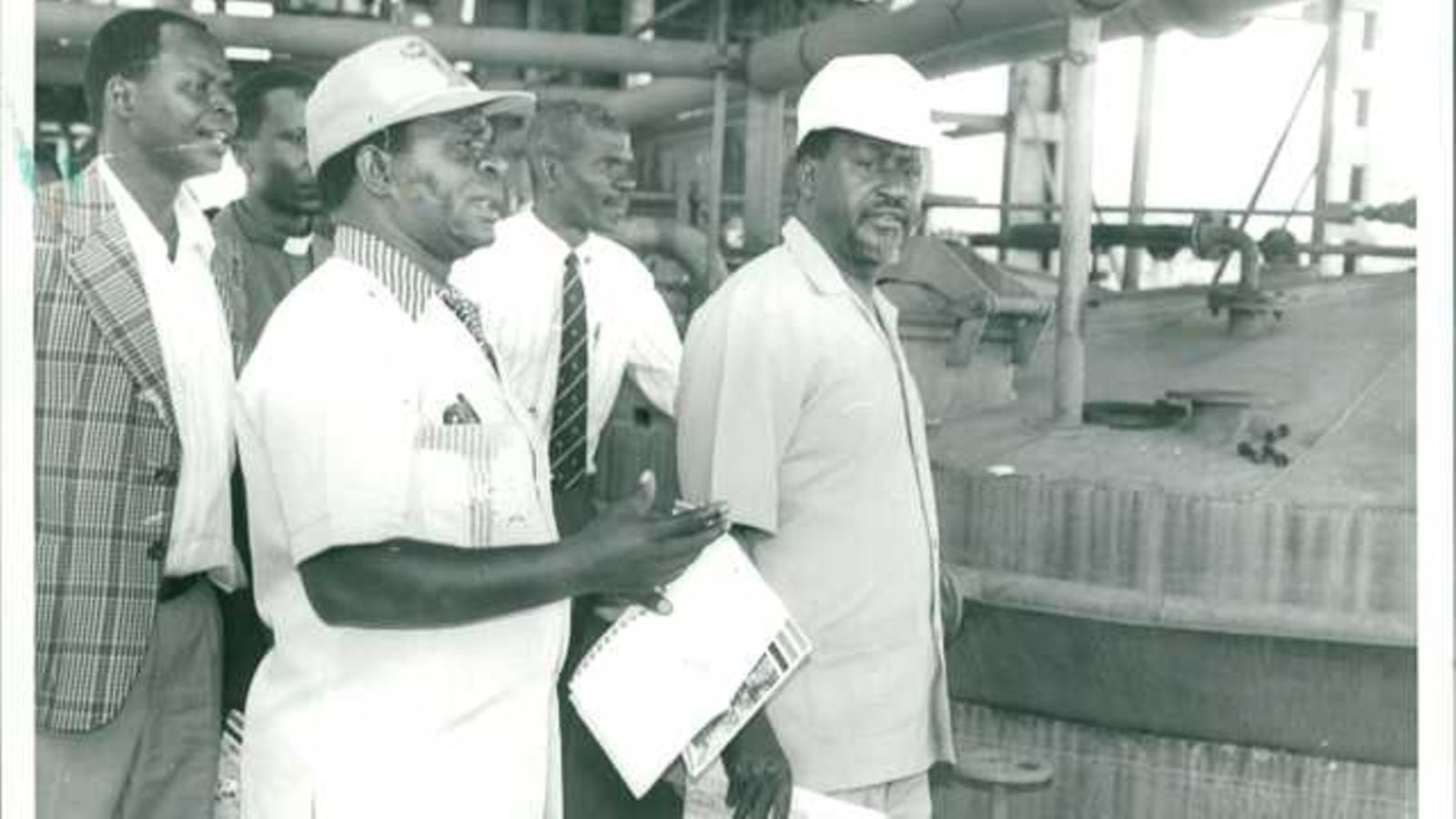
Reviving the asset has been a long struggle for Raila. The story goes back to June 3, 1996, when his company, Spectre International, jointly with an entity known as the Kisumu Development Trust (KDT), emerged as the highest bidder at a public auction held on the plant’s premises.
The plant was originally owned by the Madhvani Group, which abandoned the project, leaving behind massive loans from Kenya Commercial Bank. The lender placed the company under receivership. Spectre International and KDT won the auction with a bid of Sh570 million.
Who was KDT? It was the vehicle that mobilised funds from members of the public to support Spectre International’s bid. It was run by a board of trustees chaired by the late Job Omino.
The other trustees were Pamela Momanyi, Ben Okudo, Ngeso Okolo, Oburu Odinga, Phoebe Asiyo and Aoko Midiwo. Today, the interests of members of the public who contributed to the bid are represented on the board of Spectre International by the family of the late engineer Ngeso Okolo.
In the newspaper advertisement announcing the auction, the auctioneer, Panama Rovers, declared that it would sell “all the assets of the said factory”.
Yet the moment Odinga’s company was declared the highest bidder, the rules changed. In a sudden about-turn, the lender, clearly influenced by the political nuances of the day, announced: “We are not selling you the land. Pay us and take the machines and factory to your own piece of land.”
Raila’s plan, however, was to revive the plant on its original site. He went to court to challenge the receivers.
It was clear that powerful interests had decided to weaponise the plant’s revival to force Raila into a political accommodation. But the tactic did not deter him.
For five years, as the machines rusted and depreciated, Raila remained in the High Court, fighting to take possession of what he had won in an open public auction.
When the political circumstances changed, he changed tactics. He formally applied to the government for an allocation of the land, invoking the then-standard policy and practice of allocating land to industrialists and investors.
It was a clever move. His calculation was that if the land were allocated to him, the receivers would no longer have the option of selling the equipment separately to a third party; they would be forced to negotiate a realistic price.
The letter of allotment from the then Commissioner of Lands, Sammy Mwaita, did not arrive until January 11, 2001. With the land now out of the equation, Raila eventually purchased the heavily depreciated machinery for $1,262,338 under a sale agreement signed on July 24, 2003.
The Kisumu Molasses plant was never merely an industrial asset. For Raila, it was a symbol of a long fight against political obstruction and the waste of public assets. Completing the waterfront project, or finding a cred-ible industrial future for the plant, would be a far more meaningful tribute than speeches.