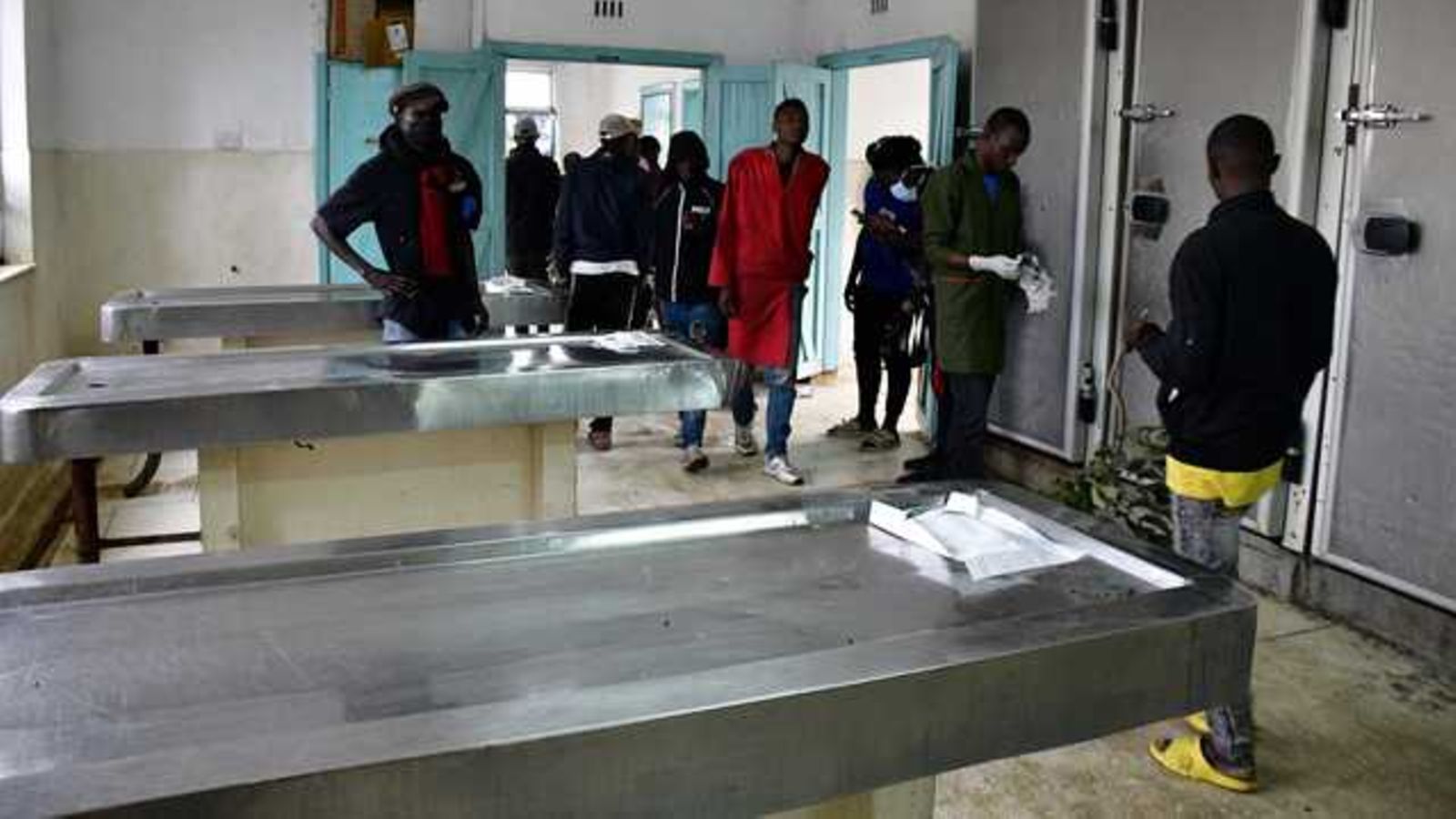
The business of caring for the dead has become another frontier for Public-Private Partnerships (PPPs), after Nairobi County disclosed plans to pick a private investor to upgrade City Mortuary and charge fees for services for an unspecified period.
Nairobi County will competitively select an investor to transform the decades-old City Mortuary, the capital’s principal public mortuary, into a modern funeral home with expanded storage capacity for 1,000 bodies, disclosures by the National Treasury show.
“The proposed project seeks to modernise the existing City Mortuary by developing the Nairobi City Funeral Home and Forensic Services, a state-of-the-art facility to enhance service delivery, dignity, and forensic capacity,” the PPP Directorate says in its October disclosure.
The project will also include a forensic laboratory capable of handling 2,500 postmortems annually, modern waste-management facilities and additional capacity to cope with disasters.
Dubbed the Nairobi City Funeral Home and Forensic Services, the project is at the concept-note stage, with its value yet to be determined.
The private investor will be competitively selected to finance, develop and operate the facility under a long-term arrangement.
The project highlights the extent to which PPPs have expanded beyond traditional infrastructure such as roads, energy and water into public services that can generate revenues from users.
The National Treasury says PPPs can help bridge infrastructure funding gaps by tapping private-sector finance, while reducing pressure on government borrowing and expenditure.
The Treasury estimates that more than Sh145.7 billion in private capital had been mobilised through PPPs by June 2025.
Funeral services are already a commercial industry in Nairobi. A University of Nairobi study of funeral-service providers found that anticipated high profits were among the main motivations for investors entering the sector.
The study identified 16 registered funeral-service providers at the time, with hearse services forming the mainstay of the industry.
A later University of Nairobi study found that privately owned funeral homes had a competitive advantage over publicly managed facilities, citing shorter decision-making processes and the ability to offer families a wider range of services.
Current published county tariffs show that preservation for bodies from Nairobi costs Sh500 per day for the first 10 days, rising to Sh700 thereafter.
Adult embalming costs Sh3,000, while washing and dressing costs Sh2,800 and viewing costs Sh500.
On those tariffs, a family using 10 days of storage, embalming, washing and dressing and one viewing would pay about Sh11,300, excluding transport, a coffin and other funeral expenses.
City Mortuary has itself generated millions of shillings from these services. In 2020, the facility collected Sh23 million between February and August, while revenue reached Sh8.7 million in March and April alone.
City Mortuary was constructed in 1956 with capacity for just six bodies to cater for destitute cases. Parliament later noted that Nairobi City Council expanded the facility to hold 160 bodies.
By 2011, the mortuary had a capacity of 160 but was holding about 250 bodies, prompting a Sh15 million refurbishment that added 48 spaces.
Further renovations followed, including work under the Nairobi Metropolitan Services in 2021.
Yet capacity pressures have persisted. In October 2024, City Hall said the facility was holding 607 bodies against an official capacity of 184, forcing it to temporarily stop receiving unidentified bodies from police.
The private market has meanwhile grown around facilities such as Lee Funeral Home, Umash Funeral Services and Montezuma Monalisa Funeral Homes, which offer mortuary storage alongside embalming, viewing, coffins, hearses and repatriation services.
A 2009 University of Nairobi study identified Lee, Umash and Montezuma as the three main private providers of mortuary services in Nairobi.
With the proposed PPP, Nairobi County seeks to turn a chronically overstretched public mortuary into a modern, revenue-generating funeral and forensic facility.
It also illustrates the government’s growing reliance on private capital to finance public services at a time when fiscal space is constrained.
The test for a privatized City Mortuary will be whether a commercially operated facility can provide modern death-care services while remaining affordable and accessible to the families who have traditionally relied on the public mortuary.