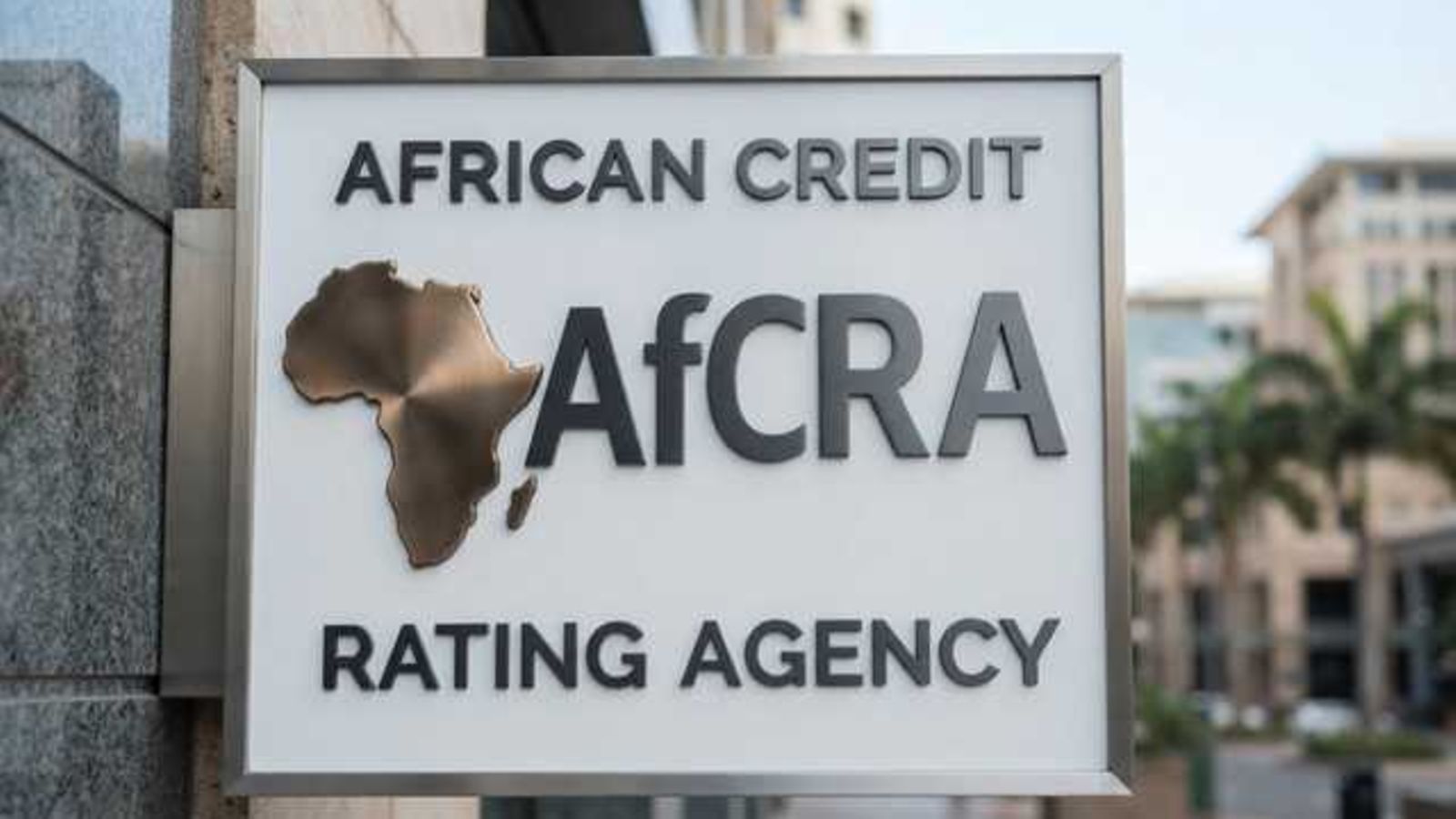
The African Union (AU) launched the continent’s first credit rating agency, seeking to provide an alternative to the “big three” global ratings agencies.
African leaders have long accused Western ratings agencies including S&P, Moody’s and Fitch of unfair assessment of African countries and moving too quickly to downgrade them during crises.
Why did AU back the creation of a rating agency?
African heads of state and government expressed their discontent with the ratings accorded to their countries by international rating agencies.
The leaders noted African economies had improved since 2000, riding on better governance, institutional quality, stable banking sector and deeper capital markets. However the number of countries with an investment grade have dropped from eight at the turn of 2000 to two (Botswana and Morocco).
The heads of states feel the rating agencies intentionally lock them out of achieving an investment grade, resulting in them paying a two percent premium to access debt in the international markets.
The effect can extend beyond governments: sovereign risk influences the financing costs of banks, corporates, public enterprises and infrastructure projects operating within the same jurisdiction.
The African Union through the Africa Peer Review Mechanism (APRM) has disputed some of the credit assessments issued by international rating agencies. Some of the disputed ratings include the recent downgrade of Botswana, Kenya’s downgrading in 2024, Ghana’s downgrade in 2022 and Fitch downward review of African Export-Import Bank (Afreximbank).
How do credit ratings affect financing costs and decisions?
For example, countries with investment grade ranking access credit at an interest rate of between 0.5 percent and 5.5 percent. Investment-grade threshold starts at BBB− for S&P and Fitch, Baa3 for Moody’s.
Credit ratings may follow markets, lead them, or amplify a move already underway. This means a rating downgrade may have almost no effect if anticipated, and a large effect if it is unexpected, crosses the investment-grade boundary, or lands close to a planned issuance.
Is there an estimate of the financial cost borne by African states due to the contested ratings?
A research paper done by the United Nations Development Programmeestimated that African countries pay $28 billion in excess interest payments because of subjective or punitive credit ratings compared to independent, data-driven credit assessments. It further estimated the African nations lost $46 billion in potential financing, bringing the total estimated cost of rating idiosyncrasies to $74 billion.
Who owns Africa Credit Rating Agency?
AfCRA is an AU backed credit rating agency launched on October 7, 2026 in Mauritius. The agency is currently fully owned by a South African firm Plus 94 Plus 94 Research. Plus 94 Research is associated with Sifiso Falala who also own Sovereign Ratings of South Africa.
AfCRA has fully acquired Sovereign Ratings in South Africa which will serve as a launch pad for its operations.
Mr Falala has been appointed the interim CEO of AfCRA, which is issuing 2000 new shares which will be taken up by new shareholders. Governments will not have shareholding in the agency.
Are there existing independent African credit rating agencies besides AfCRA?
There exists domestic and regional credit rating agencies in Africa which rate companies, banks, municipalities and instruments in several markets. Their strength is proximity to domestic issuers, regulators, currencies and market structures.
Their limitation is that national-scale ratings and local regulatory recognition do not automatically create a globally comparable opinion. Some of the agencies include Metropol Credit Rating in Kenya, Bloomfield Investment Corporation in Cote d’Ivoire and DataPro Limited in Nigeria.
What is the current sovereign credit rating for Kenya?
Fitch Ratings accorded Kenya a B- rating with a stable outlook in an assessment concluded in July. Moody’s rated the country B3 with a stable outlook in January while S&P awarded Kenya a B rating also with stable outlook in an assessment done in August, 2025.