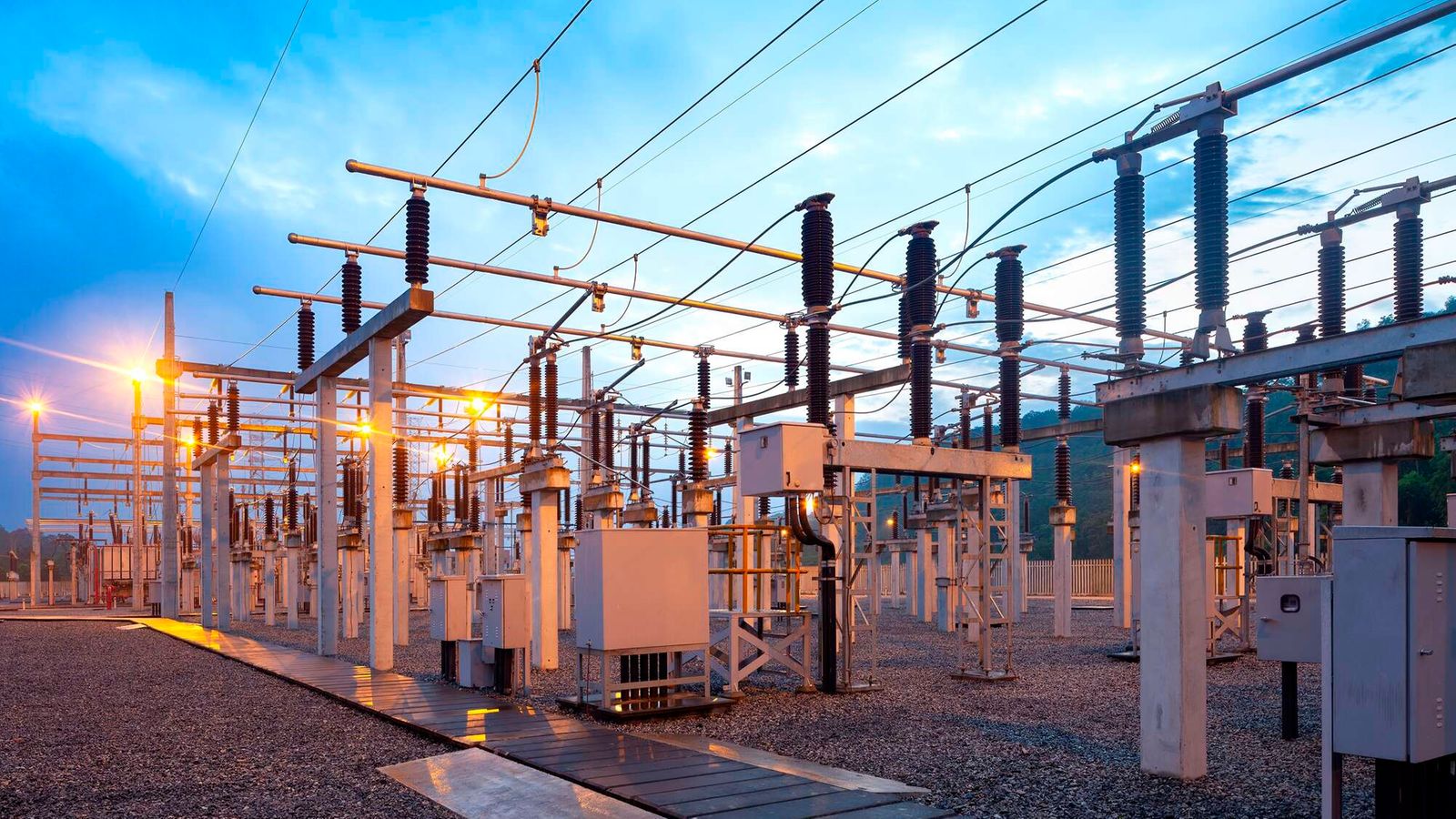
The push for universal access to electricity has intensified with a new focus on clean, renewable sources like solar, wind, and hydropower to reach net-zero carbon emissions.
A new update by the International Energy Agency (IEA) shows that, despite the global electrification rate rising from 80 percent some 15 years ago to 91 percent in 2025, around 730 million people worldwide still lack access to electricity, with over 80 percent of those still without access living in sub-Saharan Africa.
“Although countries such as Kenya, Nigeria and Rwanda have made notable progress in expanding electricity access, rapid population growth has meant that the total number of people without access in sub-Saharan Africa has remained broadly unchanged over the past decade,” the France-based intergovernmental agency said.
Electricity customers connected through Kenya Power reached over 10.27 million households and businesses as of 2026, data from the Energy Department said.
“In 19 sub-Saharan African countries, population growth has outpaced the expansion of electricity access since 2015, resulting in an increase in the number of people without electricity,” the IEA report said.
The IEA projects that, although recent policy developments, falling technology costs and multilateral efforts have improved the outlook, more than 510 million people will remain without access to electricity in 2050. An estimated 9 out of 10 of those to remain without access to electricity will live in sub-Saharan Africa.
“By replicating, in countries that still face electricity access gaps, the fastest rates of progress historically achieved in countries with similar socioeconomic conditions, the Accelerating Clean Cooking and Electricity Services Scenario (ACCESS) finds that universal access could be achieved by around 2035, with an average of around 80 million people gaining access each year between now and 2035,” it said.
The IEA projects that most of these new connections would occur in sub-Saharan Africa, with around 70 million people benefiting annually. Of those gaining access, 45percent would be connected through the grid, 30percent through mini-grids and 25percent through solar home systems.
“Achieving this would require average annual investment of approximately $23 billion (Sh2.98 trillion),” it said.
This comes as most African countries seek to expand their energy infrastructure and decarbonise, while also exploring financing options for these capital-intensive and long-term projects.
A recent report by the Africa-EU Energy Partnership (AEEP), for instance, found that, while total commitments from the EU dedicated to achieving SDG-7 on the continent hit EUR 20.6 billion (Sh3 trillion) between 2014 and 2023, resources remain inadequate to meet the projected needs of the continent’s energy demands.
This includes electricity access, where half of the continent has been left out; access to clean cooking fuels and technologies, which stood at 21 percent in Sub-Saharan Africa in 2023; and new renewable energy capacity.
“The technologies are ready, and the economic case is strong, but current progress falls well short of what is needed. We are still in the middle of an energy crisis with crippling oil and gas prices, and governments must now act across every sector, from buildings and transport to industry,” Jan Rosenow, a Professor of Energy and Climate Policy at Oxford University, told Business Daily when he commented on the IEA report.
According to the IEA, electrification in Africa has barely kept pace with population growth, and progress in widening access in recent years has stalled compared to pre-pandemic levels. For instance, less than 19 million people gained access in both 2023 and 2024, compared to 23 million people in 2019.
“Nearly $150 billion (Sh19.45 trillion) in cumulative investment – $15 billion (Sh1.94 trillion) per year – is required to reach universal electricity access by 2035,” explains the IEA.
“Just under half of this investment ($7 billion annually) targets the expansion of grid networks, with around a third ($5 billion annually) going to mini-grids and just over 20percent ($3 billion annually) to solar home systems,” explains the global energy agency in its latest special report on energy financing needs in Africa.
Kenya has estimated that it would need up to Sh77.85 trillion ($600 billion) in capital investment over the next 25 years to achieve net zero carbon emissions across all key sectors that use energy.
Under the Kenya Energy Transition and Investment Plan, the government anticipates capital markets to provide the largest funding pools. The investment will go into electric mobility projects, clean cooking initiatives, and low-carbon hydrogen and is expected to support an additional 500,000 net new jobs by 2050 and beyond.
This financing need is massive and calls for a combination of national government spending, private finance and equity capital, all of which have in recent years funnelled hundreds of millions of dollars into the continent’s energy networks.
“The plan illustrates how the energy transition course will support the whole economy by creating about $600 billion of near-term investment opportunities by 2050. As such, the plan will be used to engage with national, regional and global partners for mutual benefits,” Energy and Petroleum Cabinet Secretary Davis Chirchir says in a brief on the Kenya energy investment and transition plan.
The Energy and Petroleum Ministry says a combination of private sector capital and de-risking instruments could help finance Kenya’s energy transition.
Several commercial banks in the East Africa region, including KCB Group, Equity Group, the African Development Bank (AfDB), and Diamond Trust Bank-Kenya (DTB-K), are already angling for energy financing partnerships across all key sectors, including upstream oil, regional crude infrastructure, gas and power projects.
For example, KCB Group’s Head of Oil and Gas, Noreen Araka, said Africa’s share of global clean energy investment remains far below the global average and limits the pace of infrastructure development and energy access expansion.
“While clean energy investment in Africa has grown from about $17 billion (Sh2.2 trillion) in 2019 to nearly $40 billion (Sh5.18 trillion) in 2024, this remains far below what is required to meet demand,” she said during a recent energy forum in Nairobi.
“There is a $30 billion (Sh3.89 trillion) annual gap in concessional capital to de-risk projects across the energy spectrum, while making deals attractive to export credit agencies and international partners,” she explained.
In addition to this, global geopolitical shifts, conflicts and trade disputes that disrupt traditional supply chains are shining a spotlight on the exposure facing countries relying on these energy pipelines.
“The consequences will extend beyond energy markets and supply chains to affect whole economies, influencing inflation and economic activity simultaneously, with most pronounced effects likely for the most vulnerable communities around the world,” explains Araka.
In the last financial year, KCB Group’s credit to the Energy and Water sector across the six African countries it operates stood at Sh47.3 billion, a 48 per cent increase compared to a similar period in 2024.
In March this year, KCB Bank Kenya received approval for a Sh12.5 billion project to be co-financed by the Green Climate Fund (GCF). The blended finance initiative, a mix of concessional lending, a guarantee and a grant, is meant to support Kenya’s most vulnerable communities under the Climate-smart Technologies programme.
Out of this, KCB said that 60 percent of the projects will focus on adaptation, particularly climate-resilient agriculture and water management technologies, while the remainder will target mitigation technologies such as renewable energy and energy efficiency.
Financing green industrialisation
Equity Group CEO James Mwangi recently said that green energy financing has become core to the lender’s business.
“Climate finance is now at the heart of Equity Group’s Africa Recovery and Resilience Plan, which aims to finance Africa’s green industrialisation and inclusive growth. We view sustainability not as an add-on, but as a strategic imperative integrated into every aspect of our business,” he said in an interview published in November 2025 in a magazine by Proparco, the private sector financing arm of the French development agency Agence Française de Développement (AFD) Group.
“Our goal is to allocate over 30percent of our lending portfolio to climate-aligned sectors by 2030, supporting smallholders, MSMEs, and industries in adopting cleaner technologies and practices. This holistic approach links economic growth to environmental stewardship and social inclusion,” Mr Mwangi added.
The AfDB Group Board in November 2025 approved a loan of $16.5 million (Sh2.14 billion) to support the development of the 35 MW OrPower Twenty-Two (OTTL) Geothermal Power Plant, a flagship renewable energy project that will increase Kenya’s baseload generation and accelerate its clean energy transition.
DTB-K in 2024 also signed a deal with AfDB for a $70 million (Sh9.08 billion) integrated facility containing a $10 million (Sh1.29 billion) blended line of credit ring-fenced for energy efficiency and renewable energy technologies.
In another deal, AfDB and KCB Bank in December 2025 signed a $150 million(Sh19.45billion) package (including a $100 million(Sh12.97billion) subordinated debt facility and a $50 million(Sh6.48billion)transaction guarantee) to scale up green lending—targeting renewable energy, e-mobility, and climate-resilient.
Seleshi Bekele Awulachew, Former Energy Minister of Ethiopia and Renewable Energy Champion for Africa, said that electrification powered by renewable energy is an economic opportunity.
“It can reduce dependence on imported fossil fuels, lower energy costs and keep more resources within African economies. For Africa, accelerating electrification is a solid pathway to greater energy security, economic resilience and sustainable development,” he said.