Kenya’s earnings from exports to the US market surpassed Uganda’s in the five months to July 2026, amid resumed orders following the restored preferential market access terms under the African Growth and Opportunity Act (Agoa).
The exports to the US were also partly fuelled by a scramble by buyers who sought to maximise duty-free terms before the initial expiry of the trade pact.
Domestic exports to the US such as apparel and coffee rose to Sh63.59 billion between March and July 2026, up from Sh32.51 billion a year earlier, according to data tracked by the Kenya Revenue Authority and published by the Kenya National Bureau of Statistics (KNBS).
That put America ahead of Uganda, which bought goods such as construction materials, steel, iron and vegetable oils worth Sh60.54 billion from Kenya during the period, 12.08 percent more than Sh54.01 billion a year earlier.
The US turnaround followed the restoration of the Agoa in February, after exporters endured months of higher duties and uncertainty following its expiry in September 2025.
Tobias Alando, chief executive of the Kenya Association of Manufacturers, said American buyers resumed sourcing products whose volumes had fallen after duties ranging from 15 to 42 percent were imposed when Agoa expired.
“Since March 2026, Kenya has experienced a notable increase in exports to the US,” Mr Alando said, citing renewed buyer demand and efforts to maximise preferential market access.
He said the initial restoration was retrospective, allowing duties paid on eligible Kenyan products during the intervening period to be reimbursed, providing relief to US buyers and Kenyan manufacturers.
The latest KNBS data show trade flows responded at an accelerated pace, with US-bound exports increasing by Sh31.08 billion, or 95.6 percent, between March-July 2025 and the same period this year.
Over the same period, shipments to Uganda increased by relatively marginal Sh6.52 billion, meaning the American market generated almost five times the additional export earnings recorded from the landlocked country.
The data shows Kenya’s earnings from the US have more than doubled compared with March-July 2023, expanding 126.7 percent from Sh28.05 billion.
Corresponding export earnings from Uganda increased from Sh49.64 billion in March-July 2024 to Sh60.54 billion this year, highlighting the much faster expansion of the American market.
Pakistan, the largest buyer of Kenya’s tea, received Sh34.3 billion worth of domestic exports during March-July 2026, the official data shows, while shipments to the Netherlands, largely cut flowers, amounted to Sh29.9 billion.
The January-July figures, however, show that Uganda remained marginally ahead when the full seven-month period is considered, with exports of Sh76.68 billion against Sh76.22 billion for the US market.
That represents a marginal gap of Sh460 million, compared with Uganda’s Sh28.95 billion lead over the US in January-July 2023.
The narrowing gap underscores the speed of the recovery by the world’s largest economy following the restoration of the duty-free deal and the significance of the preferential access to American consumers.
KAM, the lobby for factories including apparel producers, said buyers had incentives to increase orders because the Agoa framework was initially due to expire at the end of 2026, encouraging companies to maximise the remaining period of duty-free access.
The advantage has become more significant as Washington introduced new tariffs linked to forced-labour rules affecting several major Asian apparel exporters.
The US Trade Representative Jamieson Greer in July imposed Section 301 duties of 10 percent on Bangladesh, Cambodia, Indonesia and Malaysia, while Vietnam and several other investigated economies faced a 12.5 percent rate.
Kenya was not among the 60 economies investigated under the US forced-labour action, giving its exporters an additional tariff advantage alongside Agoa’s duty-free treatment.
This creates a particularly important cost difference for apparel manufacturers competing with Asian suppliers for American orders, because duties directly affect the landed cost of garments.
Jaswinder Bedi, managing director of Bedi Investments, attributed the strong US export performance to Kenya’s preferential treatment compared with competing suppliers.
“The main reason is duty-free (zero tariff) market access for Kenya,” Mr Bedi said, pointing to the additional tariffs imposed on competing exporters.
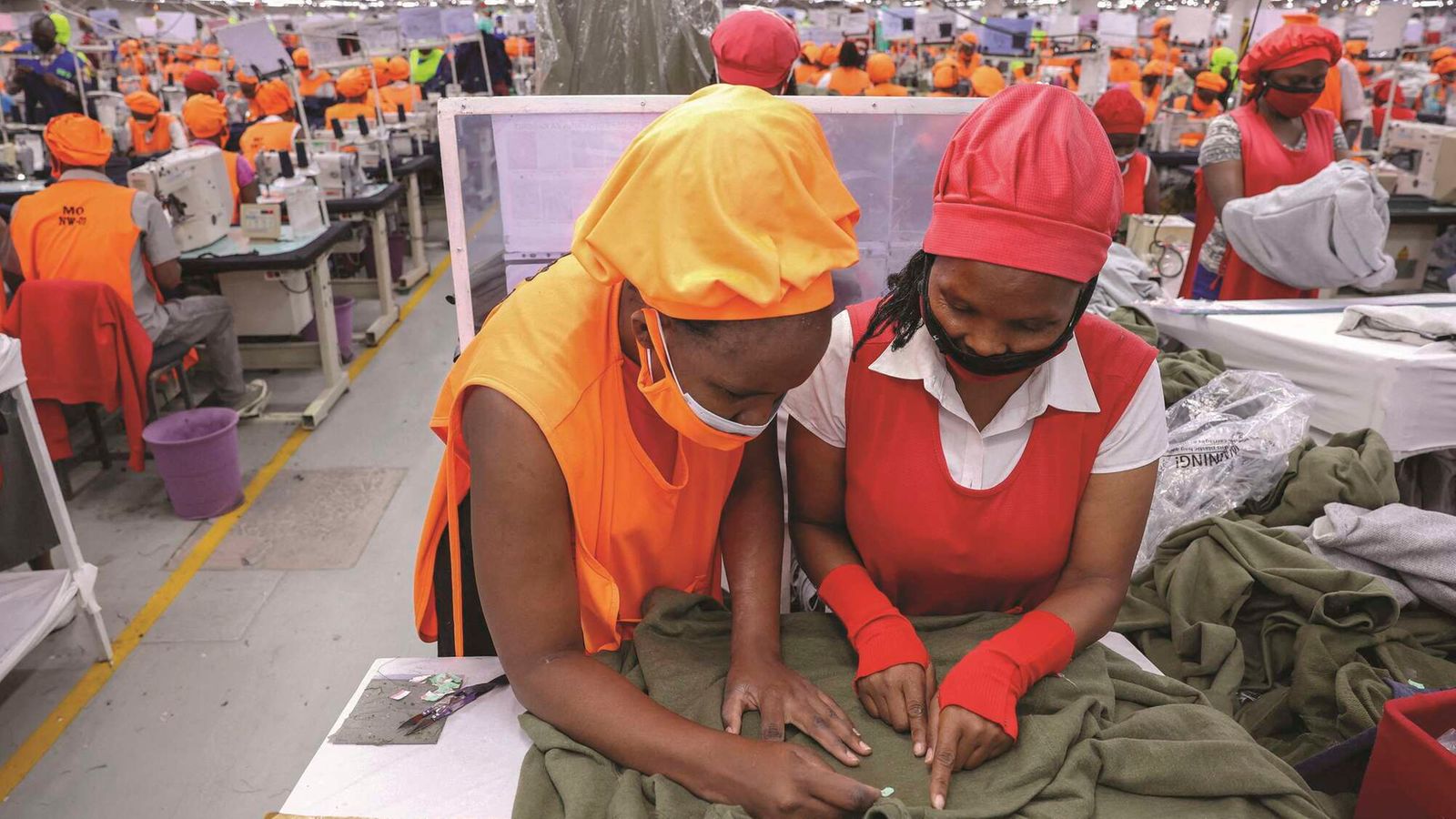
Kenyan apparel factories have supplied American brands including H&M, Levi’s, JCPenney and Wrangler, with cotton trousers, overalls, breeches and shorts forming the largest export category.
The country also exports synthetic-fibre clothing, alongside smaller shipments of macadamia nuts, tea, coffee and fresh produce.
The trade data suggests the expansive US market became particularly valuable after the duty- and quota-free access trade pact was restored because Kenyan exporters could sell into America without the additional tariff burden facing several Asian competitors.
Washington’s September decision to extend the Agoa through December 2028 has since provided exporters with a longer planning horizon, reducing the immediate uncertainty surrounding preferential market access.
Mr Alando said the extension had provided “much-needed confidence for exporters and investors while safeguarding preferential access to the US market.”
US Assistant Secretary of State for African Affairs Frank Garcia described Agoa as a foundation for Kenya-US commercial ties during his September visit to Nairobi.
“Agoa provides a foundational framework for trade opportunities, you know, between the United States and Kenya,” Mr Garcia said.
The export data suggest that American demand has already responded to the restoration of preferential access, with the US moving from a distant second to virtually matching Uganda within three years.