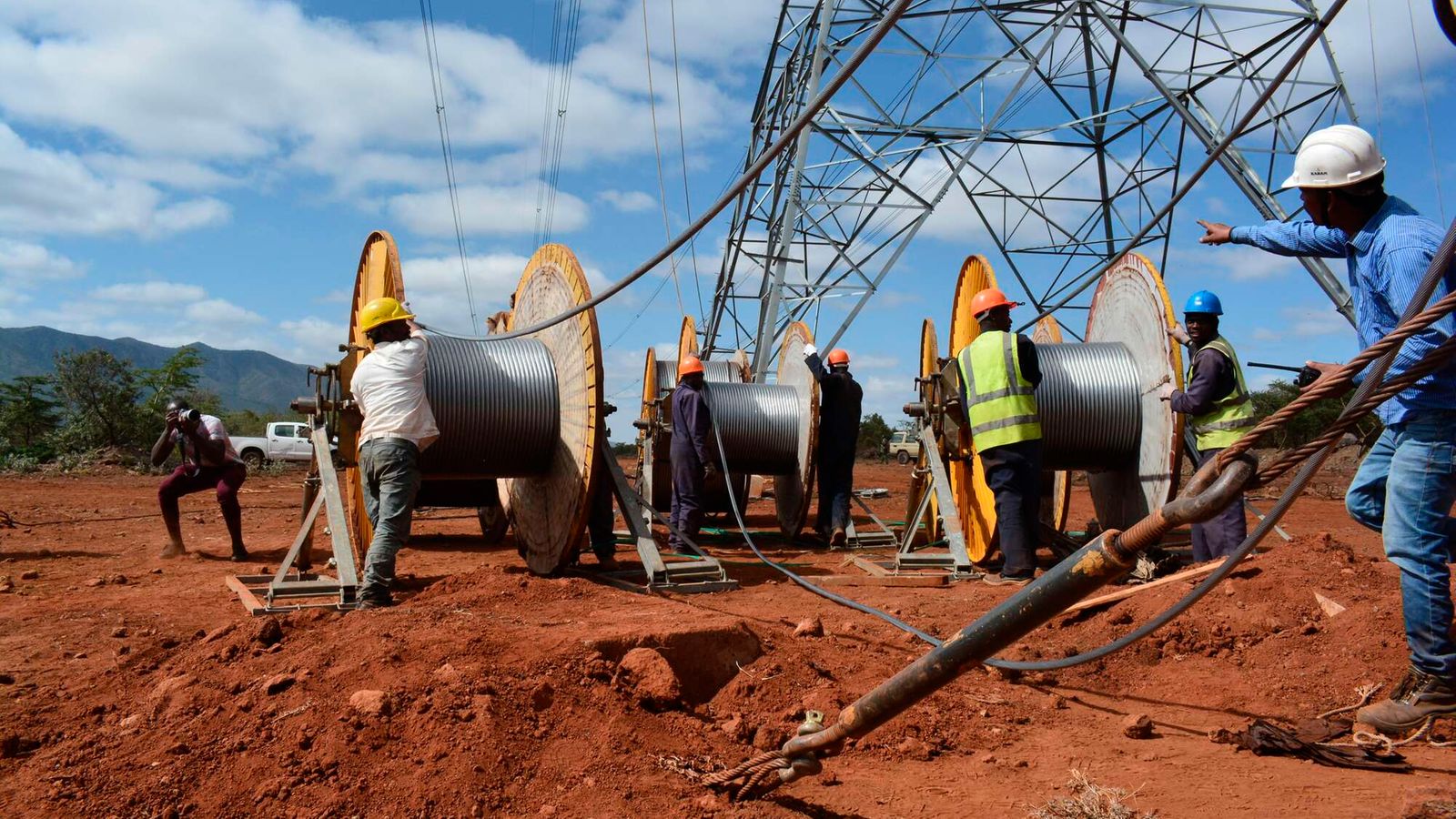
The government has withdrawn Sh46 billion in funding for 41 energy sector projects in the current financial year and transferred the ventures to the newly established National Infrastructure Fund (NIF), triggering doubts about their implementation.
The Parliamentary Budget Office (PBO), which advises lawmakers on economic and budgetary matters, revealed that the government excluded the 41 projects under five agencies and the State Department of Petroleum for the 2026/27 budget in anticipation of the NIF rollout.
The State removed Sh18.8 billion in funding for 12 Kenya Power projects, Sh8.8 billion for 15 Kenya Electricity Transmission Company projects and Sh6.8 billion for some five projects under the State Department for Petroleum, according to the PBO.
“In anticipation of the operationalisation of the NIF, the government identified several projects in the energy and petroleum sectors mainly undertaken by Government Owned Enterprises (GOEs) whose financing can be weaned off from the exchequer and government loan book and transitioned to the NIF in financial year 2026/27,” the PBO notes.
PBO says that the government also cut Sh6.46 billion in funding to some three projects being implemented by the Geothermal Development Company (GDC), removed Sh3.97 billion from four projects under the Kenya Electricity Generating Company (KenGen), and Sh1 billion from two projects under the National Oil Corporation of Kenya.
The PBO, however, did not reveal details of the specific projects affected by the government’s budget cuts, but reckons that while transitioning the projects to NIF presents an opportunity to diversify their financing, the speed at which it was done has exposed them to risks of delay.
“The transition to the NIF presents an opportunity to diversify infrastructure financing, leverage private and institutional capital, reduce reliance on direct budgetary allocations and public borrowing, and improve the structuring of commercially viable projects. However, the sudden transition exposes them to project implementation risks due to changes in the funding structures that will potentially lead to disruptions in budget disbursements,” the PBO says.
In a report regarding implementation of the current fiscal year’s budget, the office observes that the transition of the projects to NIF will involve repurposing of exchequer funding to other sectors, leaving them to wholly rely on funding by agencies implementing them.
This poses risks to the projects’ unhindered continuity since some of the agencies lack sufficient cash to finance them on their own, the PBO warns.
“Likewise, it will also entail restructuring of existing contractual agreements with external financiers. Getting consent from external financiers for such a restructuring may take some time, and this will adversely affect implementation of Energy projects which are significantly dependent on donor funding,” the office says.
NIF is at the centre of President William Ruto’s plan to mobilise private capital for infrastructure development, with the government targeting up to Sh5 trillion in investments over time by using public capital to crowd in private investors.
Among the projects expected to benefit from the fund is the planned modernisation and expansion of Jomo Kenyatta International Airport, as well as investments in transport, logistics, energy and other strategic sectors.
The NIF Act, 2026 provides for the development of an investment policy to guide on what projects can be bankrolled by the fund, a fact the PBO observes may also form part of the obstacle for the 41 projects the State has removed exchequer funding.
“Another concern is that the transition of the projects to the NIF will also require them to be subjected to the general investment criteria review as provided in the IPS (Investment Policy Statement) including demand validation, commercial viability, financial return, investor readiness and capital mobilisation and risk management,” the PBO says.
The PBO warns that projects risk stalling as they wait for the review, which is likely to cause cost overruns “due to penalties for delayed payments to contractors and commitment fees from approved but undisbursed development financing from lending agencies.”
The office also cautions that transitioning the projects to NIF funding will require reappraisal, restructuring, refinancing, legal reviews, and transaction advisory services, which may increase the current project cost.
“Therefore, to ensure the successful implementation of the energy and petroleum projects identified for transition to the NIF, the National Assembly should keep an eye on timely operationalization of the NIF, and policy and legal alignment for project migration,” the PBNO said.
The NIF currently has Sh350 billion in capital from the Sh106 billion proceeds from the government’s sale of a 65 percent stake in the Kenya Pipeline Company (KPC) and Sh244 billion proceeds from the government’s sale of a 15 percent stake in Safaricom.
The PBO also reckons that while an investment policy for the NIF has been developed and approved by MPs, its annual business plan is yet to be developed.
“With the establishment yet to be fully operational, review and approval of the energy and petroleum projects is likely to be delayed, and this may lead to implementation challenges,” the PBO says.
The office has also urged MPs to scrutinise affected projects to ensure their contractual agreements with development partners are not breached to the detriment of taxpayers.