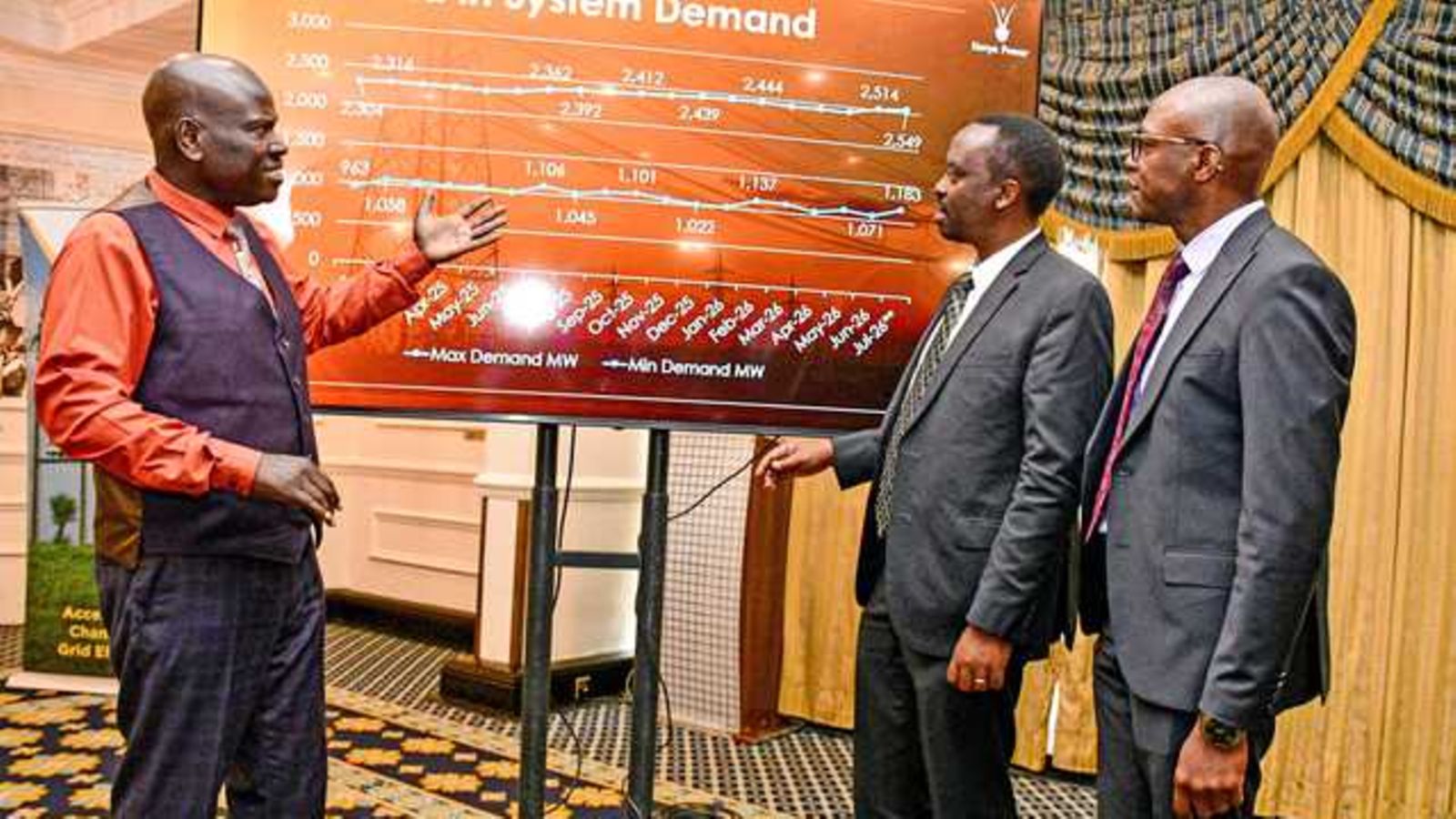
Revenue from electricity sales to new Kenya Power customers dropped by Sh1.07 billion in the year to June despite increased connections, signalling slowing economic expansion and increased adoption of off-grid solar alternatives.
Official data shows that Kenya Power’s new customers consumed 161.7 Gigawatt-hours (GWh) in the year to June, marking a 20 percent drop from 202.98 GWh a year ago, pulling down revenues from this customer segment to Sh4.05 billion from Sh5.12 billion in the previous period, or a 26.41percent drop.
The dip in unit sales and revenues came despite Kenya Power connecting 412,249 new customers in the 12 months to June 2026, up from 401,848 the previous year, with more than half of them, or 226,803, being commercial customers.
Kenya Power connected a further 539 new large consumers, also referred to as premium customers, for supply in the period to June 2026, while adding 184,907 clients under the Last Mile Connectivity Project (LMCP).
The utility’s overall electricity revenue from all customers, including the previously existing ones, however, grew by Sh18.9 billion to Sh238.24 billion.
Kenya Power did not respond to Business Daily queries on the shifts, but insiders in the energy sector said a drop in electricity sales to new customers may indicate subdued economic expansion and increased adoption of off-grid solar alternatives.
“A drop in electricity sales to new customers, dominated by commercial clients, is generally a sign of a slowdown in business expansion, industrial activity, or overall economic growth,” an official in the Energy ministry said.
“When new businesses or expanding commercial facilities purchase less power than expected, it may be a sign that they are stifled by inflation pressure or overall weakening economic confidence.”
Kenya’s economic growth slowed to 4.6 percent in 2025, down from 4.7 percent in 2024, continuing a multi-year cooling trend from post-pandemic highs. The Treasury has since also revised Kenya’s economic growth outlook for 2026 downwards to 5.0 percent from the earlier projection of 5.3 percent amid stubborn inflation, partly due to disruptions related to the Middle East crisis.
A growing number of electricity consumers, especially the large commercial ones, are also turning to solar energy to lower their electricity bills and ensure reliable supplies, thus reducing their reliance on the grid.
Kenya Power is also grappling with low consumption by beneficiaries of the Last Mile Connectivity Project (LMCP) initiative amid lingering questions about the return on investment in the subsidised power connection scheme.
Many businesses are increasingly shifting to solar to cut costs and ensure stable and reliable electricity supply. This has seen the country’s captive power installations in the commercial and industrial sector hit a landmark 630 megawatts by early 2026, driven by high grid tariffs and a growing shift toward private self-generation.
Firms such as Bamburi Cement, TotalEnergies Marketing Kenya, Carbacid Investments, Mabati Rolling Mills, BAT Kenya, Africa Logistics Properties and the International Centre of Insect Physiology and Ecology (ICIPE) have recently set up solar power plants.
Besides the rising number of consumers with solar installations, Kenya Power is facing the headache of low usage by beneficiaries of the LMCP.
The African Development Bank (AfDB), one of the biggest financiers of the Last Mile scheme, recently raised concerns about the low usage of electricity by the beneficiaries of the project, calling on the government to come up with a fund to help them set up businesses, boost their livelihoods and spur power consumption.
“The financial sustainability of the LMCP is assessed as satisfactory even though the demand for electricity among the connected new customers is very low and not adequate to compensate for operational and maintenance costs of Kenya Power without the government subsidising this cost,” AfDB said in a recent review of the scheme.
“It is expected that with time, new customers are going to gradually engage in productive use of electricity which would grow the electricity demand.”
The Last Mile project was rolled out in 2015 as the then Jubilee government, backed by development partners, sought to connect homes to electricity at a subsidised rate of Sh15,000.
But most of the LMCP beneficiaries use electricity for lighting and lack appliances like refrigerators, microwaves, and electric heaters, which are key drivers of power usage by households.
Besides the use of solar power and low consumption by LMCP beneficiaries, a reduction in the base tariff across all consumer categories negated the impact of increased unit sales of electricity. Under the current tariffs that came into effect in April 2023, the cost of a kilowatt-hour (kWh) has been dropping year on year.
“One of the major reasons why our electricity revenue did not grow by a bigger margin was the reducing tariff. The tariff has been reduced by Sh0.70 per unit on average year on year over the tariff control period,” Joseph Siror, the managing director of Kenya Power, said.
Higher consumer tariffs could have allowed Kenya Power and other utilities in the energy sector to raise more cash from electricity sales, affording them room to fund critical projects.
The State froze a review of the consumer tariffs indefinitely in June this year, a decision that further derailed Kenya Power’s quest for more revenue.
New tariffs were set to kick in from July 1, and stay in force for a three-year control period, in line with the Energy Act.
Kenya Power has, over the years, grown its market base largely driven by the LMCP, with the utility’s total customers hitting 10.4 million in the year to June following the addition of 411,710 customers.
The utility relies on the large consumers, also referred to as premium customers, to drive electricity sales and ultimately revenues.
Premium customers are the large commercial and industrial users who are connected at high voltages –33kilovolts (kV), 66 kV, and 132kV— and are the heaviest consumers of the national grid.