County governments left Sh100.2 billion of available funds unspent in the year to June 2026, while execution of development budgets weakened and 189 projects worth Sh10.51 billion stalled, exposing a widening gap between approved spending and delivery.
Controller of Budget (COB) Margaret Nyakang’o says counties had Sh596.78 billion available for spending during the year but used Sh496.58 billion, translating into an overall absorption rate of 83.2 percent.
The biggest shortfall was in development, where counties spent Sh126.69 billion of the allocated Sh233.69 billion, absorbing just 54.21 percent of allocations compared with 57 percent a year earlier and leaving nearly Sh107 billion unspent.
“The total funds available to the County Governments in the financial year 2025/26 amounted to Sh596.78 billion. These included Sh415 billion equitable share of revenue raised nationally, Sh97.55 billion from OSR (own-source revenue) and Sh1.47 billion from other revenues,” said Dr Nyakang’o.
“County Governments spent a total of Sh496.58 billion, comprising Sh369.89 billion for recurrent activities and Sh126.69 billion for development activities.”
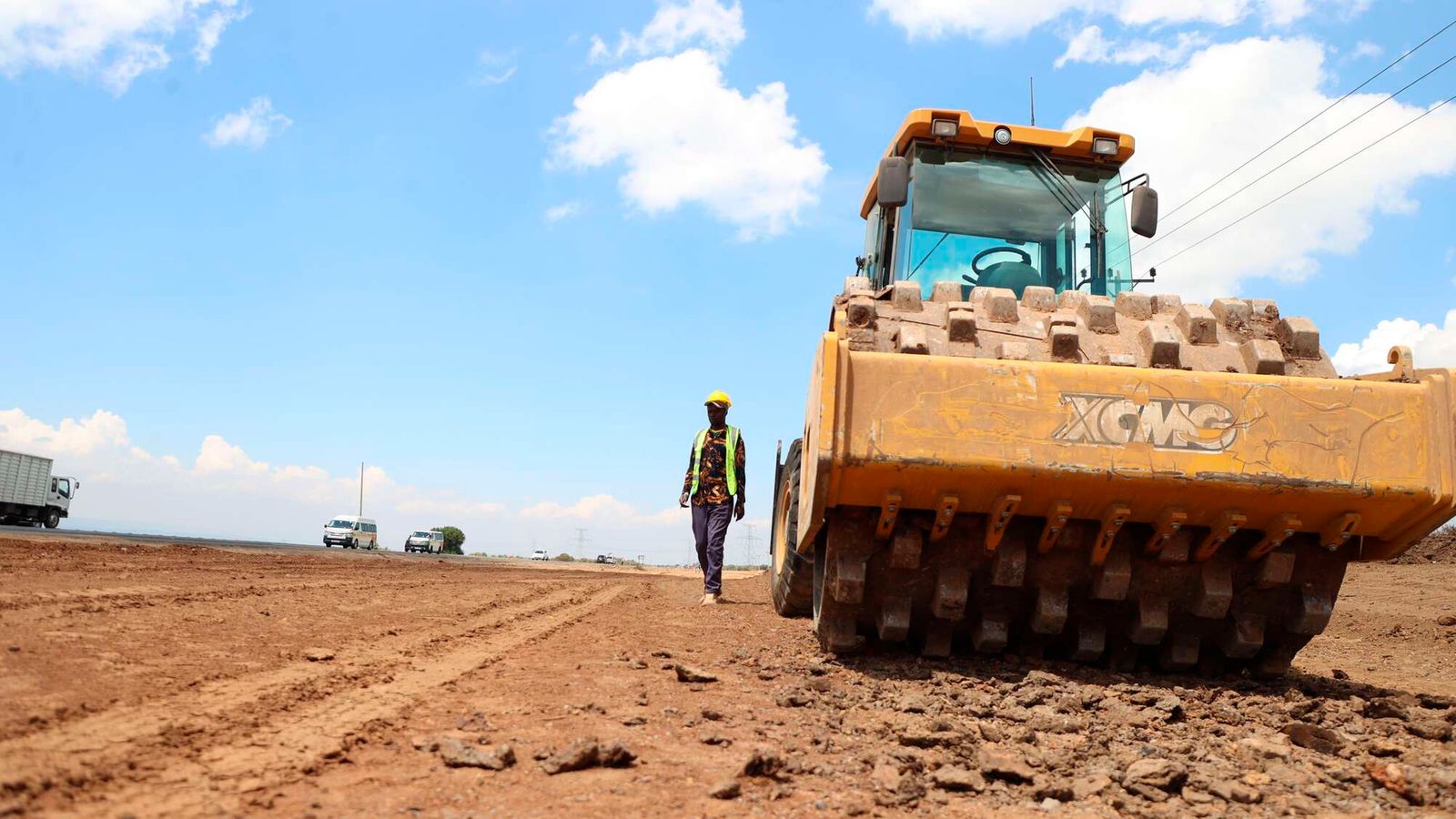
The weak execution of development budgets means billions earmarked for roads, markets, water infrastructure, health facilities and other capital projects did not translate into completed projects during the financial year.
Only three counties achieved development absorption above 80 percent, led by Kilifi at 84.52 percent, Wajir at 83.03 percent and Mandera at 80 percent, according to the budget watchdog.
On the other end, 13 counties absorbed half or less of their development budgets, with Kisumu recording the lowest rate at 25.92 percent, followed by Siaya at 26.53 percent and Nairobi at 28.47 percent.
The poor performance left a growing list of unfinished investments, with counties reporting 189 stalled projects valued at Sh10.51 billion.
“22 counties reported 189 stalled projects valued at Sh10.51 billion, out of which Sh4.21 billion had already been paid,” said the COB.
Nairobi accounted for the largest value of stalled projects at Sh2.24 billion across 57 projects, followed by Isiolo at Sh1.77 billion from seven projects, highlighting the financial cost of delays on capital investments.
Kakamega reported 26 stalled projects worth Sh848.95 million, while Baringo had 23 projects valued at Sh163.32 million, as Machakos reported 22 projects worth Sh891.58 million.
The figures point to a persistent implementation problem in devolution where county administrations allocate money for development but struggle to move projects from procurement and contracting into actual construction and completion.
Counties also carried Sh172.53 billion in trade payables at June 30, creating another constraint for contractors and suppliers and potentially slowing new projects as administrations struggle to clear obligations from previous years.
The accumulation of unpaid bills is significant for development, as contractors facing delayed payments can slow work, suspend construction or demand settlement of previous obligations before taking on additional county projects.
The challenge has previously been linked to procurement disruptions, with an earlier COB review showing that 10 counties cut development spending by Sh1.7 billion in the three months to September 2025 following disruption caused by the transition to the electronic government procurement system.
The squeeze is occurring even as counties remain central to delivery of services such as healthcare, local roads, markets, water and sanitation, making development spending a key measure of whether the devolved units are converting budgets into public assets.
Dr Nyakang’o has urged counties to prioritise stalled projects that can be completed and operationalised, allocate adequate resources for completion, as well as resolve outstanding contractual obligations.
“County governments should prepare verified schedules of stalled projects, prioritise projects that can be completed and operationalised, and allocate adequate resources in future budgets,” said the COB.
“Ring-fence projects under investigation and pursue appropriate recovery, enforcement, or corrective actions where loss or irregularity is established.”