Africa has spent decades trying to help farmers produce more. That work still matters. But it is no longer enough.
The next agricultural revolution will not be won only in fields. It will be won in the spaces between the farm and the market: in warehouses, aggregation centres, cold rooms, pack houses, repair workshops, processing facilities, logistics firms and rural service businesses.
That is Africa’s missing middle. And one of the most overlooked parts of it is not a road, a warehouse or a cold room. It is the technician who keeps the system working.
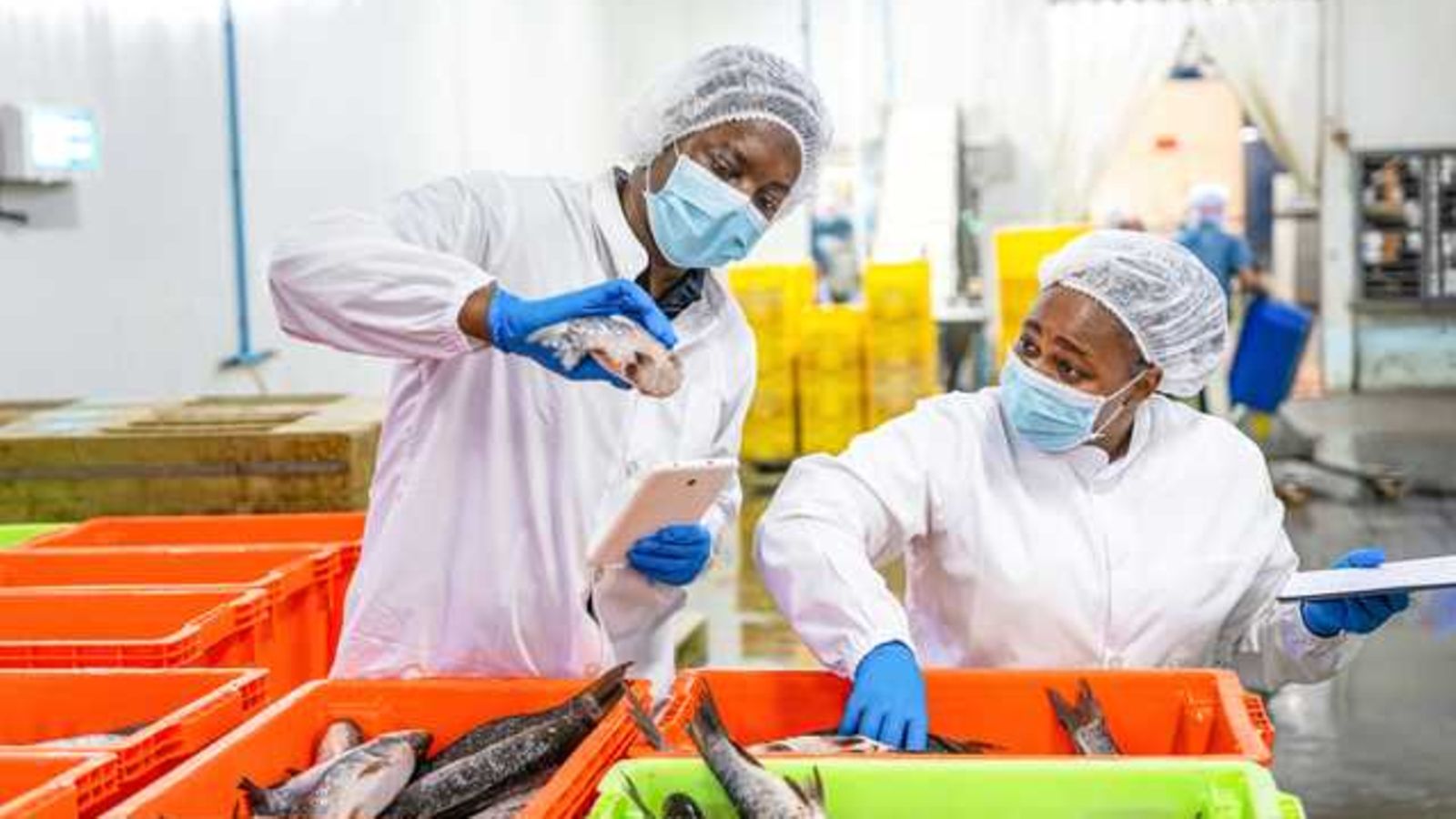
A cold chain is only as effective as the technicians who run it. A processing plant depends on skilled operators and maintenance teams, while warehouses rely on expertise in quality, inventory, food safety.
If Africa wants to reduce food loss, create rural jobs, raise farmer incomes and build competitive agrifood systems, it must stop treating skills as a social programme sitting outside agricultural transformation. Skills are part of the infrastructure of transformation.
Kenya illustrates the issue sharply. A recent World Resources Institute report estimates that about 15 million Kenyans, or 28 percent of the population, face food insecurity, while 30 to 40 percent of food is lost or wasted between production and consumption. The report estimates annual losses at about Sh72 billion, or $578 million.
Those figures are usually discussed as post-harvest loss statistics. They should also be read as labour-market and enterprise-development signals. When maize is lost in storage, farmers do not just need better bags. The value chain also needs reliable drying services, storage operators, quality management, aggregation and financing.
Likewise, when fish spoils before reaching consumers, the problem is often the absence of a functioning cold-chain ecosystem, including refrigeration, transport, maintenance and market coordination. In many cases, food is lost because the system around them remains incomplete.
Kenya’s avocado sector illustrates the point. Losses are lower in export markets because aggregation, grading, traceability and logistics are stronger. Where systems are more complete, losses fall.
Across agriculture, development investments often prioritise visible assets such as cold rooms, warehouses, dryers, trucks, processing equipment and digital platforms. Yet infrastructure alone is not enough. Without the technicians, operators, quality controllers and maintenance specialists needed to run them, even well-funded investments struggle to deliver their full value, and agribusinesses can quickly encounter labour bottlenecks.
This is why agricultural transformation is also workforce transformation. The missing middle is not only missing infrastructure. It is missing the people, capabilities and occupational pathways that allow infrastructure to generate value.
Many young people will continue to work in farming, but some of the fastest-growing opportunities in a modern agrifood economy lie around it: cooling, mechanisation, sorting and grading, packaging, logistics, processing, quality assurance, digital coordination and other rural business services.
These are practical occupations, including technicians, mechanics, processing operators, cold-room attendants, quality controllers, warehouse managers and agribusiness service entrepreneurs.
Positioned between production and consumption, they preserve value after harvest, reduce waste, improve market reliability, support climate resilience and create skilled jobs beyond farming itself.
That is why the missing middle should matter to donors, governments and private investors. It connects food security, youth employment, climate resilience, SME development and value addition in one investment space.
This is where dual apprenticeship becomes relevant to a much bigger conversation than youth employability. A strong apprenticeship system is economic infrastructure.
Agrifood systems need the same employer-led approach to develop the technical occupations that value chains require, from technicians and operators to supervisors, mechanics and quality specialists.
By aligning training with the occupations value chains need, connecting employers and training providers, and treating skills as an investment in productivity, dual apprenticeship can help make food systems transformation operational.
For donors and governments, the question then becomes: what occupations, services and enterprises are required for that production to become income, nutrition, jobs and resilience?
A solar cold room is not only a food-loss intervention. It is an energy, enterprise, climate and skills intervention. A warehouse receipt system is not only a storage intervention. It is a finance, quality and market-discipline intervention. A processing facility is not only a value-addition intervention. It is a workforce, maintenance and SME competitiveness intervention.
This also changes how success should be measured; by whether assets operate commercially, service businesses become viable, skilled employment is created, and more value is preserved after harvest.
Most smallholders will access modern infrastructure through service models rather than ownership if the services are reliable, affordable and linked to real markets.
This is where the missing middle becomes investable. Banks, Saccos, climate funds, county governments and private investors can finance service models that preserve value after harvest. Development partners can help de-risk early adoption, strengthen business models, improve market coordination and support the skills pipelines that these services need.
The difference matters. Donated equipment can solve a short-term visibility problem. Viable service models solve a market problem. They create incentives for maintenance, customer service, pricing discipline, workforce development and scale.
Kenya already knows how to manage high value produce when export markets demand it. The systems exist: aggregation, quality standards, traceability, buyer coordination, cold chain and compliance. The challenge is to bring similar seriousness into domestic and regional markets.
Food consumed in Africa should not pass through weaker systems simply because it is not destined for Europe. Domestic markets deserve the same standards of aggregation, grading, food safety, cold storage and processing as export markets.
This is not only a consumer issue but a competitiveness issue: if Africa is to retain more value from its own production, domestic value chains must become more organised, efficient and investable, supported by skilled people at every step.
First, measure losses seriously. What is not measured remains politically invisible. Better data on food loss should guide investment toward the points in the chain where value is being lost and where services can become viable.
Second, design every major agrifood investment with a workforce plan. Cold-chain, warehousing, processing, mechanisation, logistics and quality infrastructure should come with occupational standards, training pathways, apprenticeship partnerships and maintenance capacity.
Third, finance services rather than assets alone. The critical questions should be: who operates this, who maintains it, who pays for it, who benefits from it, and what makes the model commercially durable after the project ends?
Fourth, make employers central to skills development. They must help define occupations, host learners, assess competence and co-invest where the business case is clear.
Finally, coordinate policy around value chains rather than institutions. Agriculture, trade, energy, transport, education, labour, finance, cooperatives and county governments all shape whether the missing middle can grow. Coordination must become practical, funded and accountable.
Africa lacks the ecosystem that connects production to prosperity: a combination of infrastructure, enterprises, finance, services, standards, markets and the skilled people who make them productive.
Yet, the next agricultural revolution will not be defined only by what happens in fields, but by what happens after harvest, in the missing middle of the food system. This is where food is saved, value is created, SMEs grow and young people find skilled work. It is also where Africa’s agricultural transformation will ultimately succeed or fail.
The challenge is no longer just to grow more food, but to build the technicians, enterprises and services that can turn agricultural potential into economic transformation.