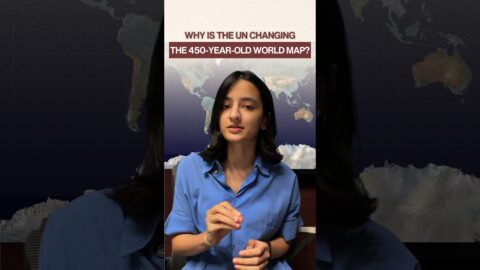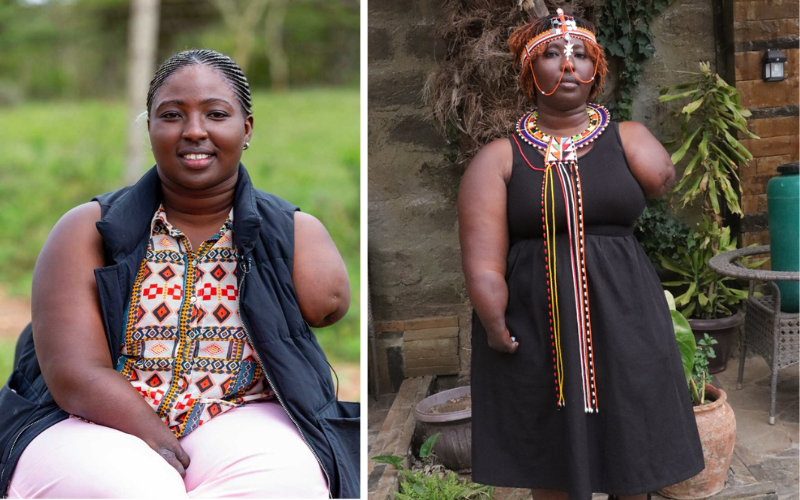
There are moments when a story quietly reveals itself. For me, one came as I watched Florence Ntisai bring women with disabilities together in Maralal, Samburu County
I watched her move between conversations, checking on the women, listening, organising and making sure everything came together.
It was difficult to reconcile that woman with the Florence I would come to know through our conversations – a young girl who once found it almost impossible to stand before others and introduce herself.
“I couldn’t even stand up to introduce myself,” she tells me.
I pause over the words.
What happened between that girl and the woman standing before me?
The answer is a journey through childhood, stigma, education, mentorship, advocacy and, eventually, climate action.
Florence was born about 28 years ago in Samburu, the sixth of nine children in a polygamous family. Born with phocomelia, a congenital condition that affected the development of her limbs, she encountered the barriers that disability can place in a child’s path.
She began her education at Ol-Kalau Disabled Children’s Home, where she studied up to Standard Two before undergoing surgery and therapy. Four years later, she returned to mainstream schooling, eventually completing Class Eight before joining AIC for secondary school.
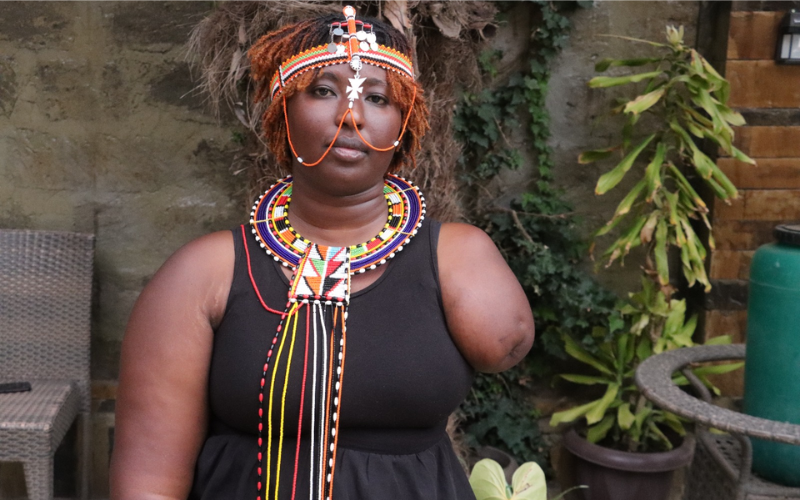
However, remaining in school was not only about passing examinations.
“There were financial difficulties, there was stigma, and there were teachers whose words made me question what I could achieve because of my disability,” she recalls.
Yet there were classmates who treated her differently.
“While some people were teaching me to doubt myself, others were quietly showing me that I belonged.”
This contrast mattered to her.
When she completed secondary school in 2016, there was no grand plan waiting for her. She worked as a shopkeeper before securing a one-month contract compiling data for the LAPSET project in Baragoi. She later joined St Mathews Teachers Training College and graduated, albeit with dreams of advocacy.
Then someone noticed her.
Jane Meriwas, director of Samburu Women Trust, recognised Florence’s potential and introduced her to opportunities around women’s empowerment and the experiences of women with disabilities.
Later, Jacinta Silakan, director of Sang’ida Foundation, offered her a volunteer position as an administrator, where Florence also worked with children with special needs.
When Florence speaks about these women, it is clear that neither came into her life simply as a name on a résumé. They opened doors, and helped her see possibilities.
Slowly, she began to understand that her experiences were not merely obstacles to overcome. They could also become knowledge she could use to help others.
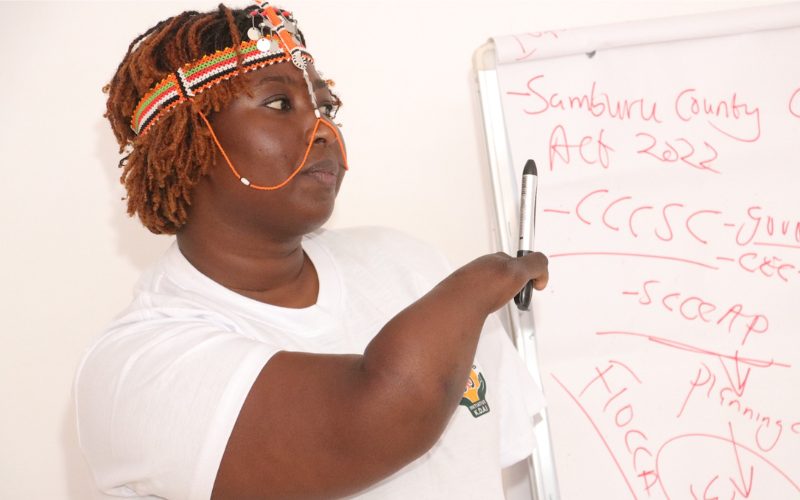
In 2024, she was introduced to the Indigenous Women Council. Here, something clicked. Florence was not only a woman living with a disability. She was also an Indigenous woman whose experience carried knowledge about her community.
“I found a space where that identity was not something to explain away. Instead, it was part of what I brought to the table,” she says.
She began noticing how many spaces in Samburu were still missing people like her – development, education, health, employment, leadership and decision-making.
When Florence Found Climate
In Samburu, climate change is not an abstract conversation. Changing weather patterns, pressure on water, livestock and food, and increasingly difficult livelihoods are realities communities must navigate.
Florence saw another question. Where were women with disabilities in the conversations about these challenges?
That question eventually drew her into climate advocacy through the Strengthening the Voices of Women with Disabilities to Actively Participate in Climate Change Policy and Negotiations initiative.
When I ask what she gained, her answer is simple.
“I have gained confidence.”
I think back to the woman who once told me she could not even stand to introduce herself.
Confidence, then, was not a small thing. What matters even more is what she did with it. “My own experiences have taught me many things,” she tells me.
Florence shares what she learnt back to the women she works with through the Kimunyak Differently Abled Initiative, or KDAI, which she founded. The process of registering KDAI began in 2024 and was finalised in 2025. She was now deep into advocacy.
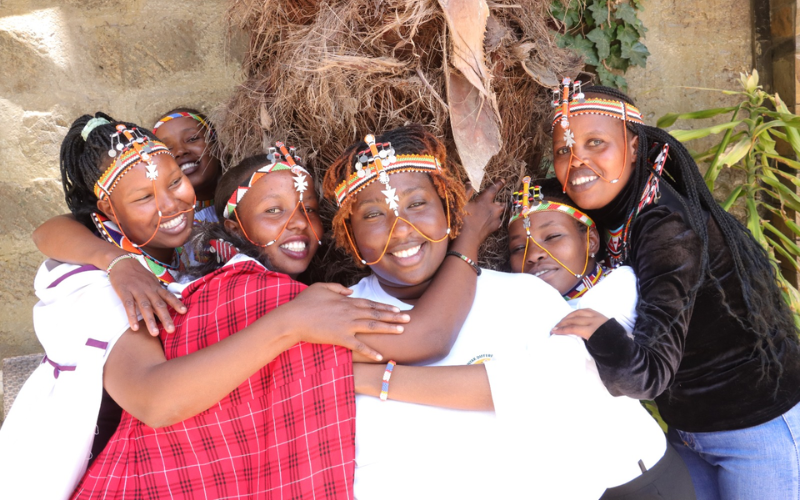
Today, the organisation has 156 registered members, with more than 30 others participating in its activities without formal registration.
Through KDAI, women with disabilities come together to learn, organise and discuss issues affecting their lives. They participate in community tree planting and use sports to create awareness, turning familiar activities into opportunities to talk about disability inclusion and climate action.
The transformation is perhaps easiest to see in Maralal. The workshop I attended brought together women with disabilities to learn about climate change, climate action and the decisions shaping their communities.
At first, climate change sounded like something belonging elsewhere, in policy documents, government offices or conversations among environmental experts. However, as the discussion unfolded, it came closer. It was about water, food, livelihoods, natural resources, and the changing environment around them.
Then came the deeper realisation: for women with disabilities, climate vulnerability can be compounded by barriers that already limit access to information, opportunities and decision-making.
The conversation became bigger than climate change. It became a conversation about rights, representation and justice.
As I watched the women engage with the discussion, I found myself thinking about the girl Florence had described to me. The girl who could not stand up to introduce herself. Here she was now, helping other women find their voices.
Florence’s own horizons have also expanded through her climate work. In 2025, she travelled to Ethiopia through the support of Strengthening the Voices of Women with Disabilities to Actively Participate in Climate Change Policy and Negotiations (STREVOW) initiative, implemented through ICCASA and supported by the African Climate Change Fund of the African Development Bank.
This was her first journey outside Kenya, where she met women with disabilities from other countries participating in the same initiative. She returned with new ideas and connections to share, however, perhaps the most revealing measure of her transformation is where she sees herself going next.
The training exposed her to climate policy, advocacy, public speaking, leadership and peer mentorship.
Today, when Florence talks in confidence about what she gained, she does not begin with policy documents.
The more she learnt, the more she began to see climate change through the same lens that had shaped her disability advocacy.
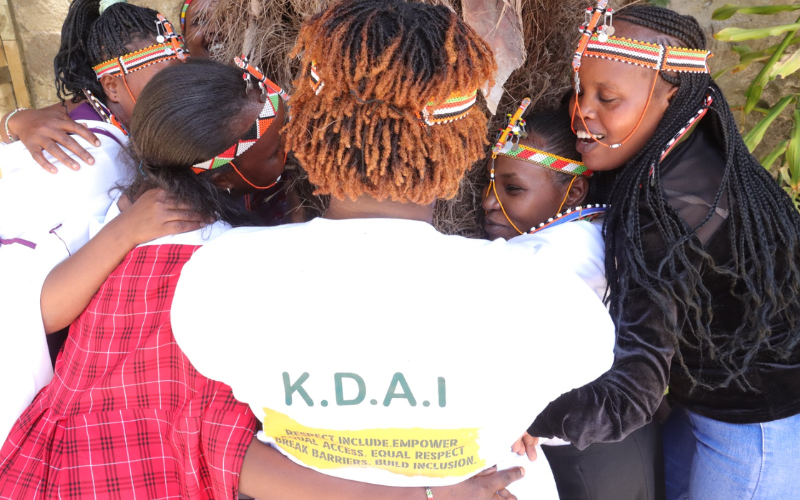
It was about rights, about representation, about gender, and ultimately, it was about whose knowledge counts when solutions are being designed.
For a woman who had once struggled to introduce herself, this was a significant shift. She was no longer simply asking to be included. She was learning how to enter the conversation prepared to contribute.
“I am really grateful to ICCASA for being supportive trough my ambition to become a voice for women with disability in issues about climate change, and especially climate action, and this training workshop is one of the many ways that the organisation has been supportive,” she says enthusiastically.
Florence has expressed interest in vying for the Samburu Women Representative seat, saying she wants to use such a platform to articulate policies and strengthen the representation of women with disabilities in decision-making.
It is an ambition that says something about the distance she has travelled. The woman who once struggled simply to introduce herself is now thinking about standing for others.
This is where Florence’s story comes full circle. She is no longer waiting for someone to make room for her at the table. She is learning how to make the table wider.