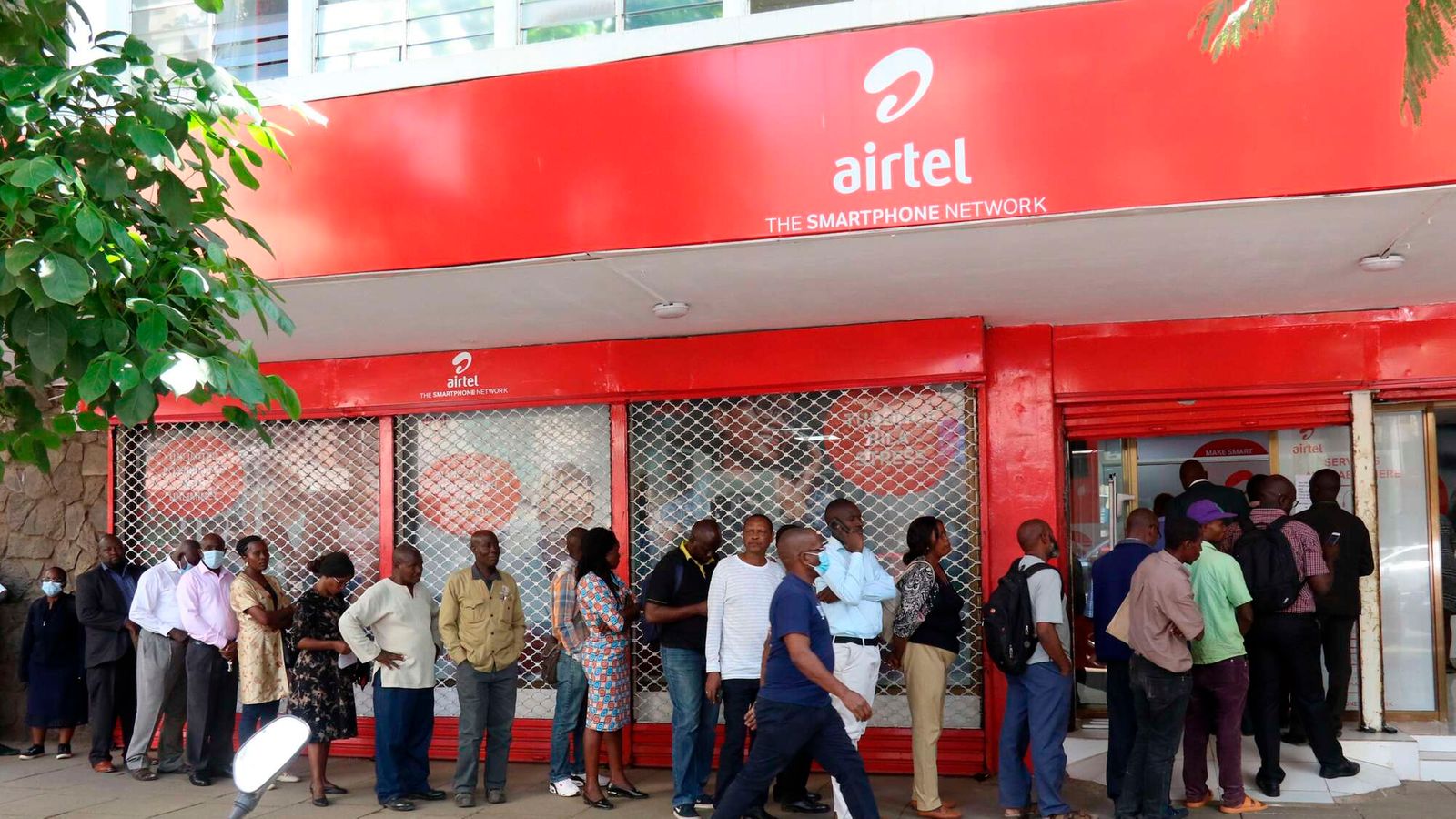
Airtel Africa is winding up its Kenyan wholesale internet and fibre-optic subsidiary, two years after it was set up amid struggles to turn a profit.
The Registrar of Companies revealed that the Airtel subsidiary, known as Airtel Kenya Telesonic, would be struck off the register by December 2026, following a request by the telco.
Airtel Kenya Telesonic filed a notice to surrender its Network Facilities Provider Tier 2 (NFPT2) licence to the Communications Authority of Kenya (CA) at the end of 2025.
The exit application came as the subsidiary reported a net loss of Sh16.1 million in the year ended December 2025, up from Sh2.9 million the previous year when it was launched. The CA approved the shutdown of Airtel Kenya Telesonic, prompting the Registrar of Companies to kick off the deregistration.
Airtel Telesonic is the wholesale arm of Airtel Africa focused on providing enhanced data solutions and extensive fibre-optic networks across the telco giant’s 14 African markets.
It serves governments, large enterprises, small and medium-sized enterprises, startups and cloud hyperscalers – large cloud computing providers that operate data centres.
But the Kenyan company has struggled to turn a profit since 2014 amid stiff competition from other players in the fibre sector such as Safaricom, Liquid Intelligent Technologies, Seacom East Africa, and MTN Group’s Bayobab.
Airtel’s ultimate parent company, Indian firm Bharti Airtel, announced that as at December 2025, the company was in the process of winding up Airtel Kenya Telesonic.
“Having assessed the company’s operational outlook, the company has concluded that it is not able to continue as a going concern,” Bharti Airtel documents seen by the Business Daily said.
“The decision to wind up the Company arose from a combination of strategic, operational, and commercial considerations.”
The Kenyan subsidiary submitted its licence booklet to the CA on February 6, 2026 and has been awaiting gazettement and completion of the remaining regulatory termination procedures.
An NFPT2 licence, valid for 15 years, costs Sh15 million. Operators pay multiple fees for the licences, including annual spectrum utilisation fees as well as 0.4 percent of their annual gross turnover or Sh800,000, whichever is higher.
Airtel Kenya Telesonic spent Sh1.2 million on licence and regulatory fees in 2025 alone, according to the Indian parent firm’s disclosures.
Telesonic is part of the 2Africa submarine cable project, which boosts connectivity between Africa, the Middle East and Europe. Other firms in the project include Meta, Safaricom’s parent Vodacom and MTN Group.
In Africa, Telesonic has more than 78,000 kilometres of terrestrial fibre and has operated across Airtel’s markets, including Uganda, Tanzania, Rwanda, DR Congo and Nigeria.
The telecoms giant has not disclosed its plans for Telesonic in the remaining 13 markets.
Kenya’s fixed fibre market has been growing in recent years, driven by increasing reliance on digital platforms for work, education, healthcare and entertainment, as well as attractive tariffs and special offers from service providers.
Communications Authority data shows Kenya had 1.4 million fibre-optic data subscriptions as of December 2025, up from 1.1 million in December 2024.
Safaricom controls 35.4 percent of the market, followed by Jamii Telecoms (19.5 percent) and Wananchi Group (10.4 percent).